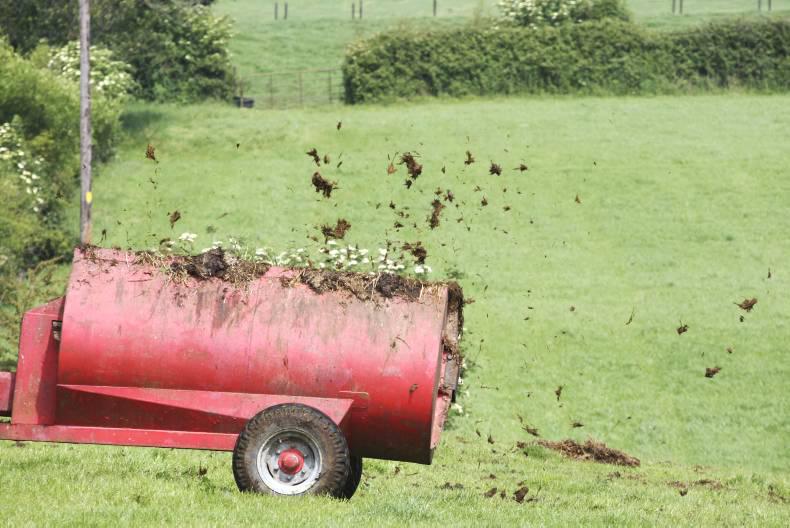
Spreading manure on grassland at Redcross, Co.Wicklow.
ADVERTISEMENT
Jalila Essaidi is a Dutch based entrepreneur and artist, known for her work in the fields of biotechnology and life sciences.
Her now venture however, was inspired the Netherlands’ surplus of cow manure, which in turn is damaging the environment.
To combat this ongoing problem, which also affects Ireland, the artist has been looking at ways to utilise cow manure and transform it into useful materials.
ADVERTISEMENT
How it works
Essaidi travels to fields to gather animal manure and then brings it to the scientific laboratory, where she mixes the dry friction with wet friction, in order to create a new material.
Chemical reactions break down the animal waste into bio paper and plastics, which can then be used to create clothes, made of a thread like material.
Plans for the future
With her scientific findings, Essaidi plans to open a demo factory in the Netherlands in the future and has further plans to extend the business with five more factories in the country.
This content is available to digital subscribers and loyalty code users only. Sign in to your account, use the code or subscribe to get unlimited access.
The reader loyalty code gives you full access to the site from when you enter it until the following Wednesday at 9pm. Find your unique code on the back page of Irish Country Living every week.
CODE ACCEPTED
You have full access to the site until next Wednesday at 9pm.
CODE NOT VALID
Please try again or contact support.
Jalila Essaidi is a Dutch based entrepreneur and artist, known for her work in the fields of biotechnology and life sciences.
Her now venture however, was inspired the Netherlands’ surplus of cow manure, which in turn is damaging the environment.
To combat this ongoing problem, which also affects Ireland, the artist has been looking at ways to utilise cow manure and transform it into useful materials.
How it works
Essaidi travels to fields to gather animal manure and then brings it to the scientific laboratory, where she mixes the dry friction with wet friction, in order to create a new material.
Chemical reactions break down the animal waste into bio paper and plastics, which can then be used to create clothes, made of a thread like material.
Plans for the future
With her scientific findings, Essaidi plans to open a demo factory in the Netherlands in the future and has further plans to extend the business with five more factories in the country.
If you would like to speak to a member of our team, please call us on 01-4199525.
Link sent to your email address
We have sent an email to your address. Please click on the link in this email to reset your password. If you can't find it in your inbox, please check your spam folder. If you can't find the email, please call us on 01-4199525.
ENTER YOUR LOYALTY CODE:
The reader loyalty code gives you full access to the site from when you enter it until the following Wednesday at 9pm. Find your unique code on the back page of Irish Country Living every week.





SHARING OPTIONS