Herbal remedies, supplements and botanicals – all interventions trialled by a desperate Loretta Dignam, as she battled menopause symptoms. “I tried a magnet that fits underneath your belly button and it cost me €35. The magnet was supposed to get rid of my hot flushes because I had 20 or 30 a day and at night. But all that happened was the metal chain for the trolley in the supermarket stuck to me,” says Loretta, with a laugh.
Loretta is a woman who has reinvented herself. As CEO and founder of The Menopause Hub, she became an entrepreneur in her 50s – something she never anticipated in the midst of her own menopause.
“I worked in the corporate sector and menopause hit me at 49, which I only discovered because my periods stopped and I had hot flushes. I thought I flew through menopause, but then I realised [in retrospect] that all the symptoms I’d experienced in my 40s were related to perimenopause.” Perimenopause is the stage before menopause and before the end of ovarian function.
Loretta had 26 symptoms: headaches (which developed into phobic migraine), dry eye (which saw her sent to the Eye and Ear Hospital A&E on three different occasions), dizziness when she entered big rooms, heart palpitations, urinary tract infections for months on end, flat moods and broken sleep. “Yet nobody mentioned perimenopause,” says Loretta.
“I just felt in my 40s that lots of things were going wrong and I was going to different people about different things and not realising that it had anything to do with menopause.”
It was Hormone Replacement Therapy (HRT) – only recently been made free of charge in Ireland – that turned things around for Loretta. “I took oestrogen, progesterone, testosterone, and vaginal oestrogen, it was truly life-changing,” she says. “I was spending up to €70 a month on my HRT before it was covered. That’s why I campaigned so hard for free HRT through the HSE – because women shouldn’t have to pay a premium just to feel well.”

Loretta Dignam is founder and CEO of The Menopause Hub.
By the time Loretta gave up her job to set up Ireland’s first dedicated menopause clinic in January 2018, her symptoms were under control; but a coffee with a friend going through menopause stopped her in her tracks. “I thought she was going to faint or something. She told me she’d had hot flushes for the past 10 years, and she didn’t know who to go to or who to trust.
“And that day, I decided I’m going to do something about this. I was a bit outraged to think that something that affects 50% of the population was so secret and taboo.
“I happened to come across a doctor specialising in menopause that summer, and once I got in contact with one medical professional, that led me to others and gave me the confidence to set up a clinic.”
At the time of its inception, The Menopause Hub was a first in Ireland and only one of two in the world. Now there are three clinics, two in Dublin and one in Cork, and each is comprised of a team of specialist doctors, psychologists, physiotherapists and dietitians.
A long list of symptoms
Hot flushes are the symptom commonly associated with menopause, but they are only one of over 40 different symptoms women can experience. “There’s a very long list, and it can vary from woman to woman,” explains Dr Rita Galimberti, specialist in obstetrics and gynaecology and medical director of The Femplus Clinic, a women’s health clinic in Dublin. “Some women would experience more symptoms than others.” Although many think symptoms of menopause last just a few months, they can last between seven and 10 years.
The symptoms, Dr Galimberti explains, are related to the fact that a woman’s ovaries gradually stop producing the hormone oestrogen during menopause.
“As oestrogen is very important for a lot of different organs of the body, reduced oestrogen has a lot of consequences in terms of symptoms. Women experience symptoms like hot flushes, night sweats, mood problems, tiredness, and concentration issues.
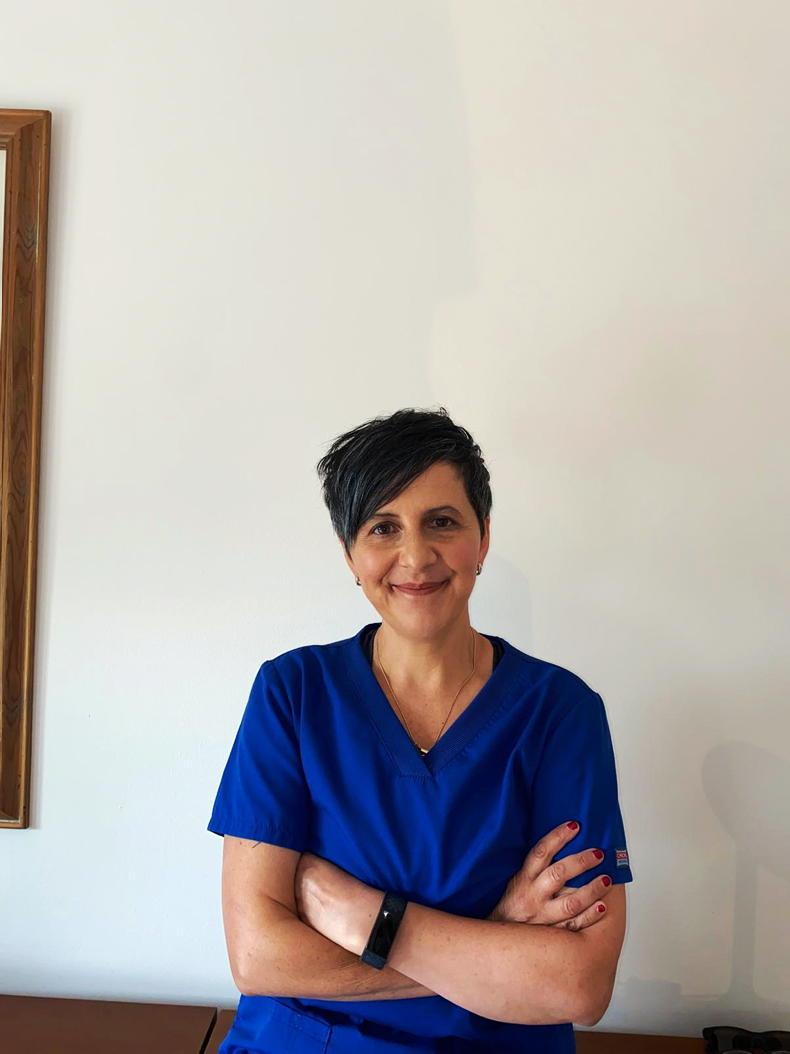
Dr Rita Galimberti, specialist in obstetrics and gynaecology and medical director of The Femplus Clinic.
“Unfortunately, this does actually affect their long-term health as well. Women have a higher risk of osteoporosis than men, and the fact that oestrogen decreases suddenly at this age is one of the main reasons. And the other important thing that happens is that cardiovascular risk – which is lower among women than men from a younger age – goes up quite quickly after this period of time.”
One issue that Dr Galimberti is keen to highlight are the vaginal, vulval and bladder symptoms women experience during menopause. Known as ‘urogenital syndrome of menopause’, symptoms can include vaginal dryness, pain during intercourse and urinary tract infections. Urogenital syndrome in menopause can affect women during and after menopause, but the symptoms often go undiagnosed and untreated because women do not discuss these topics with their GPs.
“Many women are afraid of symptoms in relation to the vagina, but changes in that area happen to everybody after a certain age. We find that a lot of women who haven’t addressed the problem earlier on are sore in their late 50s.
“Knowledge about menopause has improved but, in my experience, this is the one area that women really still don’t know so much about,” says Dr Galimberti. This can have a severe impact on women’s intimate relationships, as well as their confidence and wellbeing.
“Urogenital syndrome of menopause is so treatable. Laser and oestrogen can completely reverse the problem but a lot of women keep having painful intercourse without knowing that this is fixable.”
Changing attitudes
For the first time, The Menopause Hub had a stand at the Ploughing Championships this year. Loretta says they were “inundated” with women and their families over the three days.
“The level of knowledge from women was huge,” says Loretta. “Women have been demanding more, and so the medical profession has had to respond.
“The medical profession has upskilled in this area and improved its knowledge around this. But there’s still some way to go. We hear stories from women all the time that their doctor doesn’t know much about it.”

L-R: Loretta Dignam, Thaís Terêncio, Fiona O'Hanlon at The Menopause Hub stand at the Ploughing, where they exhibited for the first time ever.
Dr Galimberti agrees that public awareness is much better than it used to be. She bought the domain menopause.ie over a decade ago, “well before the menopause revolution time” and she “was amazed that the domain was available.”
“I always tell that story, because I couldn’t believe that nobody actually had any interest in buying it. It shows that the interest at that time was really zero.” The website includes resources and information to help women navigate the menopause.
Unfortunately, one downside of menopause shifting from taboo to trendy is that “it has become a big, big money-making thing,” Dr Galimberti cautions.
“There’s a lot of monetisation now, which is not good for women. Everybody has jumped on the wagon to sell stuff to women. There’s a lot of social media stuff going around, and often misinformation.”
One example that both Dr Galimberti and Loretta reference is the menopause supplement industry, explaining there is no “scientific evidence” these approaches work.
“If you just go into the pharmacy and look at the shelf, you will find a huge amount of products that wouldn’t be there before,” says Dr Galimberti. “There is no scientific evidence that these products do anything, and some products might be harmful.
“They hook women on the things that they want to hear. ‘Will work for losing weight, endometriosis, bladder problems, every gynaecological issue.’ These claims are completely false and very misleading for women, but they’re very attractive.”
If you are going through menopause, the best advice is to get your information from your health provider or contact
your GP.
As outlined by Dr Galimberti, patients can notice changes in their vagina, vulva and vagina during menopause due to a lack of the hormone oestrogen. This can include lack of bladder control.New research from Always Discreet reveals that one in three women have never talked about bladder leaks with family and friends.
Only 35% of Irish women experiencing bladder leaks had discussed this experience with their loved ones.
Nearly one quarter of those experiencing bladder leaks said they plan their day around access to a toilet (23%); one in five (21%) sometimes skip social events; or avoid certain activities altogether (23%).
If you have concerns regarding bladder issues, speak to your GP.
See femplus.ie and themenopausehub.ie
Herbal remedies, supplements and botanicals – all interventions trialled by a desperate Loretta Dignam, as she battled menopause symptoms. “I tried a magnet that fits underneath your belly button and it cost me €35. The magnet was supposed to get rid of my hot flushes because I had 20 or 30 a day and at night. But all that happened was the metal chain for the trolley in the supermarket stuck to me,” says Loretta, with a laugh.
Loretta is a woman who has reinvented herself. As CEO and founder of The Menopause Hub, she became an entrepreneur in her 50s – something she never anticipated in the midst of her own menopause.
“I worked in the corporate sector and menopause hit me at 49, which I only discovered because my periods stopped and I had hot flushes. I thought I flew through menopause, but then I realised [in retrospect] that all the symptoms I’d experienced in my 40s were related to perimenopause.” Perimenopause is the stage before menopause and before the end of ovarian function.
Loretta had 26 symptoms: headaches (which developed into phobic migraine), dry eye (which saw her sent to the Eye and Ear Hospital A&E on three different occasions), dizziness when she entered big rooms, heart palpitations, urinary tract infections for months on end, flat moods and broken sleep. “Yet nobody mentioned perimenopause,” says Loretta.
“I just felt in my 40s that lots of things were going wrong and I was going to different people about different things and not realising that it had anything to do with menopause.”
It was Hormone Replacement Therapy (HRT) – only recently been made free of charge in Ireland – that turned things around for Loretta. “I took oestrogen, progesterone, testosterone, and vaginal oestrogen, it was truly life-changing,” she says. “I was spending up to €70 a month on my HRT before it was covered. That’s why I campaigned so hard for free HRT through the HSE – because women shouldn’t have to pay a premium just to feel well.”
Loretta Dignam is founder and CEO of The Menopause Hub.
By the time Loretta gave up her job to set up Ireland’s first dedicated menopause clinic in January 2018, her symptoms were under control; but a coffee with a friend going through menopause stopped her in her tracks. “I thought she was going to faint or something. She told me she’d had hot flushes for the past 10 years, and she didn’t know who to go to or who to trust.
“And that day, I decided I’m going to do something about this. I was a bit outraged to think that something that affects 50% of the population was so secret and taboo.
“I happened to come across a doctor specialising in menopause that summer, and once I got in contact with one medical professional, that led me to others and gave me the confidence to set up a clinic.”
At the time of its inception, The Menopause Hub was a first in Ireland and only one of two in the world. Now there are three clinics, two in Dublin and one in Cork, and each is comprised of a team of specialist doctors, psychologists, physiotherapists and dietitians.
A long list of symptoms
Hot flushes are the symptom commonly associated with menopause, but they are only one of over 40 different symptoms women can experience. “There’s a very long list, and it can vary from woman to woman,” explains Dr Rita Galimberti, specialist in obstetrics and gynaecology and medical director of The Femplus Clinic, a women’s health clinic in Dublin. “Some women would experience more symptoms than others.” Although many think symptoms of menopause last just a few months, they can last between seven and 10 years.
The symptoms, Dr Galimberti explains, are related to the fact that a woman’s ovaries gradually stop producing the hormone oestrogen during menopause.
“As oestrogen is very important for a lot of different organs of the body, reduced oestrogen has a lot of consequences in terms of symptoms. Women experience symptoms like hot flushes, night sweats, mood problems, tiredness, and concentration issues.
Dr Rita Galimberti, specialist in obstetrics and gynaecology and medical director of The Femplus Clinic.
“Unfortunately, this does actually affect their long-term health as well. Women have a higher risk of osteoporosis than men, and the fact that oestrogen decreases suddenly at this age is one of the main reasons. And the other important thing that happens is that cardiovascular risk – which is lower among women than men from a younger age – goes up quite quickly after this period of time.”
One issue that Dr Galimberti is keen to highlight are the vaginal, vulval and bladder symptoms women experience during menopause. Known as ‘urogenital syndrome of menopause’, symptoms can include vaginal dryness, pain during intercourse and urinary tract infections. Urogenital syndrome in menopause can affect women during and after menopause, but the symptoms often go undiagnosed and untreated because women do not discuss these topics with their GPs.
“Many women are afraid of symptoms in relation to the vagina, but changes in that area happen to everybody after a certain age. We find that a lot of women who haven’t addressed the problem earlier on are sore in their late 50s.
“Knowledge about menopause has improved but, in my experience, this is the one area that women really still don’t know so much about,” says Dr Galimberti. This can have a severe impact on women’s intimate relationships, as well as their confidence and wellbeing.
“Urogenital syndrome of menopause is so treatable. Laser and oestrogen can completely reverse the problem but a lot of women keep having painful intercourse without knowing that this is fixable.”
Changing attitudes
For the first time, The Menopause Hub had a stand at the Ploughing Championships this year. Loretta says they were “inundated” with women and their families over the three days.
“The level of knowledge from women was huge,” says Loretta. “Women have been demanding more, and so the medical profession has had to respond.
“The medical profession has upskilled in this area and improved its knowledge around this. But there’s still some way to go. We hear stories from women all the time that their doctor doesn’t know much about it.”
L-R: Loretta Dignam, Thaís Terêncio, Fiona O'Hanlon at The Menopause Hub stand at the Ploughing, where they exhibited for the first time ever.
Dr Galimberti agrees that public awareness is much better than it used to be. She bought the domain menopause.ie over a decade ago, “well before the menopause revolution time” and she “was amazed that the domain was available.”
“I always tell that story, because I couldn’t believe that nobody actually had any interest in buying it. It shows that the interest at that time was really zero.” The website includes resources and information to help women navigate the menopause.
Unfortunately, one downside of menopause shifting from taboo to trendy is that “it has become a big, big money-making thing,” Dr Galimberti cautions.
“There’s a lot of monetisation now, which is not good for women. Everybody has jumped on the wagon to sell stuff to women. There’s a lot of social media stuff going around, and often misinformation.”
One example that both Dr Galimberti and Loretta reference is the menopause supplement industry, explaining there is no “scientific evidence” these approaches work.
“If you just go into the pharmacy and look at the shelf, you will find a huge amount of products that wouldn’t be there before,” says Dr Galimberti. “There is no scientific evidence that these products do anything, and some products might be harmful.
“They hook women on the things that they want to hear. ‘Will work for losing weight, endometriosis, bladder problems, every gynaecological issue.’ These claims are completely false and very misleading for women, but they’re very attractive.”
If you are going through menopause, the best advice is to get your information from your health provider or contact
your GP.
As outlined by Dr Galimberti, patients can notice changes in their vagina, vulva and vagina during menopause due to a lack of the hormone oestrogen. This can include lack of bladder control.New research from Always Discreet reveals that one in three women have never talked about bladder leaks with family and friends.
Only 35% of Irish women experiencing bladder leaks had discussed this experience with their loved ones.
Nearly one quarter of those experiencing bladder leaks said they plan their day around access to a toilet (23%); one in five (21%) sometimes skip social events; or avoid certain activities altogether (23%).
If you have concerns regarding bladder issues, speak to your GP.
See femplus.ie and themenopausehub.ie








SHARING OPTIONS