



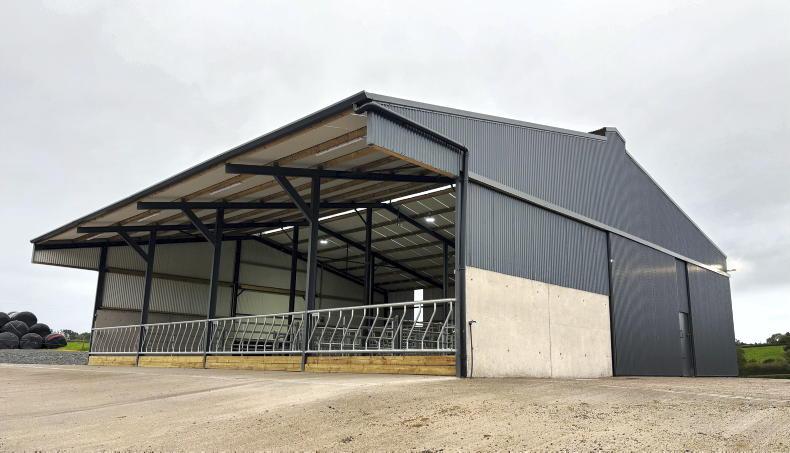
While many suckler sheds follow a similar design, Shane Conlon’s is that little bit different.
The young Monaghan farmer from Emyvale has slowly been transitioning from a store-beef system to calving down more commercial suckler cows, while also building a small-but-quality herd of pedigree Charolais cattle under the Shacon prefix.
His heifer, Shacon Adorable, took the showing scene by storm with six championships under her belt for the 2026 season, remaining unbeaten.
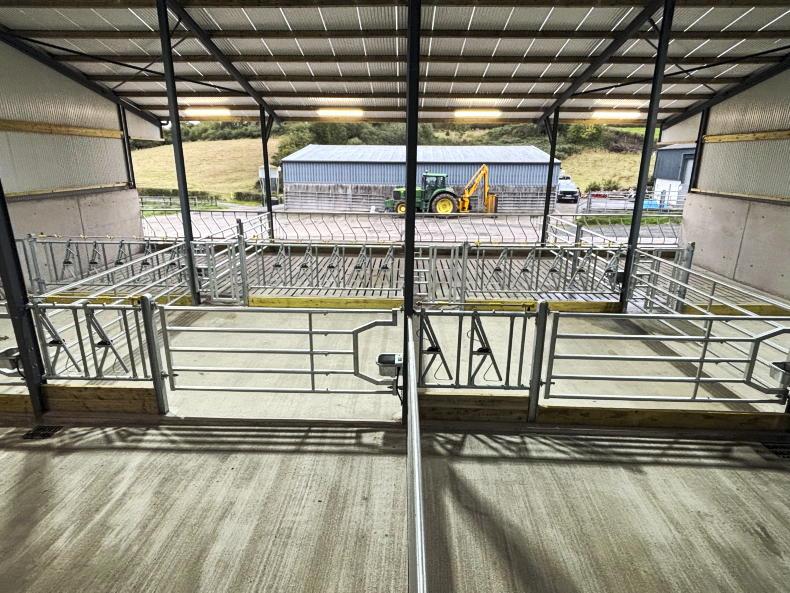
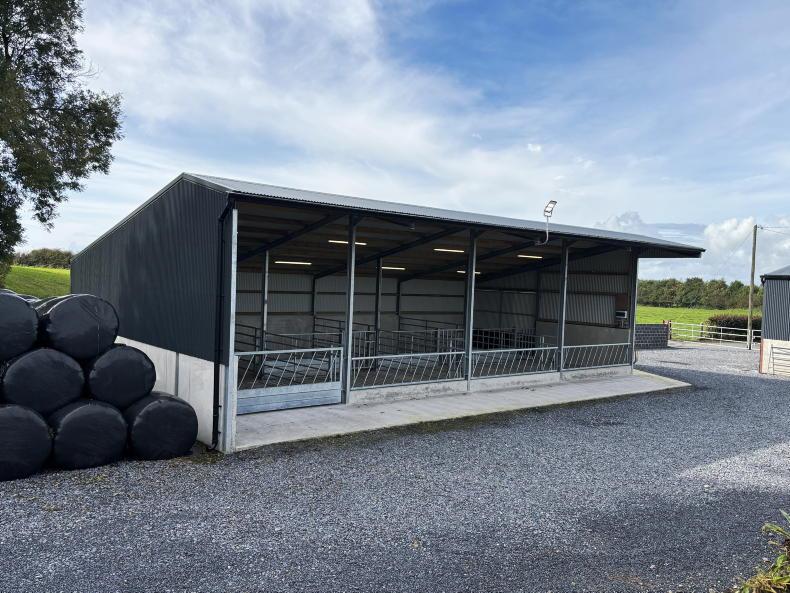
With the increase in suckler numbers came the need for additional accommodation, and Shane has recently overseen the completion of his new four-bay suckler shed complete with slatted accommodation, creep and calving pens all under the one roof.
Timeline
Shane availed of the Young Farmers Capital Investment Scheme (YFCIS) under TAMS III, something which he says he could not have completed the build without, with the 60% grant rate allowing him to complete a well sized and specced build. Shane applied for TAMS in September 2025 and was approved in spring of 2026, with planning permission having granted prior to approval with no hiccups.
Ground was broken in April of this year, with the tank dug and all digger work completed by local contractor Gary Sherlock. Martin Fox Construction was the main contractor involved in the build, with the tank poured by Martin and his crew in late April. The erection of the steel work began in the end of July, with ideal weather aiding a speedy build.
“The timing worked perfect. If I hadn’t gotten the approval for another two or three months we would have been under pressure to complete the job before housing,” noted Shane.
Layout
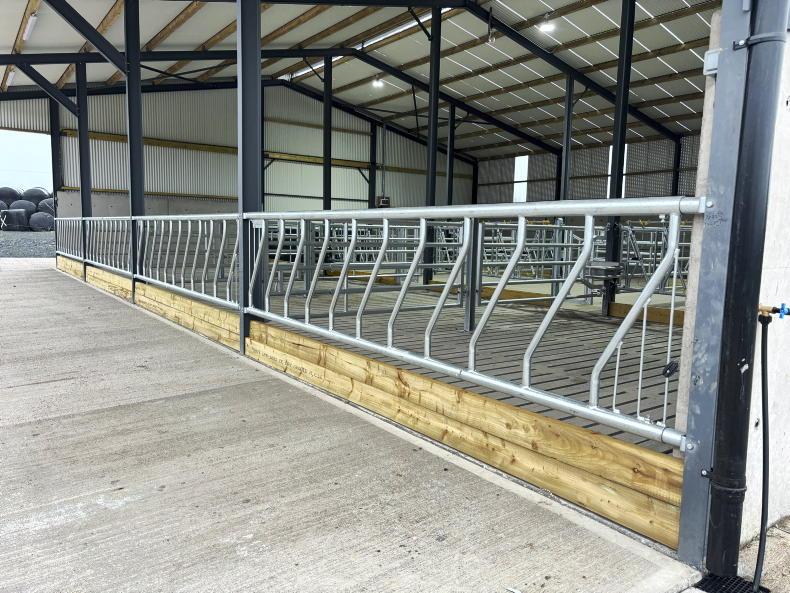
The shed spans four standard bays (4.8m) extending to 19.3m in total, with an open feed face running along the front of the shed sheltered by a 2.4m overhanging canopy.
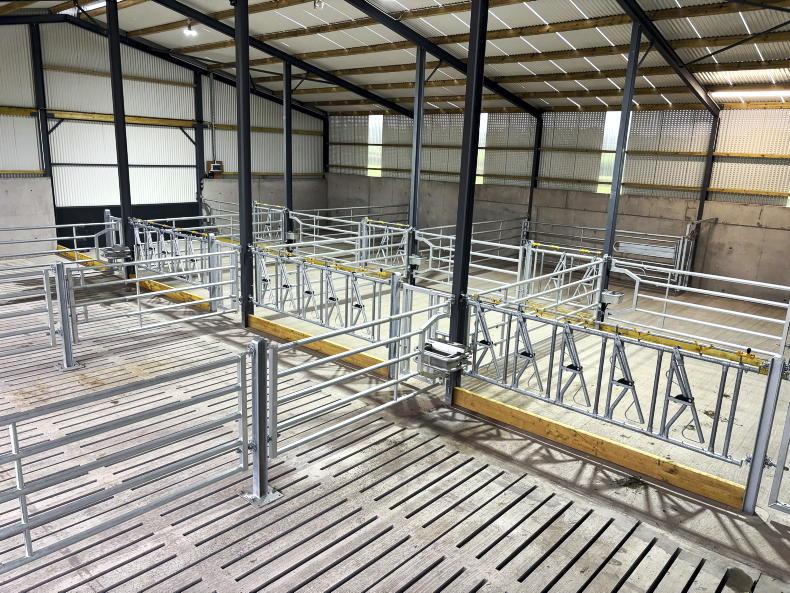
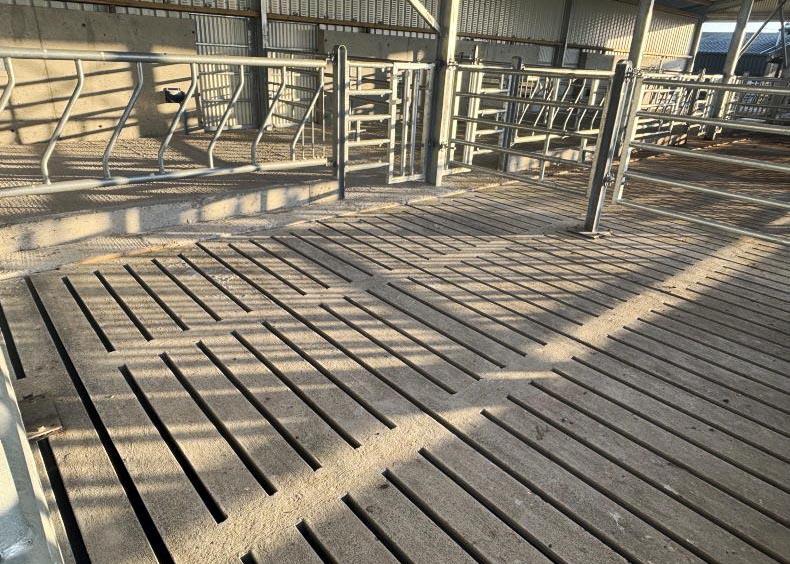
A 16ft slat sits to the rear of the feed face, with 2ft (600mm) of toe space at either side of the slat.
Shane was keen to have ample lying room in the pens but to also have sufficient feed space, opting for a straight diagonal feed barrier along the front which are fixed in place. Installing locking barriers here would have reduced the number of cows capable of feeding at the one time.
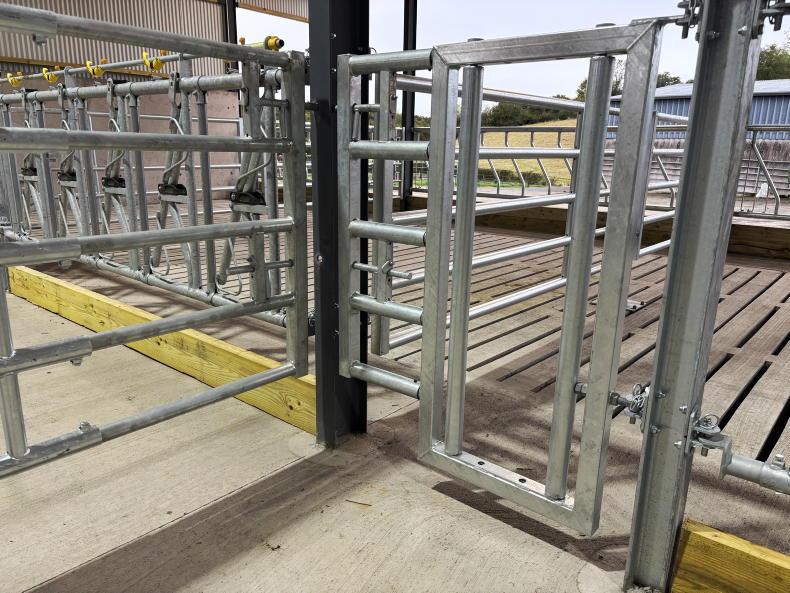
To the rear of the slats lies an additional feed barrier made up of five locking head yokes with a creep gate also incorporated. The flexibility this offers Shane is that when the creep is not in use, additional cattle can be fed in these.
The main handling yard is currently situated away from the shed, but with the addition of these locking barriers Shane is able complete the majority of work in the pens, such as AI, synchronisation and dosing.
Tip over water troughs have been fixed to the rear of the pens, again this helps maximise feed space along the front.
Another super feature in the slatted area is the split gates, which make moving stock between pens safer for both cattle and farmer, with a centre H-iron bolted to the slats.
Dry bedded area
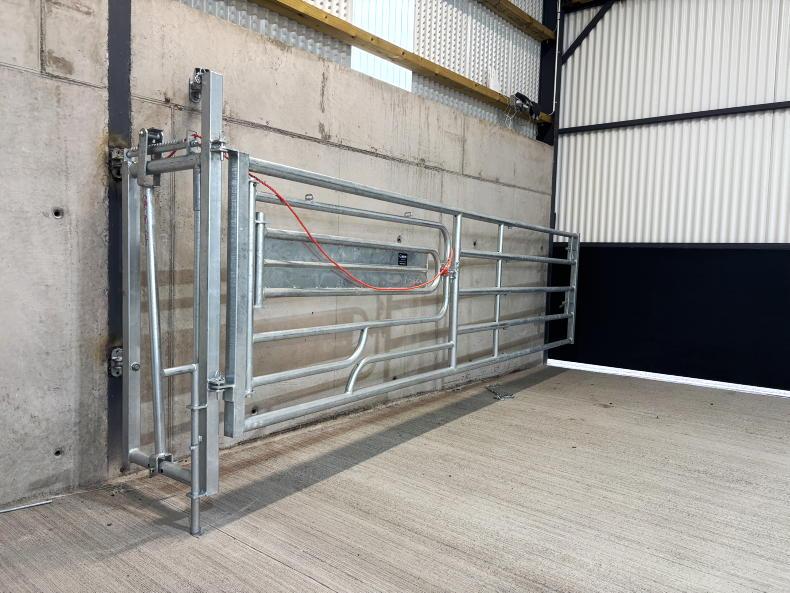
Shane opted for Condon Engineering barriers and gates throughout, sourced from Giffin Agri Sales. The creep gate is of ample height, with Shane noting the importance of this for September-born calves coming into late spring. Roller bars can be incrementally changed or removed depending on calf size in the gate.
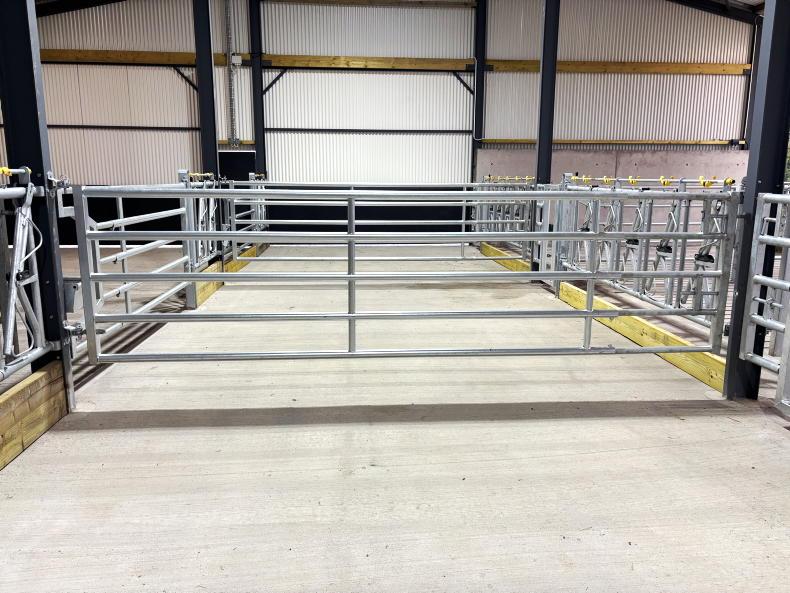
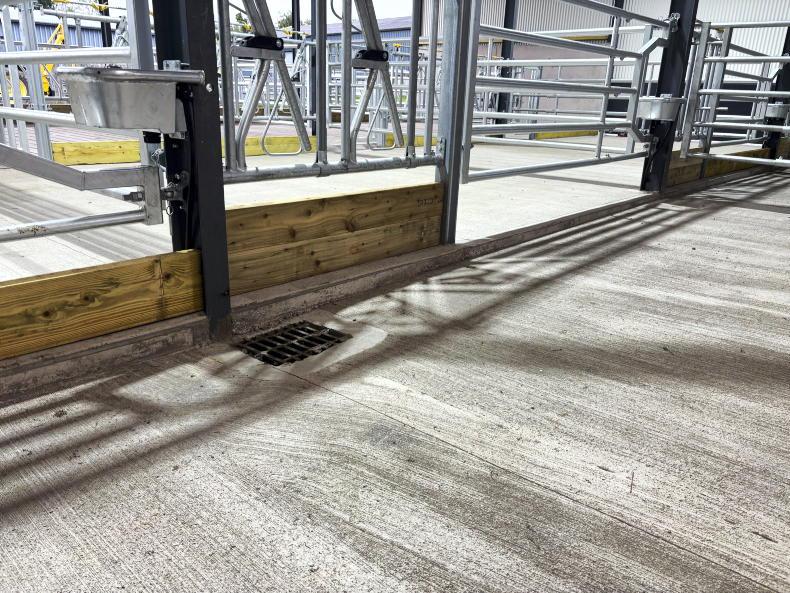
The creep area measures 15ft (4.57m) across and is serviced at either end by two sliding doors. The floor has been cambered to drain any effluent towards the slatted area, with the standard of concrete finish throughout exceptional. The dividing gates within the creep are removable, allowing this area to be used as a second feed passage if necessary.
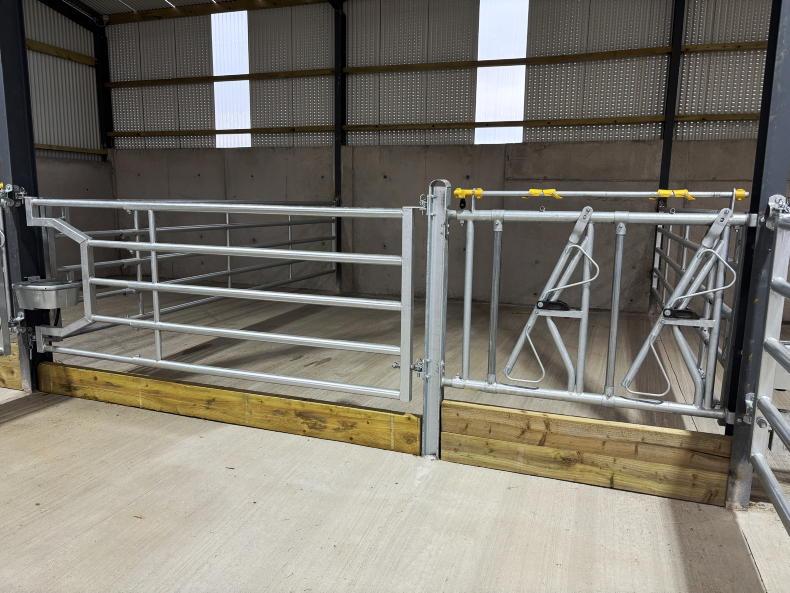
Along the back wall of the shed sits four calving pens. With embryo work being a core part of the pedigree herd, ample calving pens for recipient heifers all calving down at roughly the same time was a necessity. Each pen is fitted with its own water trough, while two locking spaces allow for an animal to be secured in place for any work to be completed safely. The floor of the calving pens has been sloped towards two manholes, with a manhole servicing two pens, with the floor level of the calving pens deliberately kept lower at the front to ensure any water from washing etc is diverted to these manholes as opposed to out towards the creep. This allows for a pen or an animal to be washed in one pen without any bedding from other pens becoming wet.
A calving gate is used to divide two of the pens at the lower end of the shed, again sourced from Condon Engineering. Shane noted that the extendable gate should make directing cows in to the headlock safer and less stressful for all. The first pen, which will primarily be used for any caesareans required, is serviced by a neat pedestrian door. Shane plans to install an IBC and a fire hose for washing down this area.
The design of the shed offers great flexibility. There will be times that a creep area directly in front of a calving pen is in use, but this will not often be the case and Shane plans to overcome this with creating a feed bunker in front of the locking barriers in the calving pens.
Other points of note
The shed sits at 13ft2in (4m) at the eaves, rising to 23ft10in at the top of the canopy, with Shane having desired an open and airy shed.
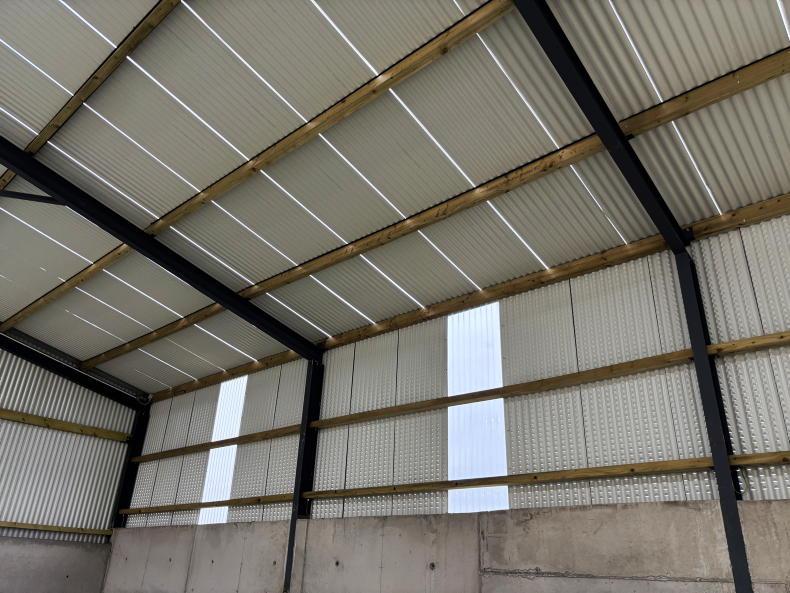
A 7ft (2.1m) shuttered wall sits along the back, with vented and clear sheeting used between it and the eaves.
Under the recommendation of Martin Fox, Shane opted to install space sheeting in the roof for increased air outlet space but still included a central outlet.
With all of this, there should be ample air flow in the shed to keep the prized herd healthy.
A 360° rotating calving camera has been installed alongside Wi-Fi, while LED lighting has been fitted throughout by Sean Duffy Electrical services.
The standard of work in the shed is exceptional, with a huge amount of thought gone in to the design by Shane himself being a winning combination.




SHARING OPTIONS