



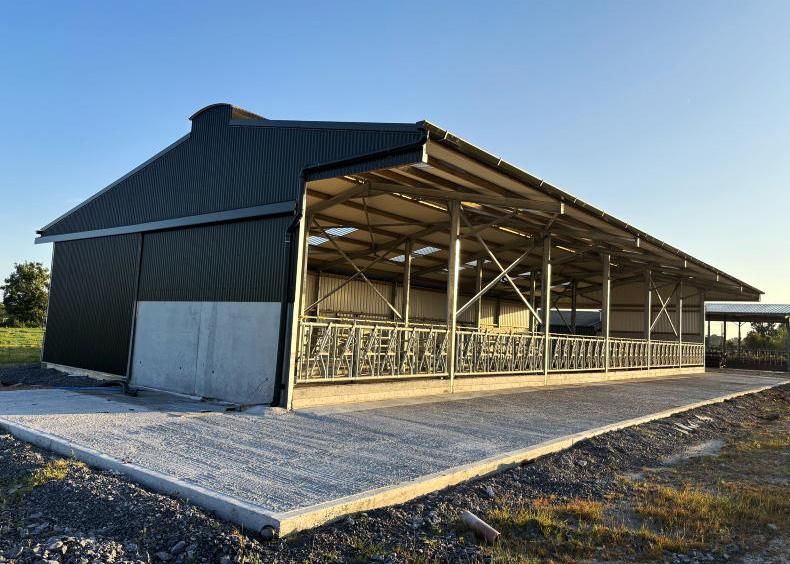
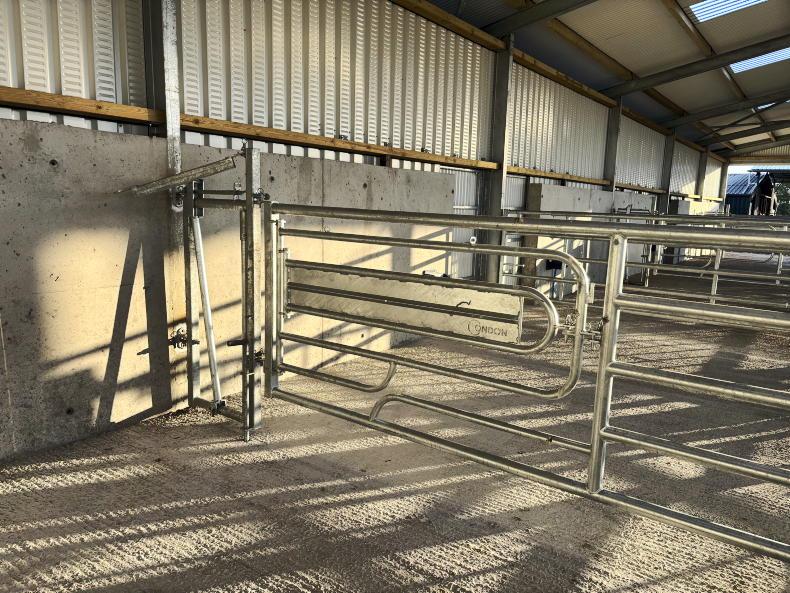
Astandard three-bay shed with a creep at the back is the most common size on a farm. It was great to feature something on a slightly larger scale, although remaining accessible to many, on a visit to James Donellan who keeps just over 40 cows outside the village of Barnaderg in Tuam, Co Galway.
‘’A number of years ago when weanling price was poor, we decided to start brining all our own stock through to beef and have been doing so since’’ explained James. Cow numbers have steadily crept up to where they currently sit.
With all progeny brought through to beef, there are three stock groups on the farm in the winter months; suckler cows (calving in spring), finishing animals and weanlings.
Finished cattle are killed out of the shed before two years of age around Christmas time. Pressure on accommodation means that weanlings are outwintered until cattle are slaughtered and space is freed up.
In addition to this, James has also been practising synchronisation on both cows and heifers to compact his calving, and while this works well from a labour point of view, it was putting pressure on older calving accommodation.
‘’Working full time off farm, it was a quick turn around for calving pens and trying to get them cleaned out and ready for the next cow’’ James explained.
With this in mind, James opted to construct a new slatted unit that would tick all his needs, with the project having just recently been completed.
James opted to go the TAMS route with the project, citing little to be saved money wise on materials and his wish to build a long lasting shed as to his reasoning for this.
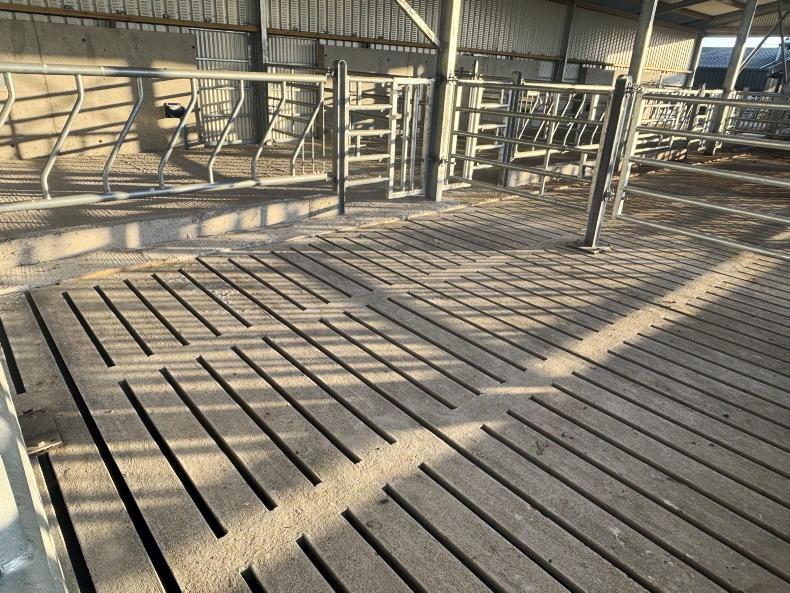
The project commenced in summer 2024, with the tank being dug out and poured then. Local man Declan McWalter of Blackstick Construction was responsible for the digging and groundwork in the project, with all concrete work completed by Colm Finnerty, Mountbellew. James had considered using a 16ft 6in slat for the additional storage, but ultimately opted for a 14ft 6in slat sourced from Banagher Concrete, Co Offaly.
The internal depth of the tank measures 2.43m, with internal width and length at 4.11m and 31.8m respectively. This gives James a total usable capacity of 287.54m2 (including freeboard).
This gives James 18 weeks of storage for 55 cows alone, not including what storage he has in other tanks.
All concrete work on the tank and shed was completed by Colm Finnerty, Mountbellew.
The main erection work on the shed began last summer, with the shed in partial use this spring. James lavished praise on Mike Cahill of Newbridge, Ballinasloe who supplied and fitted the frame of the building and sheeting.
‘’They came one day and erected all the steel work and one line of purlins. The next day they completed the roof sheeting and the third day they were fixing gutters, doors etc. They were highly efficient."
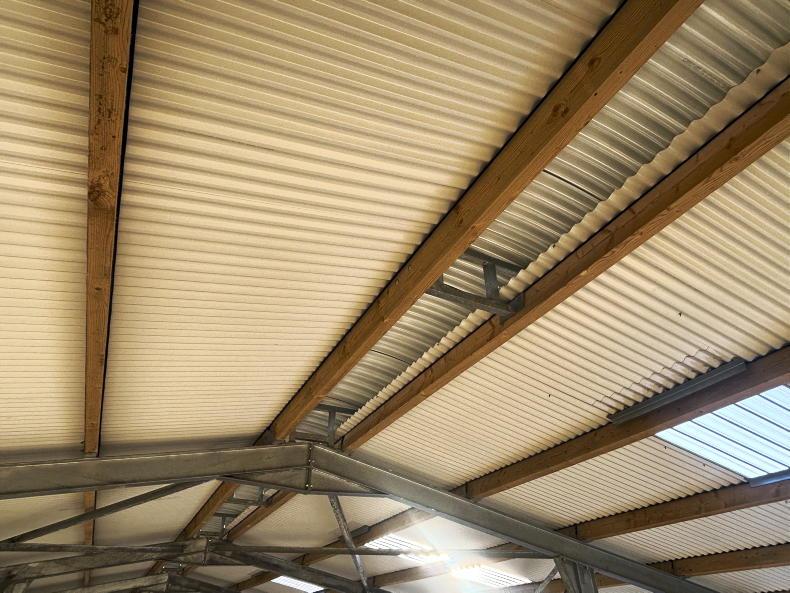
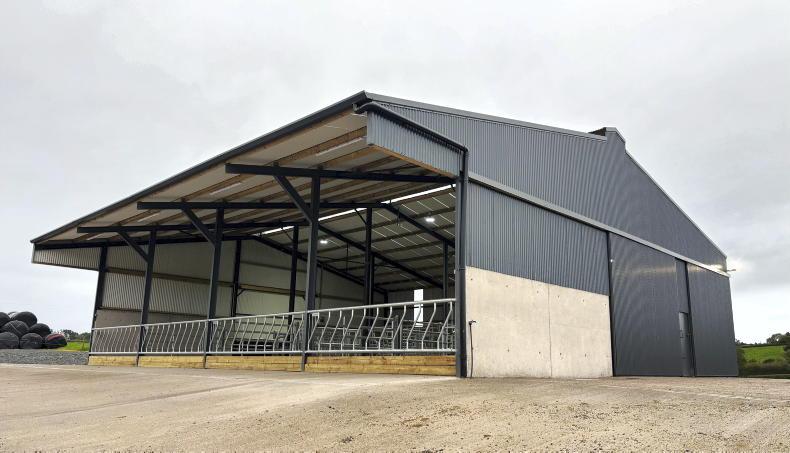
All structural steel was hot dip galvanised, with ample bracing placed in the roof structure as well. A total of 12 roof lights have been fitted throughout the shed, all supported by safety cages underneath. The longest side of the roof sits above the creep area and half the slatted area, with this being the southern facing side.
Angling the shed the way he has done so means that the feed face at the front of the shed is protected from the prevailing south westerly wind, while having the greatest roof area facing the south is a solid option should James wish to install solar panels in the future.
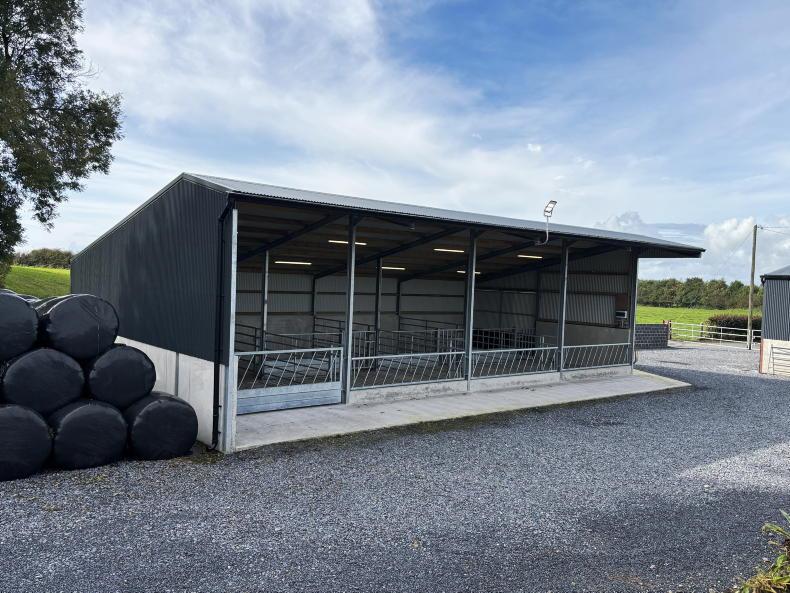
Vented sheeting has been fitted along the back wall of the shed, with a gap left in the sheeting between the stanchion and eaves as well for additional inlet spacing. An overhang of the eaves protects any ingress of water from getting in to the bedded creep area.
A tidy galvanised steel frame was fitted by Mike Cahill to allow for a curved sheet to protect a raised ridge outlet.
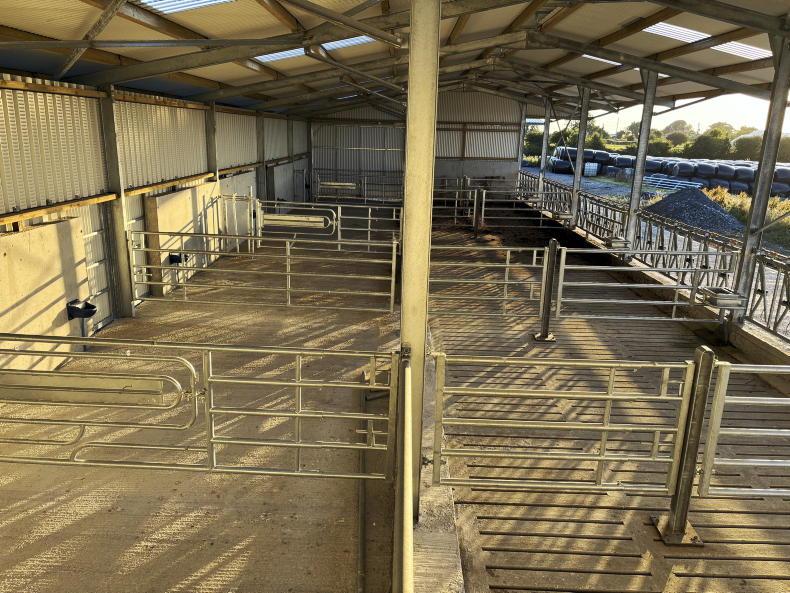
As mentioned, a 14ft 6in slat was used, with the total width of the slatted pens being 5m and the length being the standard 4.8m. This gives James a pen size of 24m2, meaning at the upper end of lying space requirements (3m2/suckler cow) James can fit eight cows per pen.
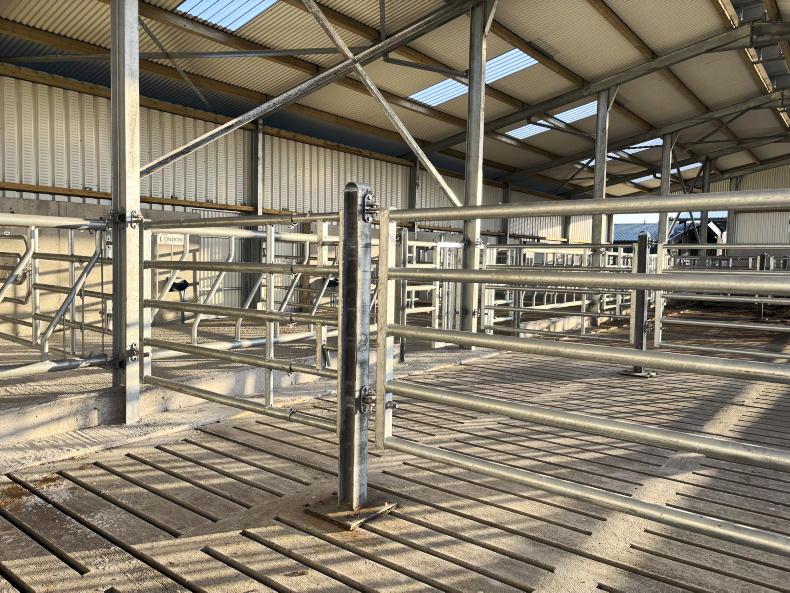
Self-locking barriers have been installed along the front feed space, limiting pen capacity to seven cows but is worthwhile in James’ eyes for the benefits they bring in handling cows for synchronisation, breeding and general treatment.
The feed face is covered over by a 2.7m overhang which is slightly wider than standard and should keep any feed dry. James intends on utilising the shed for the finished animals, offering concentrates along this front feed face in troughs, while a barrier between the slatted and dry area will allow forage to be fed out to animals here.
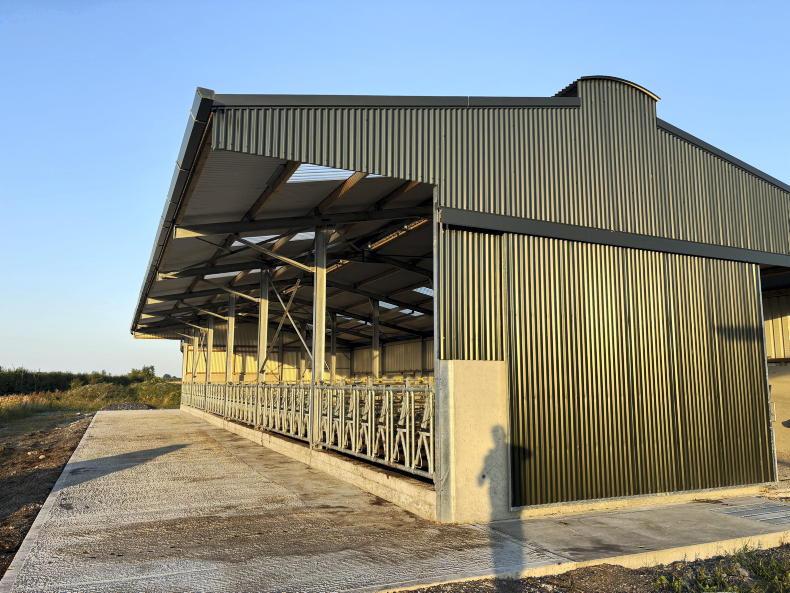
One of the stand out features of the shed for me is a very simple one; a split gate for dividing the slatted pens.
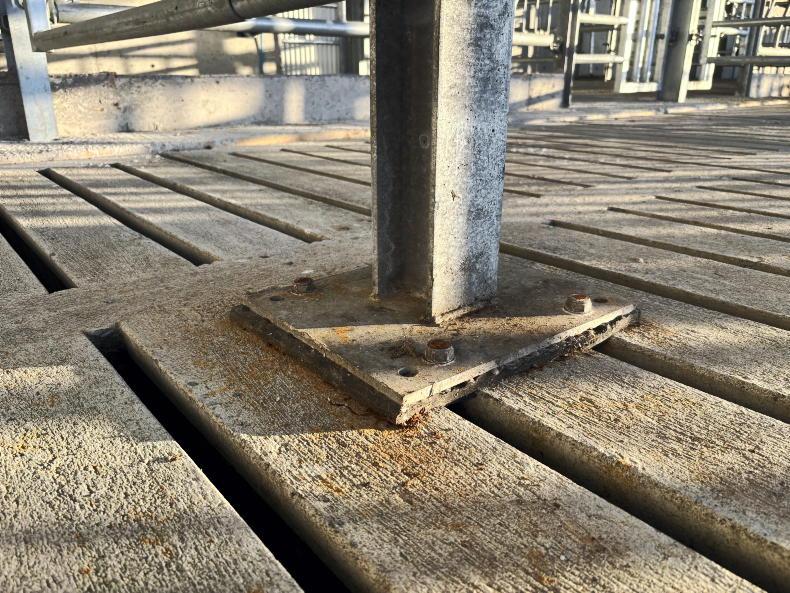
A 2m gate is the primary access for moving cattle between pens, with a central stanchion placed on the slats allowing it and a solid panel to be securely bolted in place. James and his Uncle Paddy Joe installed all the gates and barriers themselves, with James also cutting and placing rubber matting under the base plates for these central stanchions.
James’ use of family labour didn’t cease there, with wide Rola tasked with aiding installing water troughs and pipe work. All the barriers, gates and water troughs were sourced from Paddy Fitzgerald Agri Supplies, Shrule.
A 4.5m deep creep area is accessed through an adjustable creep gate. James has fitted a total of three calving gates in this area, meaning all pens have access to a creep gate, with this area intended as the main calving area in spring.
Each pen is also fitted with its own small sliding door.
This allows easy access to individual pens or allows calves access to a paddock if in batches.
James intends fitting a small removable barrier to each door space to allow for cows in individual pens to be fed from the safety of outside the shed, which I think will work superbly.
There is no crush or race within the creep area, with future plans being to hopefully create an outdoor one to the rear of the shed.
All costings are available in detail in tables 1 and 2.
Electrical work was being completed by Martin Mulry, Abbeyknockmoy, with James installing several calving cameras for spring 2027.
James was able to avail of a 60% grant on the tank thanks to the Young Farmers Capital Investment Scheme while availing of a 40% grant for the shed itself under the Animal Welfare and Nutrient Storage Scheme on the remaining ceiling of money.
Overall, it’s an extremely flexible shed that will tick all of James’ needs. As a young farmer with an off farm job, his enthusiasm is infectious and I thank him for allowing the Irish Farmers Journal to profile the shed and wish him many happy years of use.



SHARING OPTIONS