Labour is an increasing problem on Irish farms, but a recent study trip to Italy with Lely Centre Mullingar and Kilkenny proved that the problem is not unique to ourselves, but is seen right across the continent. A mixture of beef and dairy farmers from throughout Ireland were in attendance for the three-day study trip, visiting farms in the north of Italy around the Verona area.
The first farm visited was the Urbani Azienda Agricola (Urban Agricultural Business). A total of 300 Charolais bulls are present at any one time on farm, sourced from France as weanlings at 400kg and brought though to beef on a fully indoor system.
An additional unit owned by the company holds 400 beef animals of the same breeds and weights. On the farm the group visited, 1,200 animals are finished each year, with 40-50 bulls drafted for slaughter being replaced by weanlings on a weekly basis.
One-hundred hectares of land is owned by the farm, with 15ha of forestry and 85ha for crops. Maize silage is the primary feed, with two types of maize silage used. The first is conventional maize that we would be accustomed to in Ireland, where the entire plant is chopped and pitted, while the second ‘silage’ type is where the Italians harvest the maize as corn meal, crush it and pit it.
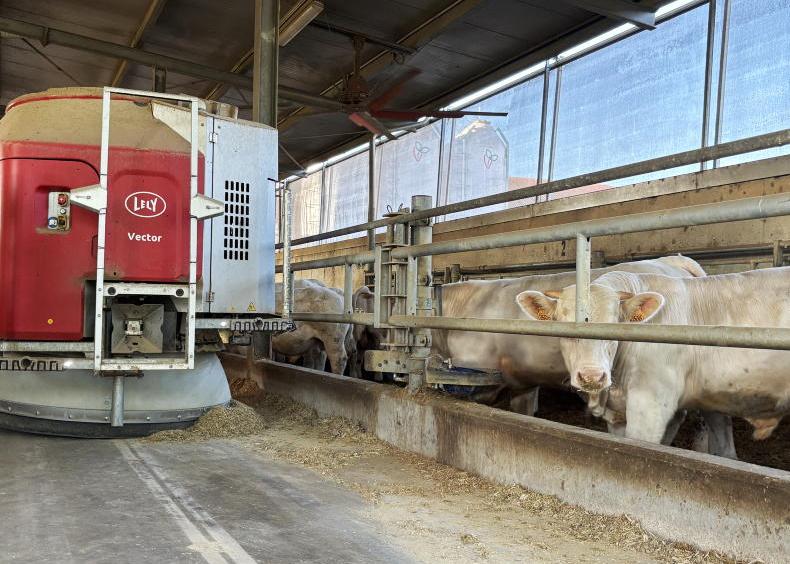
The Lely Vector system was installed on farm in 2025, the machine being the third generation of the automatic feeding system. The Urbani farm uses a TMR of both types of maize silage listed above, chopped straw, soya, sugar beet pulp and distiller’s ration. It is important to note that the Vector system does not chop any feed that goes in to it, with long fibre sources having to be chopped beforehand if included in the diet.
Feeding of the 300 bulls is based off a dry matter intake of 10kg DM/head on average across all weight bands; 400kg weanlings arriving on farm are typically consuming 8.5kg DM/head/day, while 600kg to 700kg animals are consuming 12kg DM/head/day.
The target of the farm is to turn out these 400kg bull weanlings into 750kg finished bulls in six to seven months, which would give an average daily gain in the region of 1.66-2kg daily liveweight gain (DLWG), with a target that all bulls hit a minimum of 1.5kg of a DLWG.
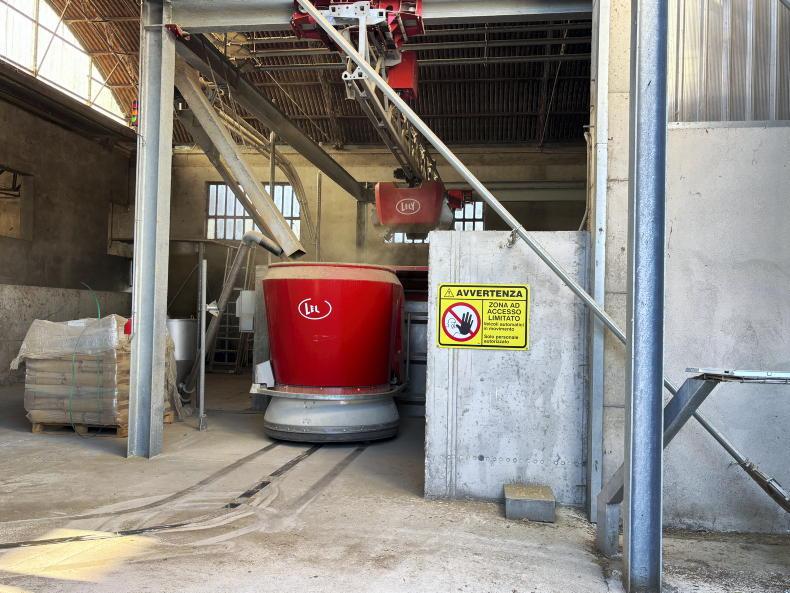
The Lely Vector being filled. Note the feed pipes above the Vector which deposit concentrates and minerals in to the tub.
Weanling bulls generally lose 20kg (5%) of body weight on the trip from France, while a maximum of 2% bodyweight is lost in transit to the factory – 400km from the farm. Weanlings are fed a ‘conditioning’ TMR for one week post arrival on farm, with the same TMR feed given from week two up to slaughter with the thinking behind this being to increase the fat score on the highly muscled Charolais bulls. Typical protein percentage of this feed is 13-14%.
Killout percentages of the Charolais bulls being slaughtered was typically 62-63%, grading an ‘S’, a grade higher than the standard E we would be accustomed to in Ireland, with S being linked to double muscled animals.
When questioned by farmers about the prevalence of Irish-born weanlings on Italian farms, the owner who themselves is a leading importer for French-bred cattle for other farmers highlighted the demand from Italian supermarkets for French born cattle with packaging labelled “born in France, fed in Italy, slaughtered in Italy’’ being what Italian consumers wanted.
Currently, weanlings are being purchased at a €5.40.kg liveweight, selling for the equivalent of €4.50/kg after 190-200 days of feeding.
Like many of the farms that opt for a Vector system, a feed wagon had been in used until converting over to an automatic feeding system. The previous time taken to feed animals was 14 hours weekly (two hours daily).
Now, the kitchen, which stores all the forage and some of the loose grain in the diet, is filled twice weekly taking an hour and a half each time, reducing the labour associated with feeding by 78%.
The vast majority of feed kitchens are filled twice daily for two reasons; firstly to keep feed fresh and secondly due to size limitations.
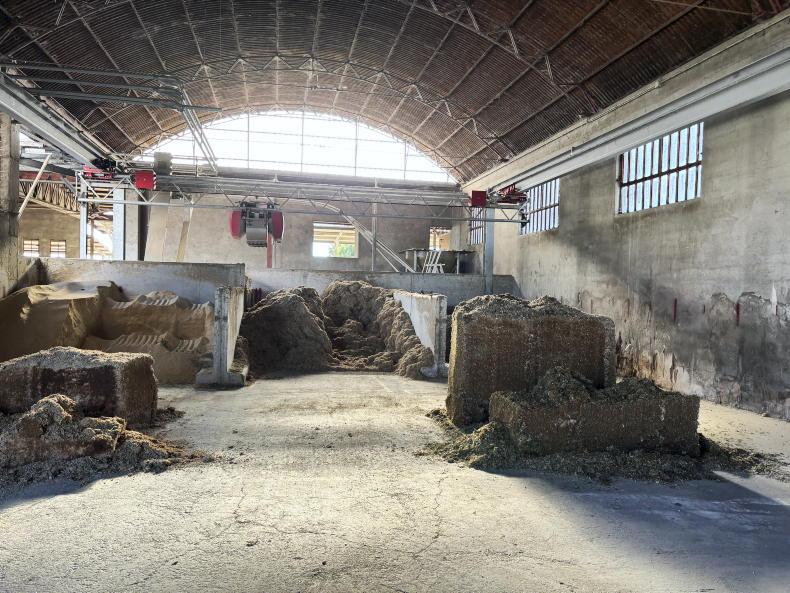
The kitchen located on farm was installed in an existing shed, with a gantry system installed using RSJs for the feed grabber.
The way the grabber works is that it automatically moves to the right block of silage or feed needed. The feed grabber scans the height of the feed with a laser to grab from the highest point.
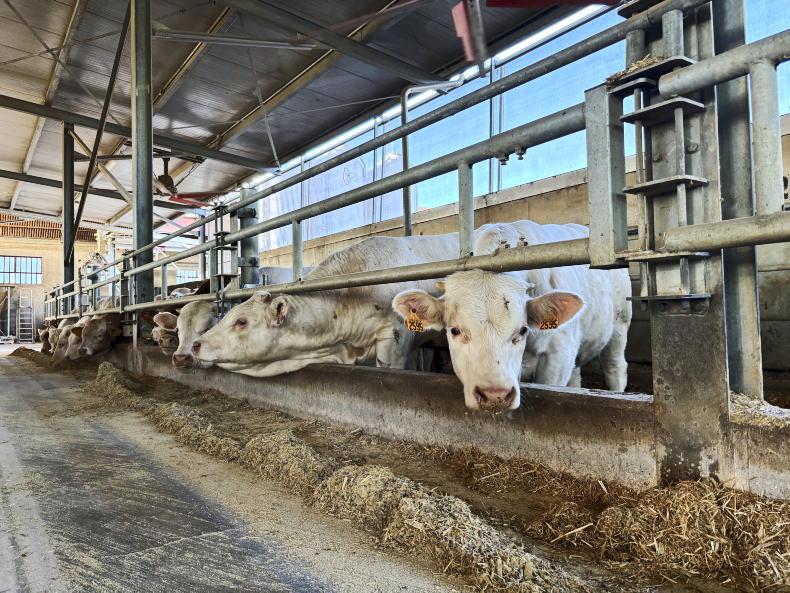
Weanlings are fed a transitional diet for a week post arrival and then move on to a TMR the same as is fed to finishing bulls.
Self-learning management software helps the grabber determine the depth the feed grabber needs extend to pick up the desired weight, through a resistor in the arm of the grabber linking with the weight of the feed being deposited in to the Vector feed tub.
The feed grabber loads the different types of feed into the mixing and feeding robot by taking small quantities from the highest point of the feed blocks, so that the blocks remain compacted and fresh. Concentrates can also be fed in to the Vector through an auger system linked up to a vertical meal bin, while minerals and molasses/water can also be added.
Feed is distributed eight to nine times a day to all pens, feeding just over 1kg DM/head in each feed on this farm.
A laser in the Vector establishes the feed height in front of animals, and will either push up existing feed that is there or will distribute fresh feed that has been formulated in the kitchen.
This height is adjustable at farm level, meaning the farmer can pre-set the height at which they want fresh feed to be distributed.
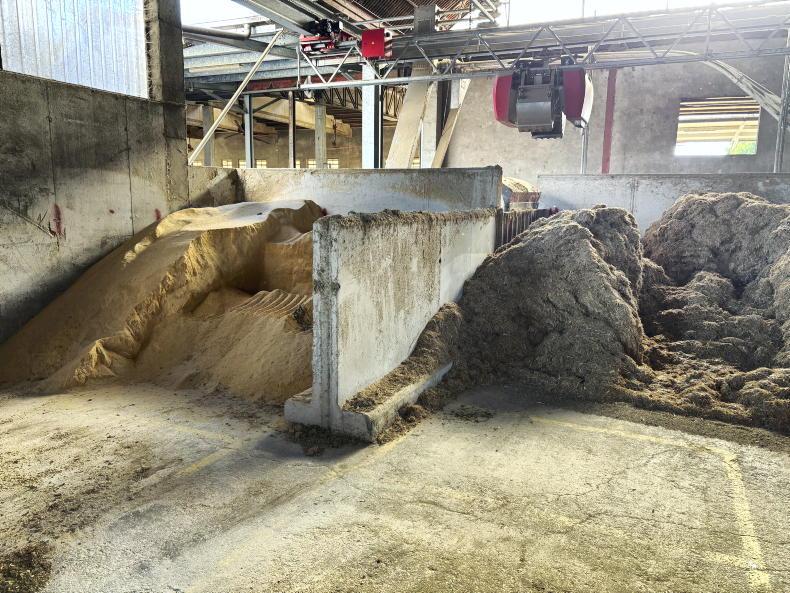
Feed in the kitchen. Soya on the left and straw on the right.
Since switching to the Vector system, the farmer reported increased rumination in his cattle, while even with 15 strangers in the shed, bulls were full and content and passed little heed.
Reduced selection in feed was also highlighted as one of the benefits of the system, while lighter or more timid animals were also accessing the same feed compositions due to the more frequent feeding.
Certainly, the animals on farm were extremely even on a pen per pen basis.
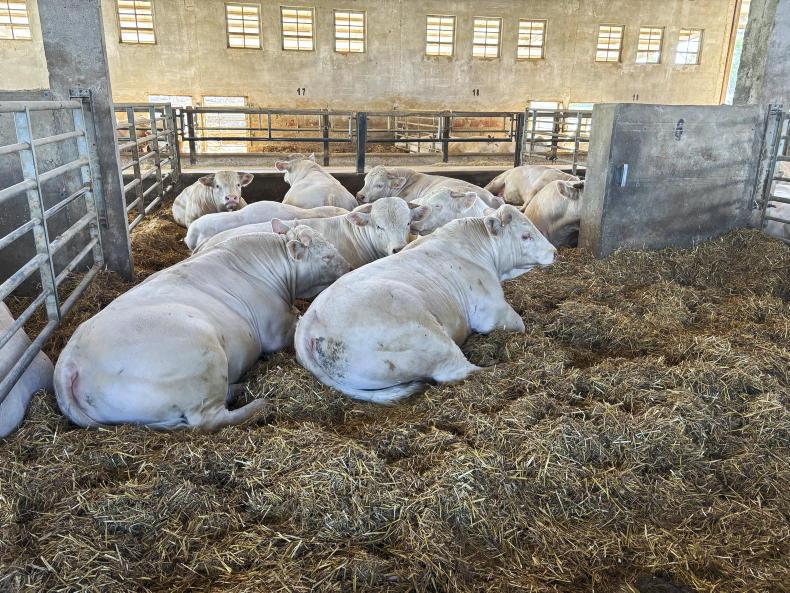
Bulls were batched according to weight and age, with bulls of all weights from 400kg freshly arrived weanlings to bulls tipping thee scales over 700kg due to head for slaughter. All the bulls were housed on a deep bed of straw, with animals notably clean and comfortable.
Straw is topped up every three days, while a full cleanout of pens is completed every 20 days or so. Due to the high dry matter in the diet and the warm weather, bedding stays relatively dry and clean. Spent bedding is stored for spreading on the crop land used to feed the system.
There were a series of ‘railway crossing’ gates which lifted up and out of the way, but could be moved down across a passageway to allow for the movement of animals from one side of the shed to the other.
Opinion: automation likely to be an ever-increasing feature
Automation in farming is often linked to precision ag in tillage or automatic milking or calf rearing systems in dairy herds.
The question on many of the beef farmers minds who were on the trip was if a Vector system could work for them.
We looked at four farms in total; two dairy and two beef, with a variety of Lely automated systems working on each including the Vector system. Discussion amongst the farmers pointed at the increasing cost and difficulty of sourcing labour on farms, as well as machinery purchase and maintenance costs.
If you were like the farmer above and were spending two hours each day feeding and could cut this down to an hour and a half twice weekly, I think your ears would prick up. Is it for the majority of farmers? No, but it will be of interest to those feeding large numbers of stock and who might be interested in tailor level feeding.
There are over 20 Vector systems in Ireland at the moment, and I can see them becoming more commonplace as time moves on.
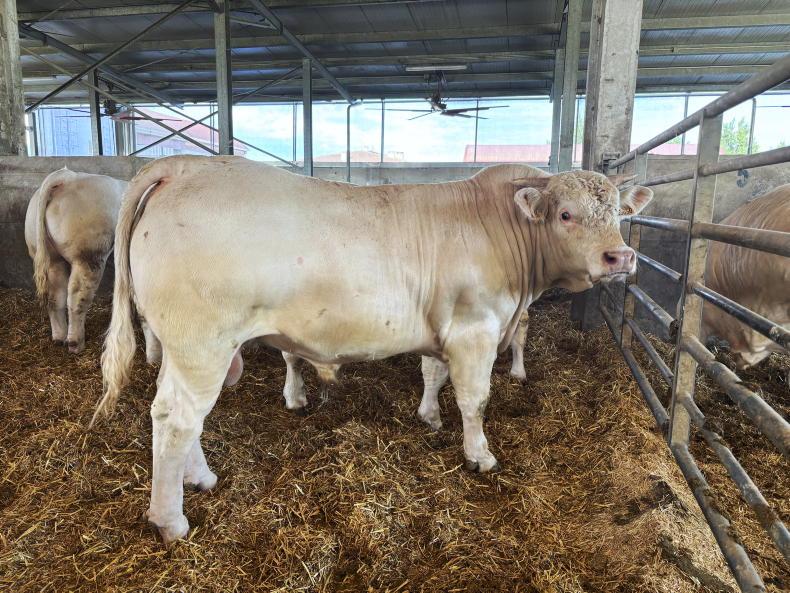
An example of one of the bulls on farm which would be drafted for slaughter soon.

All cattle on farm are purchased from France as weanlings weighing 400kg liveweight.

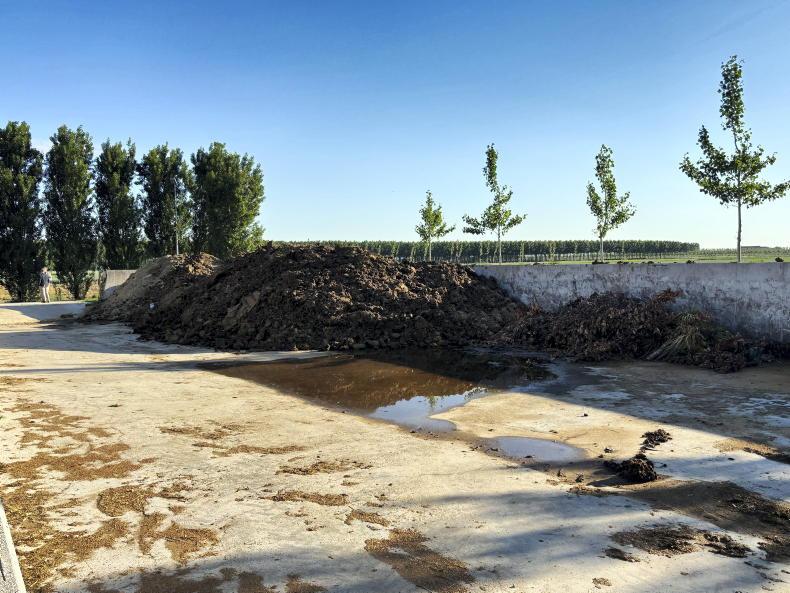
Cattle are cleaned out every 20 days and the dung stored before spreading on crop land that produces feed for the finishing cattle.

Bulls were extremely well feed and relaxed in a deep bed of straw.

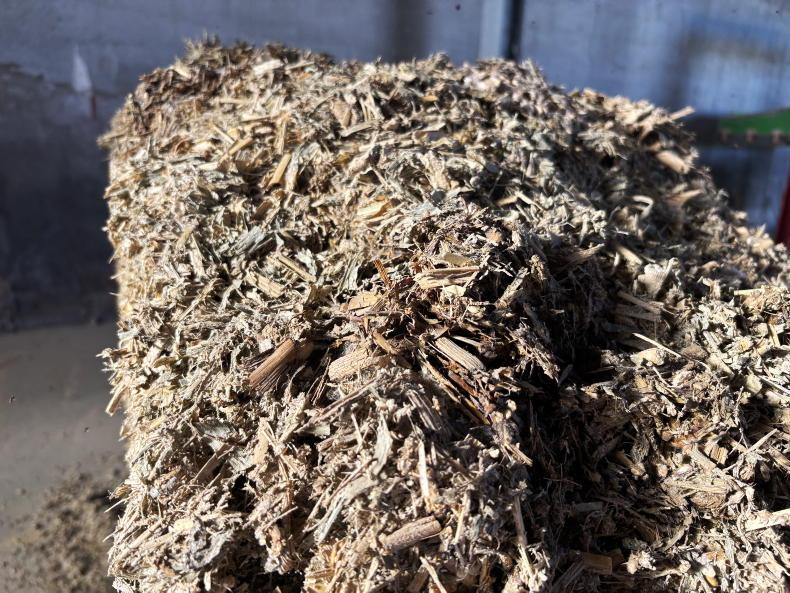
Maize silage forms much of the diet of the finishing bulls and is produced on farm.

The feed kitchen on farm, with five different dry feeds combined with additional concentrates and minerals.
Labour is an increasing problem on Irish farms, but a recent study trip to Italy with Lely Centre Mullingar and Kilkenny proved that the problem is not unique to ourselves, but is seen right across the continent. A mixture of beef and dairy farmers from throughout Ireland were in attendance for the three-day study trip, visiting farms in the north of Italy around the Verona area.
The first farm visited was the Urbani Azienda Agricola (Urban Agricultural Business). A total of 300 Charolais bulls are present at any one time on farm, sourced from France as weanlings at 400kg and brought though to beef on a fully indoor system.
An additional unit owned by the company holds 400 beef animals of the same breeds and weights. On the farm the group visited, 1,200 animals are finished each year, with 40-50 bulls drafted for slaughter being replaced by weanlings on a weekly basis.
One-hundred hectares of land is owned by the farm, with 15ha of forestry and 85ha for crops. Maize silage is the primary feed, with two types of maize silage used. The first is conventional maize that we would be accustomed to in Ireland, where the entire plant is chopped and pitted, while the second ‘silage’ type is where the Italians harvest the maize as corn meal, crush it and pit it.
The Lely Vector system was installed on farm in 2025, the machine being the third generation of the automatic feeding system. The Urbani farm uses a TMR of both types of maize silage listed above, chopped straw, soya, sugar beet pulp and distiller’s ration. It is important to note that the Vector system does not chop any feed that goes in to it, with long fibre sources having to be chopped beforehand if included in the diet.
Feeding of the 300 bulls is based off a dry matter intake of 10kg DM/head on average across all weight bands; 400kg weanlings arriving on farm are typically consuming 8.5kg DM/head/day, while 600kg to 700kg animals are consuming 12kg DM/head/day.
The target of the farm is to turn out these 400kg bull weanlings into 750kg finished bulls in six to seven months, which would give an average daily gain in the region of 1.66-2kg daily liveweight gain (DLWG), with a target that all bulls hit a minimum of 1.5kg of a DLWG.

The Lely Vector being filled. Note the feed pipes above the Vector which deposit concentrates and minerals in to the tub.
Weanling bulls generally lose 20kg (5%) of body weight on the trip from France, while a maximum of 2% bodyweight is lost in transit to the factory – 400km from the farm. Weanlings are fed a ‘conditioning’ TMR for one week post arrival on farm, with the same TMR feed given from week two up to slaughter with the thinking behind this being to increase the fat score on the highly muscled Charolais bulls. Typical protein percentage of this feed is 13-14%.
Killout percentages of the Charolais bulls being slaughtered was typically 62-63%, grading an ‘S’, a grade higher than the standard E we would be accustomed to in Ireland, with S being linked to double muscled animals.
When questioned by farmers about the prevalence of Irish-born weanlings on Italian farms, the owner who themselves is a leading importer for French-bred cattle for other farmers highlighted the demand from Italian supermarkets for French born cattle with packaging labelled “born in France, fed in Italy, slaughtered in Italy’’ being what Italian consumers wanted.
Currently, weanlings are being purchased at a €5.40.kg liveweight, selling for the equivalent of €4.50/kg after 190-200 days of feeding.
Like many of the farms that opt for a Vector system, a feed wagon had been in used until converting over to an automatic feeding system. The previous time taken to feed animals was 14 hours weekly (two hours daily).
Now, the kitchen, which stores all the forage and some of the loose grain in the diet, is filled twice weekly taking an hour and a half each time, reducing the labour associated with feeding by 78%.
The vast majority of feed kitchens are filled twice daily for two reasons; firstly to keep feed fresh and secondly due to size limitations.
The kitchen located on farm was installed in an existing shed, with a gantry system installed using RSJs for the feed grabber.
The way the grabber works is that it automatically moves to the right block of silage or feed needed. The feed grabber scans the height of the feed with a laser to grab from the highest point.

Weanlings are fed a transitional diet for a week post arrival and then move on to a TMR the same as is fed to finishing bulls.
Self-learning management software helps the grabber determine the depth the feed grabber needs extend to pick up the desired weight, through a resistor in the arm of the grabber linking with the weight of the feed being deposited in to the Vector feed tub.
The feed grabber loads the different types of feed into the mixing and feeding robot by taking small quantities from the highest point of the feed blocks, so that the blocks remain compacted and fresh. Concentrates can also be fed in to the Vector through an auger system linked up to a vertical meal bin, while minerals and molasses/water can also be added.
Feed is distributed eight to nine times a day to all pens, feeding just over 1kg DM/head in each feed on this farm.
A laser in the Vector establishes the feed height in front of animals, and will either push up existing feed that is there or will distribute fresh feed that has been formulated in the kitchen.
This height is adjustable at farm level, meaning the farmer can pre-set the height at which they want fresh feed to be distributed.

Feed in the kitchen. Soya on the left and straw on the right.
Since switching to the Vector system, the farmer reported increased rumination in his cattle, while even with 15 strangers in the shed, bulls were full and content and passed little heed.
Reduced selection in feed was also highlighted as one of the benefits of the system, while lighter or more timid animals were also accessing the same feed compositions due to the more frequent feeding.
Certainly, the animals on farm were extremely even on a pen per pen basis.
Bulls were batched according to weight and age, with bulls of all weights from 400kg freshly arrived weanlings to bulls tipping thee scales over 700kg due to head for slaughter. All the bulls were housed on a deep bed of straw, with animals notably clean and comfortable.
Straw is topped up every three days, while a full cleanout of pens is completed every 20 days or so. Due to the high dry matter in the diet and the warm weather, bedding stays relatively dry and clean. Spent bedding is stored for spreading on the crop land used to feed the system.
There were a series of ‘railway crossing’ gates which lifted up and out of the way, but could be moved down across a passageway to allow for the movement of animals from one side of the shed to the other.
Opinion: automation likely to be an ever-increasing feature
Automation in farming is often linked to precision ag in tillage or automatic milking or calf rearing systems in dairy herds.
The question on many of the beef farmers minds who were on the trip was if a Vector system could work for them.
We looked at four farms in total; two dairy and two beef, with a variety of Lely automated systems working on each including the Vector system. Discussion amongst the farmers pointed at the increasing cost and difficulty of sourcing labour on farms, as well as machinery purchase and maintenance costs.
If you were like the farmer above and were spending two hours each day feeding and could cut this down to an hour and a half twice weekly, I think your ears would prick up. Is it for the majority of farmers? No, but it will be of interest to those feeding large numbers of stock and who might be interested in tailor level feeding.
There are over 20 Vector systems in Ireland at the moment, and I can see them becoming more commonplace as time moves on.
An example of one of the bulls on farm which would be drafted for slaughter soon.

All cattle on farm are purchased from France as weanlings weighing 400kg liveweight.

Cattle are cleaned out every 20 days and the dung stored before spreading on crop land that produces feed for the finishing cattle.

Bulls were extremely well feed and relaxed in a deep bed of straw.

Maize silage forms much of the diet of the finishing bulls and is produced on farm.

The feed kitchen on farm, with five different dry feeds combined with additional concentrates and minerals.
SHARING OPTIONS