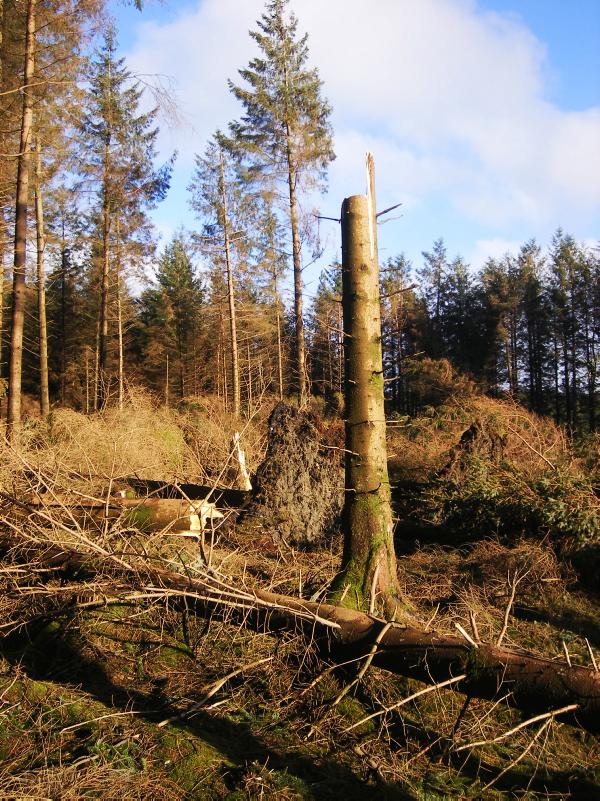
The Windblow Taskforce has issued a plan to co-ordinate a response to the forest damage caused by last month’s storm. While work continues in compiling data for area and volume of timber blown, a Department spokesperson said: “Initial estimates put the area blown at less than 1% of the total forest area but, locally, damage has been severe.”
The taskforce, chaired by Tom Hayes, Minister of State with responsibility for forestry, is:
Estimating the area, volume and extent of the damage. Making recommendations to address issues, arising from the windblow. Making recommendations for the orderly removal of windblown timber.For forest owners who have experienced windblow, the most important advice from the taskforce is not to rush into decisions but to make a step-by-step plan to minimise risk and maximise the salvage value of your plantation.
Most forests, despite being blown, can have considerable timber value.
Advice
Seek advice which is available from your local Teagasc forestry adviser and from registered foresters and forestry companies. Few owners are equipped to deal with windblow on their own as it is a complex issue, involving timber sale and harvesting and possible roading, followed by site preparation and replanting. This involves input not only from professional foresters, but also contractors involved in harvesting, road construction (if required) and eventual ground preparation and planting.
Some plantation owners may have insurance cover, especially those with forests under 20 years of age. If your plantation is insured for windblow, you should have contacted your insurance company by now so that the damage can be assessed.
The following 10 steps will assist forest owners in planning the removal of windblown timber and eventual replanting:
Assessment
1 Windblown area needs to be assessed to estimate timber volume and likely value of the felled crop. In addition, assess the adjacent area not blown, taking account of factors such as age, area and risk of future windblow. Then decide on whether it is best to retain this area and allow it to grow on to normal clearfell age or to harvest it together with the area blown to avoid further windblow in the future.
Felling licence approval
2 Although your forest may be blown, you still need to apply for felling licence from the Forest Service before harvesting the windblown timber and potentially any adjacent trees that may be at risk in the future. Plans are in place to speed up felling licence approval. You should mark your application ‘Storm Damage’ to allow it to be prioritised by the Forest Service. If there is an existing licence for the land, specify the licence number in your new felling licence application. Ensure that the felling licence is signed by the landowner and that replanting species are included.
Forest access
3 Many blown crops will have adequate forest roads but access may be an issue in younger unthinned crops not yet roaded. Where necessary, apply for a roading grant from the Forest Service.
Applications should be submitted before the end of this month and can be made through a registered forester on the approved Forest Service list.
Health and safety
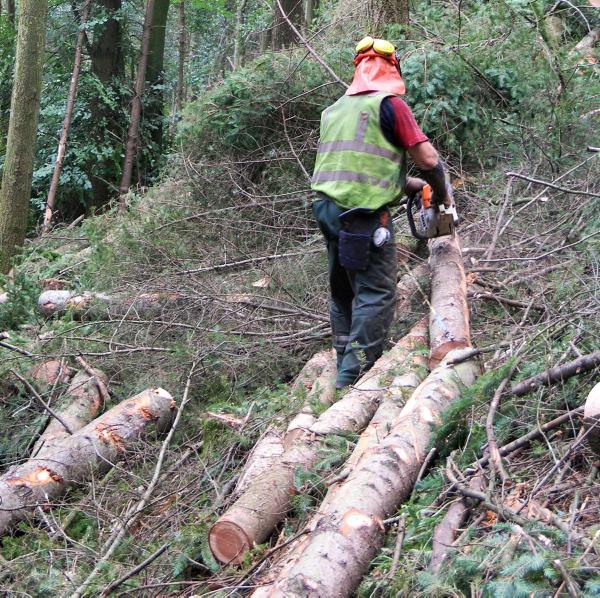
4 A windblown forest is an extremely dangerous working environment, especially for chainsaw operators as we pointed out last week, but the warning is worth repeating. Only qualified and insured operators should be permitted access to windblown forests.
All parties have legal obligations when carrying out forestry operations under the Health & Safety at Work Act 1989. Under the act, there is an obligation on landowners to gather information about site hazards and to produce a site risk assessment together with a site hazards map.
Timber harvesting & sales
5 Market the windblown timber and get professional advice on current prices as this may be the last source of revenue from the blown forest for many years with no premium payments to cushion the cost of replanting and maintenance. Consider joining a group of forest owners to sell timber, which will provide scale and efficiency.
This should reduce costs, thereby maximising salvage value.
Larger timber lots are more attractive to buyers and this co-ordinated approach will also speed up the removal of windblown timber.
Contracts
6 Have a strong timber sales contract in place to protect the interests of all parties and to ensure compliance with environmental issues, felling licence approval, health and safety, indemnity, insurance, agreed harvesting procedures, timber prices, duration of contract, arbitration provisions, relevant maps, removal schedules and other requirements.
A forestry professional should be able to provide you with such a contract or the Template Master Tree Sales Agreement produced by the Irish Timber Growers Association (ITGA) should be consulted.
Security
7 A high volume of timber will be removed from windblown forests over the coming months, so it is vital that owners and purchasers ensure it ends up in the mill or timber yard of the buyer.
Control the movement of timber from your site using a timber sales dispatch system for security and accountability. Again, a forestry professional will provide this or see the ITGA Model Timber Sales Dispatch System.
Supervision
8 Continuous supervision and monitoring of the sale and harvesting operations will ensure that you are complying with best practice and the provisions of the felling licence.
Records
9 Close off the sale making sure all timber is accounted for and paid for and ensure that proper records are kept to satisfy a range of obligations relating to tax, health and safety, environment, water quality and landscape issues.
Replanting
10 The harvesting and extraction plan should also take into account ground preparation and replanting, which is a legal obligation after felling. A badly planned and implemented harvesting operation, resulting in ground damage, will increase the replanting cost and decrease the ability of your forest to recover quickly.
Recommendations
These steps will help forest owners to optimise revenue from windblow. In productive blown areas, this approach will provide sufficient revenue to replant the cleared area and reserves to at least partly fund the non-productive period of the second rotation crop. But there are reports of damaged plantations where revenue from windblow harvest will be insufficient to cover losses. The Forest Service needs to issue a statement about the reopening of the reconstitution grant for forest owners who have suffered severe financial losses as a result of the storm.
The Windblow Taskforce has issued a plan to co-ordinate a response to the forest damage caused by last month’s storm. While work continues in compiling data for area and volume of timber blown, a Department spokesperson said: “Initial estimates put the area blown at less than 1% of the total forest area but, locally, damage has been severe.”
The taskforce, chaired by Tom Hayes, Minister of State with responsibility for forestry, is:
Estimating the area, volume and extent of the damage. Making recommendations to address issues, arising from the windblow. Making recommendations for the orderly removal of windblown timber.For forest owners who have experienced windblow, the most important advice from the taskforce is not to rush into decisions but to make a step-by-step plan to minimise risk and maximise the salvage value of your plantation.
Most forests, despite being blown, can have considerable timber value.
Advice
Seek advice which is available from your local Teagasc forestry adviser and from registered foresters and forestry companies. Few owners are equipped to deal with windblow on their own as it is a complex issue, involving timber sale and harvesting and possible roading, followed by site preparation and replanting. This involves input not only from professional foresters, but also contractors involved in harvesting, road construction (if required) and eventual ground preparation and planting.
Some plantation owners may have insurance cover, especially those with forests under 20 years of age. If your plantation is insured for windblow, you should have contacted your insurance company by now so that the damage can be assessed.
The following 10 steps will assist forest owners in planning the removal of windblown timber and eventual replanting:
Assessment
1 Windblown area needs to be assessed to estimate timber volume and likely value of the felled crop. In addition, assess the adjacent area not blown, taking account of factors such as age, area and risk of future windblow. Then decide on whether it is best to retain this area and allow it to grow on to normal clearfell age or to harvest it together with the area blown to avoid further windblow in the future.
Felling licence approval
2 Although your forest may be blown, you still need to apply for felling licence from the Forest Service before harvesting the windblown timber and potentially any adjacent trees that may be at risk in the future. Plans are in place to speed up felling licence approval. You should mark your application ‘Storm Damage’ to allow it to be prioritised by the Forest Service. If there is an existing licence for the land, specify the licence number in your new felling licence application. Ensure that the felling licence is signed by the landowner and that replanting species are included.
Forest access
3 Many blown crops will have adequate forest roads but access may be an issue in younger unthinned crops not yet roaded. Where necessary, apply for a roading grant from the Forest Service.
Applications should be submitted before the end of this month and can be made through a registered forester on the approved Forest Service list.
Health and safety
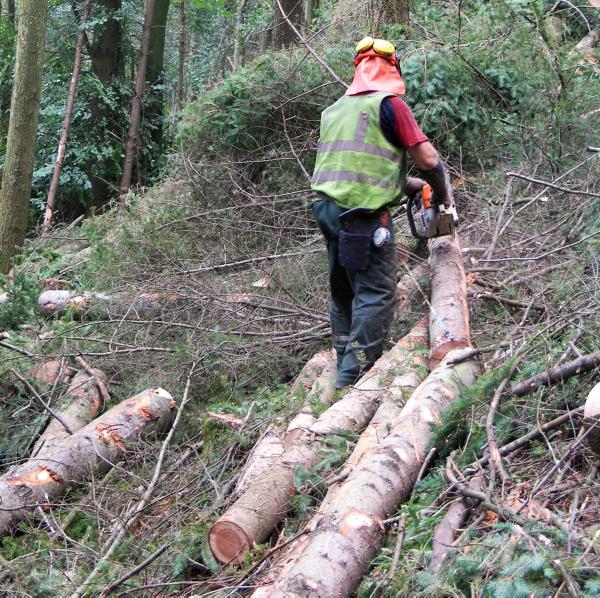
4 A windblown forest is an extremely dangerous working environment, especially for chainsaw operators as we pointed out last week, but the warning is worth repeating. Only qualified and insured operators should be permitted access to windblown forests.
All parties have legal obligations when carrying out forestry operations under the Health & Safety at Work Act 1989. Under the act, there is an obligation on landowners to gather information about site hazards and to produce a site risk assessment together with a site hazards map.
Timber harvesting & sales
5 Market the windblown timber and get professional advice on current prices as this may be the last source of revenue from the blown forest for many years with no premium payments to cushion the cost of replanting and maintenance. Consider joining a group of forest owners to sell timber, which will provide scale and efficiency.
This should reduce costs, thereby maximising salvage value.
Larger timber lots are more attractive to buyers and this co-ordinated approach will also speed up the removal of windblown timber.
Contracts
6 Have a strong timber sales contract in place to protect the interests of all parties and to ensure compliance with environmental issues, felling licence approval, health and safety, indemnity, insurance, agreed harvesting procedures, timber prices, duration of contract, arbitration provisions, relevant maps, removal schedules and other requirements.
A forestry professional should be able to provide you with such a contract or the Template Master Tree Sales Agreement produced by the Irish Timber Growers Association (ITGA) should be consulted.
Security
7 A high volume of timber will be removed from windblown forests over the coming months, so it is vital that owners and purchasers ensure it ends up in the mill or timber yard of the buyer.
Control the movement of timber from your site using a timber sales dispatch system for security and accountability. Again, a forestry professional will provide this or see the ITGA Model Timber Sales Dispatch System.
Supervision
8 Continuous supervision and monitoring of the sale and harvesting operations will ensure that you are complying with best practice and the provisions of the felling licence.
Records
9 Close off the sale making sure all timber is accounted for and paid for and ensure that proper records are kept to satisfy a range of obligations relating to tax, health and safety, environment, water quality and landscape issues.
Replanting
10 The harvesting and extraction plan should also take into account ground preparation and replanting, which is a legal obligation after felling. A badly planned and implemented harvesting operation, resulting in ground damage, will increase the replanting cost and decrease the ability of your forest to recover quickly.
Recommendations
These steps will help forest owners to optimise revenue from windblow. In productive blown areas, this approach will provide sufficient revenue to replant the cleared area and reserves to at least partly fund the non-productive period of the second rotation crop. But there are reports of damaged plantations where revenue from windblow harvest will be insufficient to cover losses. The Forest Service needs to issue a statement about the reopening of the reconstitution grant for forest owners who have suffered severe financial losses as a result of the storm.









SHARING OPTIONS