



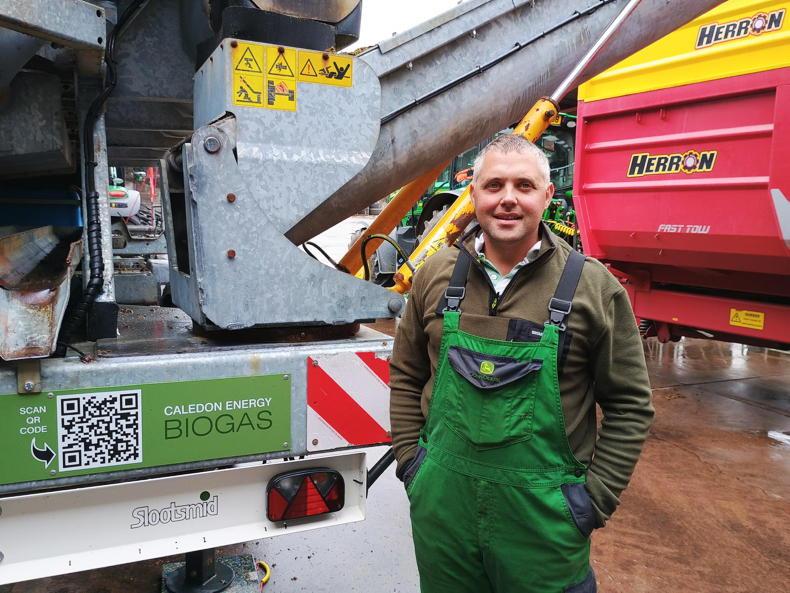
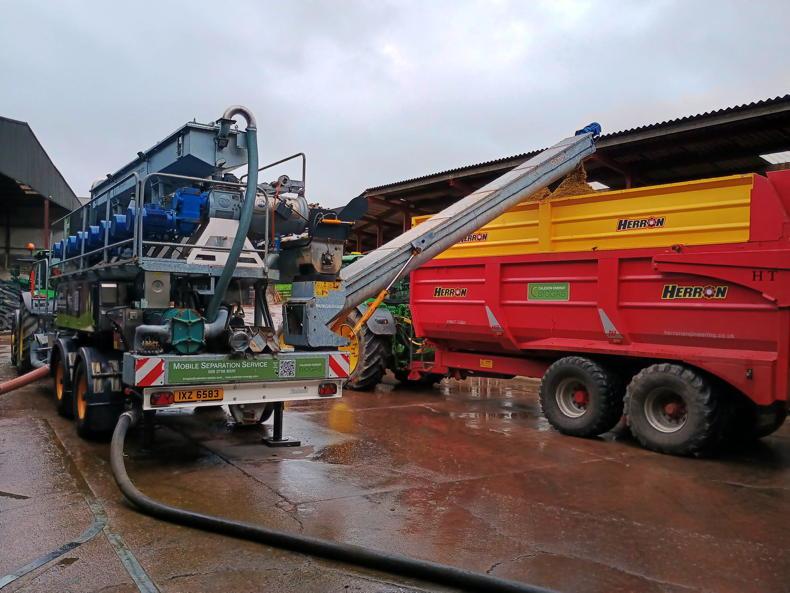
A mobile separation unit built by Dutch company, Slootsmid, has been acquired by Caledon Estates Company and is now operational across Armagh and Tryone.
The Slootsmid SMS 8 machine is equipped with eight FAN screw presses and has the capacity to process approximately 80 to 100m3 (up to 22,000 gallons) of slurry per hour.
According to Christopher Gill, the farm manager at Caledon Estates, it is the third Slootsmid machine brought into NI.
The other two machines have been acquired by Dundonald-based BH Estates, which is one of the companies awarded a contract by DAERA under the Sustainable Use of Livestock Slurry (SULS) programme. The aim of that programme is to demonstrate viable ways to process slurry and help deal with excess phosphorus (P) in agriculture.
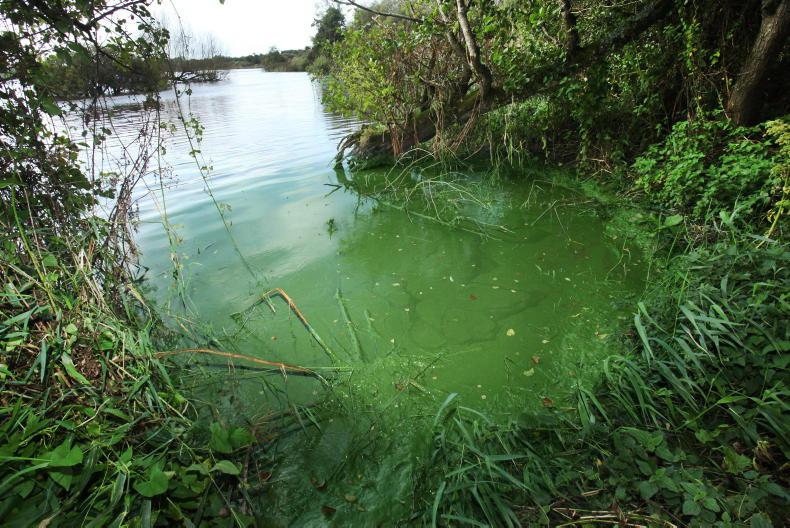
“For Caledon Estates, this is a commercial decision built around a business case, but hopefully it will also contribute towards improved water quality in the Blackwater catchment,” said Christopher.
The machine is a 2018 model that has been fully refurbished. It cost around £250,000 to get it into NI, with a new machine probably around the £500,000 mark, so either way, it is a significant capital investment. In the Netherlands, the equipment is principally used to produce green bedding for cattle.
Dry matter
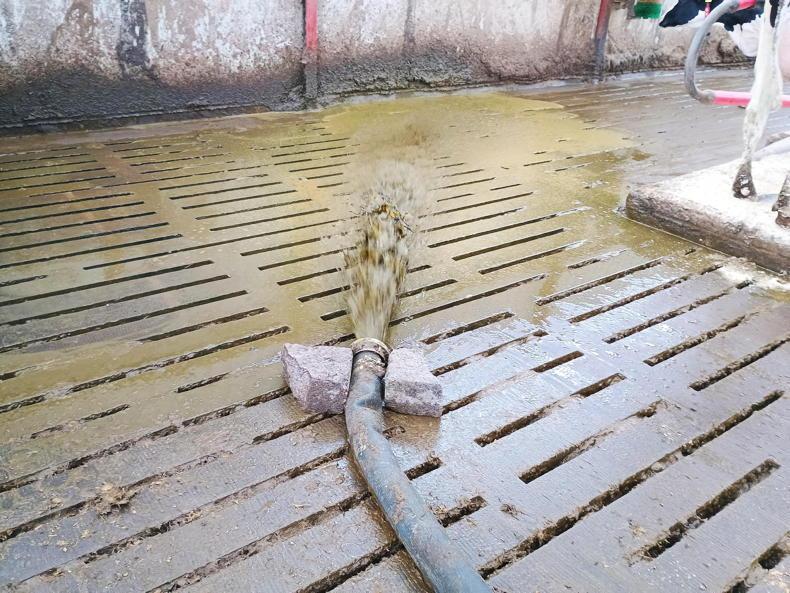
According to Christopher, the separated solids are coming out with a dry matter in the high 20s to low 30%, with the material being used to displace grass silage as a feedstock in the 500kW farm-based anerobic digestion plant run by Caledon Estates.
Biogas yield from grass silage is typically around 160m3/t of fresh material, with separated slurry solids coming in slightly below that at around 120m3/t.
“The deal we have with farmers is that we separate their slurry for free, but on the understanding, we take away the solids. If farmers want to keep the solids, there are a number of contractors now offering that.
“The only requirement we have is that the tank is well mixed beforehand,” said Christopher.
The benefit for the farmer is that they are left with a product that is easily spread through a dribble bar or trailing shoe, without the problem of lines of slurry being left in fields. Separation will also increase tank capacity, with initial estimates from the SULS programme suggesting there is a space saving of at least 13% when solids are removed.
However, it is the issue of excess P in NI agriculture that will inevitably mean intensive livestock farms will have to consider slurry separation and export of solids off their units. The updated Nutrient Action Programme (NAP) currently out for public consultation, includes proposals for a Nutrient Stewardship Programme, where these farms would either get to a P balance of 10kg/ha/year, or commit to reducing P by at least 10% over the next four years.
Recovered
Research work quoted in the NAP document estimates that separated solids from a screw press machine contain an average of 1.28kg P/m3, leaving behind a liquid product that contains 0.53kg P/m3. In effect, allowing for differences in weight between liquid and separated solids, around 24% of the P in fresh slurry is recovered in this separated material.
Given the current P surplus in NI agriculture is estimated at 8,729t, there will have to be significant investment made in slurry separation equipment, in AD facilities and other technologies if that surplus is to be significantly reduced.
The P also doesn’t magically disappear when solids go through an AD plant to create renewable energy – the long-term plan is for NI to have facilities to dry the resultant digestate and pelletise the product, for export and use outside of NI agriculture.



SHARING OPTIONS