



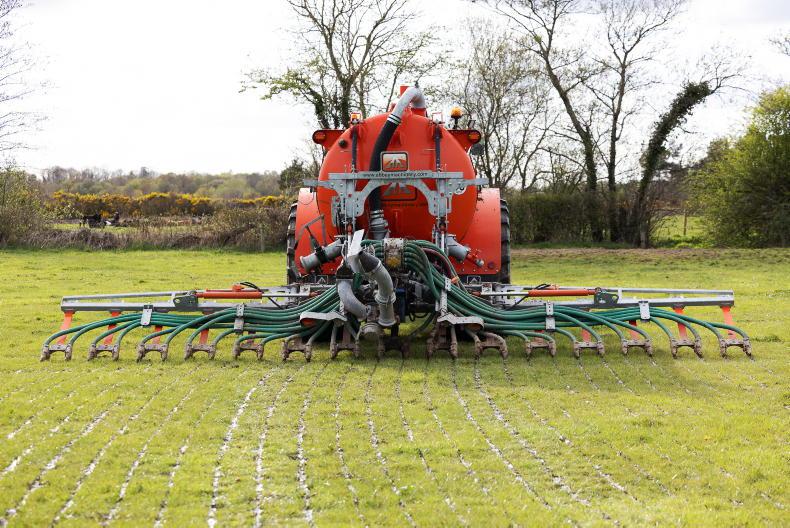
The practice of using false slurry export records to reduce a farm’s stocking rate must stop, the president of the Ulster Farmers’ Union (UFU) has said.
John McLenaghan said DAERA officials and environmental groups both raised the issue during the recent review of the Nutrients Action Programme (NAP).
“The process identified ‘paper acres’ where people have been theoretically moving slurry to land but, in some cases, it wasn’t actually happening. We cannot defend that,” he said.
Speaking to UFU members on Monday, McLenaghan suggested that DAERA will become more active at enforcing rules around slurry exports and stocking rates going forward.
In particular, DAERA has developed a new nutrient risk database which has records on all NI farms and is able to identify those who are most likely to be breaking NAP rules.
“They are showing us graphs and charts which show that the nitrogen loading on some farms is crazy,” McLenaghan said.
The new NAP proposals include a requirement for farmers to notify DAERA about slurry exports three times per year, which is up from once a year at present.
All slurry movements will need to be verified by the importer and any exports over 15 miles or more must be notified to DAERA within five days.
The department has also said that an export will be deemed “invalid” if it has been declared on land which not suitable for slurry spreading, such as bog land or rough grazing.
Finally, anyone who is found to submit false information will need to notify DAERA the day before future slurry exports with location tagged photos submitted as evidence.
“There is increased regulation around the movement of slurry. All of this is on the back of the paper acre problem,” McLenaghan said.
However, the UFU president said during the NAP review process the union “fought hard” against increased bureaucracy related to slurry exports.
The argument is that onerous regulations tied to slurry movements will be off putting for farmers who have a shortage of nutrients.
“If the receiving farmer is worried it will mean extra paperwork and inspections, then the easy option is to say ‘no’ and buy it in a bag from the local co-op instead,” McLenaghan said.
“We were at lengths to emphasise that where farms have surplus nutrients, we do not want to make it more difficult for them to find a legitimate use,” he added.
Whilst the latest NAP proposals include more regulations on slurry exports than the current rules, some measures from the first NAP consultation in May 2025 have been dropped.
This includes the proposal for both exporters and importers to notify DAERA within four days of all slurry movements, and for some importing farms to comply with tight phosphorus balance rules.



SHARING OPTIONS