Upon the establishment of a spring-calving Stabiliser suckler herd at Cafre’s lowland Abbey farm, it was decided to finish male progeny as bull beef at less than 16 months.
The benefits of bull beef compared with steers are well proven. If bulls are fed to achieve their potential, weight gains will generally be 20% greater than if castrated. Additionally, if slaughtered at the optimum fat cover, they will also achieve a greater kill-out, and a higher grade than steers.
As bulls are finished younger, in theory a higher number of cows can be carried per hectare with a suckling-to-bull beef system thereby increasing overall farm output. However, there are some drawbacks.
Firstly, output is not profit. Moving from a steer to a bull beef finishing system means that the grass utilised by a steer over the second grazing season is being substituted with extra winter feeding, which is more expensive than grass.
Therefore, to ensure a similar or greater margin per hectare extra cows must be kept. In CAFRE’s situation on a lowland farm, carrying a high stocking of suckler cows is achievable. However, on most programme farms, stocking rates are limited by the capacity to carry high numbers of suckler cows at different periods of the year. Some farms have land areas much more suitable to grazing steers than suckler cows. Consequently, most programme farms have opted for steer finishing systems from their spring-calving herds.
Potential
Ultimately, if a competitive market for bulls has been established, and they are fed to their potential with high-quality silage incorporated into the finishing diet to control finishing costs, bull beef has the potential to yield a higher return per hectare than steer beef systems. But this will not be the case on all farms.
Bull beef should only be considered in a spring-calving herd where high stocking rates of suckler cows can be achieved without poor utilisation of grass.
Moving from steers to bulls by merely displacing grass with concentrate without carrying extra cows will not generally be a profitable exercise.
All spring-born calves from the lowland suckler herd have been weaned and the remainder of cattle housed. Attention is now focused on winter feeding of young stock and finishing beef cattle.
Bull calves had an average birth date of 22 March and weighed 326kg at weaning in late October. This was an average daily gain of 1.3kg/day since birth.
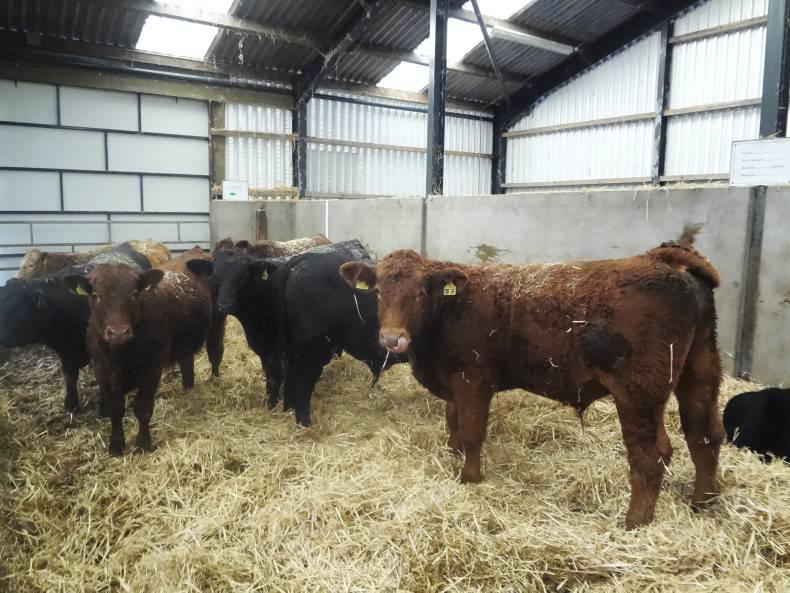
Concentrate feeding was introduced to the bull calves three weeks pre-weaning at a rate of 1kg/head/day. Calves have been housed on to straw-bedded pens close to their dams.
They will soon be moved to slatted rubber pens and built up on to ad-lib concentrates, as well as first-cut silage. They will be targeted for slaughter as young bulls at 13 to 15 months of age next summer.
Their age at slaughter will depend on daily performance and level of fat cover.
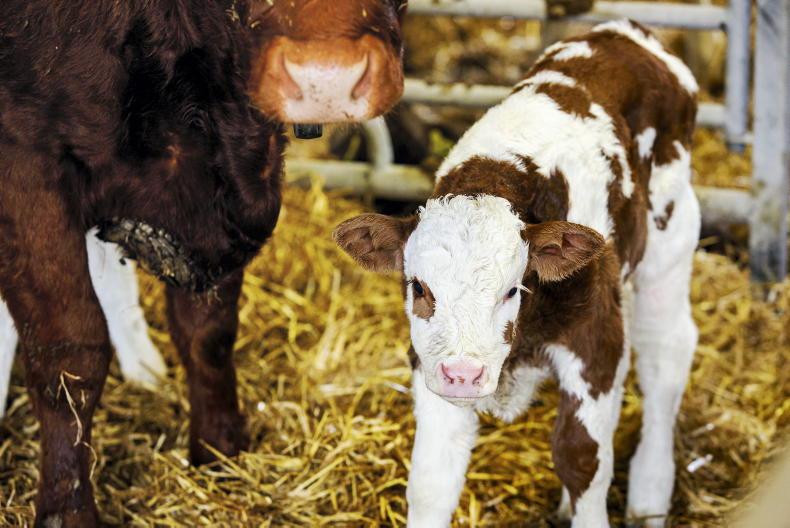
Heifer calves are also weaned. The average date of birth of heifer calves was also 22 March and average daily gain from birth was 1.1kg/day resulting in a weaning weight of 276kg, with no creep fed before weaning. Heifer calves were left outside after weaning with a small batch of seven mature cows to reduce stress and to graze out paddocks before closing up. The overall performance of this year’s calf crop was very pleasing given that two-thirds of the cows are first-calvers.
At housing, cows were grouped by body condition score and are being fed accordingly.
One group of leaner cows is being fed silage ad-lib while the other two groups are being offered restricted silage diets. Cows are due to be scanned shortly and all empty cows will be culled.
Silage
While some of the excess grass covers ensiled in early May resulted in wetter silage than normal, the main silage cuts harvested on 23 May and 9 July resulted in high quality silage (Table 1).
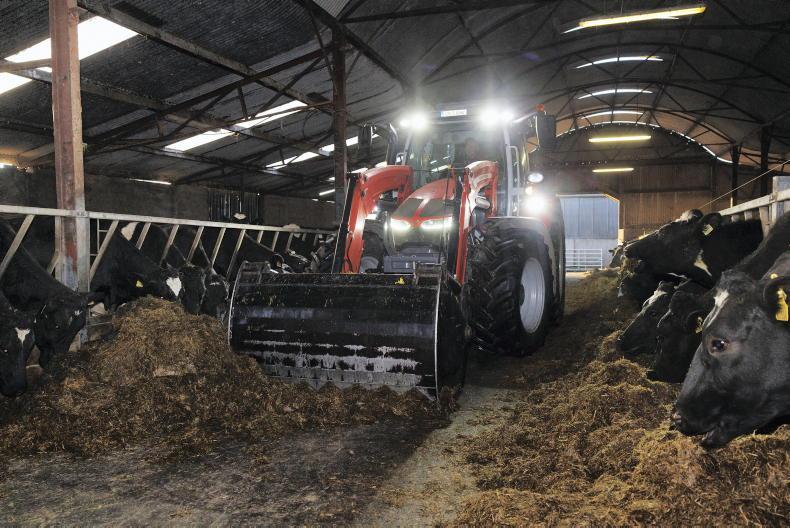
First-cut silage will be targeted towards young stock and finishing cattle. It will be supplemented with a homegrown mineralised barley/bean mix for the young and finishing stock.
The ratio of barley to beans in the mix is 80:20 and 70:30, for the finishing and weanling cattle, respectively.
As finishing cattle mature, beans can be removed from the mix, with barley alone sufficient to complement first-cut silage, which can supply adequate levels of protein.
Finishing
A group of 24 Angus and Limousin cross finishing steers from Greenmount’s dairy herd were housed on the 15 September. Some of these are nearing slaughter with the remainder targeted for slaughter by Christmas at 24 months.
Another 67 suckler bred steers from the Abbey and Hill suckler herds are also on their finishing diet. Steers are being offered 3kg of concentrate and first-cut silage ad-lib. They are targeted for slaughter in January/February at 21 months. Ten Simmental and Aberdeen Angus bred heifers were slaughtered off grass in October at 19 months, after four weeks of meal feeding at a daily rate of 3kg per head.
A proportion of the finishing cattle will be marketed through the Aberdeen Angus Quality Beef (AAQB) and Glenarm Shorthorn beef schemes to avail of the associated premiums. The Angus cattle originate from the dairy and Hill suckler herds with the Shorthorn cattle originating from the Hill Farm. Due to market specification for the Shorthorn scheme, fat scores of at least 4= are required. These cattle will be grouped separately and fed accordingly.
The replacement heifers destined to go to the Hill Farm were scanned in September. These consisted of 29 Limousin and Shorthorn cross heifers, which came down to the Abbey Farm as weanlings and will return shortly as in-calf heifers. They were synchronised and artificially inseminated using a fixed-time AI protocol as part of a research project being carried out by AFBI.
Heifers had an injection of GnRH at the time of CIDRs insertion. The CIDRs were removed after five days and heifers were then injected with Prostaglandin. Heifers were all artificially inseminated 72 hours later and received an injection of GnRH at the time of AI.
Conception rates were 45% to first service and 86% after first and second services. There will be no replacement heifers calving down in the Abbey herd this spring. The first of the Abbey-bred Stabiliser replacement heifers will be calving down in spring 2017.
Spring 2014-born steers and heifers are being monitored closely for levels of fat cover with some farms beginning to draft cattle for slaughter.Dry cows are being fed according to condition score with silage restricted accordingly.The use of calf vaccination programmes for pneumonia has resulted in healthy weaned calves with good levels of post-weaning performance now being achieved across farms.Where cattle are housed at high stocking rates, farmers are clipping animals’ backs to reduce sweating and heat stress. Farmers with autumn-calving herds are continuing to restrict suckling during the breeding season.
Upon the establishment of a spring-calving Stabiliser suckler herd at Cafre’s lowland Abbey farm, it was decided to finish male progeny as bull beef at less than 16 months.
The benefits of bull beef compared with steers are well proven. If bulls are fed to achieve their potential, weight gains will generally be 20% greater than if castrated. Additionally, if slaughtered at the optimum fat cover, they will also achieve a greater kill-out, and a higher grade than steers.
As bulls are finished younger, in theory a higher number of cows can be carried per hectare with a suckling-to-bull beef system thereby increasing overall farm output. However, there are some drawbacks.
Firstly, output is not profit. Moving from a steer to a bull beef finishing system means that the grass utilised by a steer over the second grazing season is being substituted with extra winter feeding, which is more expensive than grass.
Therefore, to ensure a similar or greater margin per hectare extra cows must be kept. In CAFRE’s situation on a lowland farm, carrying a high stocking of suckler cows is achievable. However, on most programme farms, stocking rates are limited by the capacity to carry high numbers of suckler cows at different periods of the year. Some farms have land areas much more suitable to grazing steers than suckler cows. Consequently, most programme farms have opted for steer finishing systems from their spring-calving herds.
Potential
Ultimately, if a competitive market for bulls has been established, and they are fed to their potential with high-quality silage incorporated into the finishing diet to control finishing costs, bull beef has the potential to yield a higher return per hectare than steer beef systems. But this will not be the case on all farms.
Bull beef should only be considered in a spring-calving herd where high stocking rates of suckler cows can be achieved without poor utilisation of grass.
Moving from steers to bulls by merely displacing grass with concentrate without carrying extra cows will not generally be a profitable exercise.
All spring-born calves from the lowland suckler herd have been weaned and the remainder of cattle housed. Attention is now focused on winter feeding of young stock and finishing beef cattle.
Bull calves had an average birth date of 22 March and weighed 326kg at weaning in late October. This was an average daily gain of 1.3kg/day since birth.
Concentrate feeding was introduced to the bull calves three weeks pre-weaning at a rate of 1kg/head/day. Calves have been housed on to straw-bedded pens close to their dams.
They will soon be moved to slatted rubber pens and built up on to ad-lib concentrates, as well as first-cut silage. They will be targeted for slaughter as young bulls at 13 to 15 months of age next summer.
Their age at slaughter will depend on daily performance and level of fat cover.
Heifer calves are also weaned. The average date of birth of heifer calves was also 22 March and average daily gain from birth was 1.1kg/day resulting in a weaning weight of 276kg, with no creep fed before weaning. Heifer calves were left outside after weaning with a small batch of seven mature cows to reduce stress and to graze out paddocks before closing up. The overall performance of this year’s calf crop was very pleasing given that two-thirds of the cows are first-calvers.
At housing, cows were grouped by body condition score and are being fed accordingly.
One group of leaner cows is being fed silage ad-lib while the other two groups are being offered restricted silage diets. Cows are due to be scanned shortly and all empty cows will be culled.
Silage
While some of the excess grass covers ensiled in early May resulted in wetter silage than normal, the main silage cuts harvested on 23 May and 9 July resulted in high quality silage (Table 1).
First-cut silage will be targeted towards young stock and finishing cattle. It will be supplemented with a homegrown mineralised barley/bean mix for the young and finishing stock.
The ratio of barley to beans in the mix is 80:20 and 70:30, for the finishing and weanling cattle, respectively.
As finishing cattle mature, beans can be removed from the mix, with barley alone sufficient to complement first-cut silage, which can supply adequate levels of protein.
Finishing
A group of 24 Angus and Limousin cross finishing steers from Greenmount’s dairy herd were housed on the 15 September. Some of these are nearing slaughter with the remainder targeted for slaughter by Christmas at 24 months.
Another 67 suckler bred steers from the Abbey and Hill suckler herds are also on their finishing diet. Steers are being offered 3kg of concentrate and first-cut silage ad-lib. They are targeted for slaughter in January/February at 21 months. Ten Simmental and Aberdeen Angus bred heifers were slaughtered off grass in October at 19 months, after four weeks of meal feeding at a daily rate of 3kg per head.
A proportion of the finishing cattle will be marketed through the Aberdeen Angus Quality Beef (AAQB) and Glenarm Shorthorn beef schemes to avail of the associated premiums. The Angus cattle originate from the dairy and Hill suckler herds with the Shorthorn cattle originating from the Hill Farm. Due to market specification for the Shorthorn scheme, fat scores of at least 4= are required. These cattle will be grouped separately and fed accordingly.
The replacement heifers destined to go to the Hill Farm were scanned in September. These consisted of 29 Limousin and Shorthorn cross heifers, which came down to the Abbey Farm as weanlings and will return shortly as in-calf heifers. They were synchronised and artificially inseminated using a fixed-time AI protocol as part of a research project being carried out by AFBI.
Heifers had an injection of GnRH at the time of CIDRs insertion. The CIDRs were removed after five days and heifers were then injected with Prostaglandin. Heifers were all artificially inseminated 72 hours later and received an injection of GnRH at the time of AI.
Conception rates were 45% to first service and 86% after first and second services. There will be no replacement heifers calving down in the Abbey herd this spring. The first of the Abbey-bred Stabiliser replacement heifers will be calving down in spring 2017.
Spring 2014-born steers and heifers are being monitored closely for levels of fat cover with some farms beginning to draft cattle for slaughter.Dry cows are being fed according to condition score with silage restricted accordingly.The use of calf vaccination programmes for pneumonia has resulted in healthy weaned calves with good levels of post-weaning performance now being achieved across farms.Where cattle are housed at high stocking rates, farmers are clipping animals’ backs to reduce sweating and heat stress. Farmers with autumn-calving herds are continuing to restrict suckling during the breeding season. 





SHARING OPTIONS