



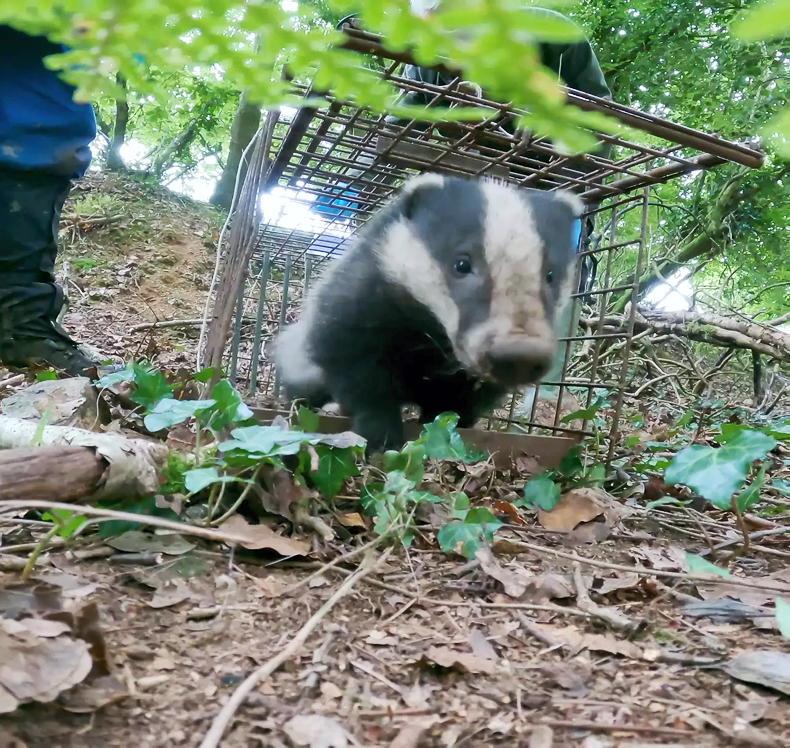
A public consultation has been published by DAERA seeking views on a number of options to help control TB in badgers.
The consultation is open for 12 weeks to 5pm on Friday 25 September. It is the latest attempt by DAERA to break an impasse around the issue and follows on from a consultation released by former Agriculture Minister Edwin Poots from March 2022.
That consultation set out a plan to cull badgers in TB hotspot areas by controlled shooting, but was successfully challenged by badger groups in the courts. Following that legal ruling, current DAERA Minister Andrew Muir asked his chief vet Brian Dooher to undertake another review of TB in NI.
That led to the creation of a new government/industry body known as the TB Partnership Steering Group.
In April 2025, the group produced a blueprint for eradication of TB in NI, which set out various short-term actions, including the need to bring forward proposals around wildlife intervention.
While Minister Muir has delivered on that, his time in office is limited, with a new Assembly election due on or before 6 May 2027 – final decisions around a potential badger cull will be for his successor to take.
However, there is a clear acknowledgement in the DAERA consultation that wildlife intervention is required “to address the role of the badger population in the maintenance and spread of bovine TB.”
The document sets out three main options:
In practice, badger intervention would take place in defined geographic areas of at least 100km² and where “there is evidence that badgers are contributing to ongoing bovine TB problems in cattle.” Intervention work would last for up to five years in each area and is likely to be restricted to an open season, running from 1 July to 30 November.
There is no preferred outcome at this stage.
“The purpose of this consultation is for stakeholders to understand the potential range of options and delivery approaches being considered and provide feedback on what could be taken forward,” states the DAERA document.
Option 1 – non-selective culling
The objective of a non-selective cull is to lower the disease pressure coming from the badger population by reducing numbers in the area by up to 70%, irrespective of whether culled badgers actually have TB or not.
In the 2022 consultation, the plan was to cull badgers in TB hotspot areas for seven years and then follow that up with an eight-year programme of badger vaccination – that plan basically models the approach taken in England and the Republic of Ireland.
Shooting
A non-selective cull can be done in three different ways. The first is to follow the English approach (and that envisaged in the 2022 consultation), which mainly involves free-roaming badgers being shot by trained marksmen employed by private companies.
The main concern with this cull method is whether a rapid kill is achieved, although of all the options explored, it is by far, the cheapest, with an indicative cost of £0.44m over a five-year period in each 100km² area.
Traps
The consultation also explores the option of using either cage traps or stopped restraints to capture badgers, before the animals are culled.
The test and vaccinate or remove (TVR) trial undertaken by DAERA in a 100km² area of Co Down between 2014 and 2018 relied on cage trapping. The data from this work suggests around 55% of badgers will be caught in the first year. However, some badgers (10 to 13%) are ‘cage shy’.
Overall, cage trapping is the most expensive approach, given the amount of labour involved in laying bait and daily visits to cages. The cages are also heavy and require vehicles and trailers to move around. The indicative cost of using cages for a non-selective cull comes to £1.61m in each 100km² area.
The stopped restraints used in the third approach are a type of snare, but incorporate a self-locking mechanism designed to limit closure, allowing the animal to be held without overtightening.
These restraints have been widely used to catch badgers in ROI. The restraints need to be checked every morning, but are cheaper than cages. Indicative costs are £0.73m.
Option 2 – a TVR approach
The second intervention option explored in the DAERA consultation is to use test and vaccinate or remove (TVR) as trialled in Co Down between 2014 and 2018.
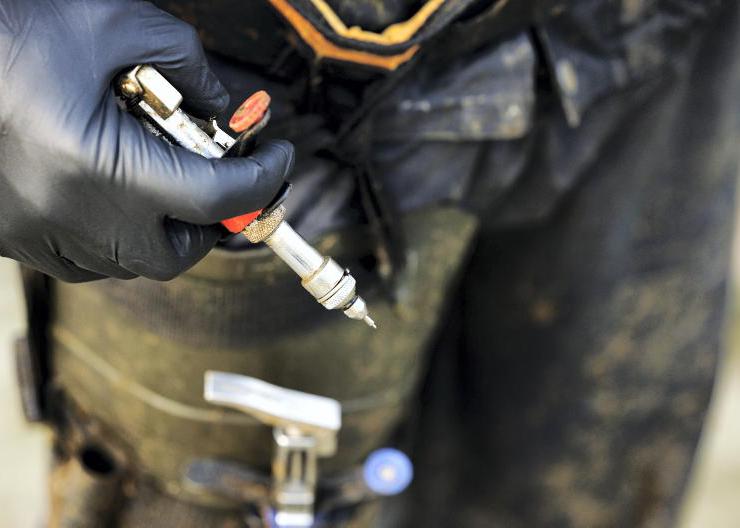
Captured badgers are anaesthetised to allow a blood sample to be collected, which is tested for TB using a dual path platform (DPP) test. Results are available within 20 minutes.
The DPP test is not perfect and has a “whole blood sensitivity of 69%”, which effectively means 31% of badgers that have TB will show a negative result. Under TVR, animals which test negative are vaccinated, micro-chipped and released, while those which test positive are culled.
The DAERA consultation suggests that if TVR is used alongside cage trapping of badgers, it would come with an indicative cost of £1.81m over a five-year period in each 100km² area.
If badgers were caught using stopped restraints rather than cages, the cost reduces to £0.95m.
Option 3 – vaccination of badgers
Under this approach all badgers that are captured are vaccinated and released back into the environment.
Captured badgers are only vaccinated once per year and if cage traps are used, the indicative cost is £1.65m across five years within a 100km² area.
Where stopped restraints are used, this cost is estimated at £0.78m.
Public versus private sector delivery
The indicative costs outlined in the DAERA consultation all assume delivery of badger controls would be undertaken by the private sector or through industry-led arrangements.
The document notes that relying on the public sector is likely to be more expensive due to higher wage levels in government jobs, the large overhead costs in the NI civil service and the lack of flexibility in public sector employment contracts.
For example, where TVR is used alongside cage trapping, the indicative cost is £1.81m over a five-year period in each 100km² area, but this increases to £2.65m if done by the public sector.
“Under all options presented, the department’s role would be limited to regulation, authorisation, monitoring, and standard administrative functions,” states the DAERA consultation.
Lay vaccinators
Also raised as an issue in the consultation document is the current requirement that only a veterinarian can vaccinate a badger.
In Britain, an exemption exists in legislation which allows lay vaccinators (non-vets) to be trained and licensed, so they can administer vaccine under certain conditions. The department has proposed that the scope of the relevant legislation in Britain is extended to include NI.
Controlled shooting is the lowest cost option
Across 11 different options in the DAERA consultation, the least expensive option is where a non-selective cull is done mainly by controlled shooting. The highest cost option is a test and vaccinate or remove (TVR) approach.
To compare the options, the department analysis assumes that each TB herd breakdown costs the NI economy an average of £27,500.
To offset that cost, the department looked at the reduction in herd breakdowns in each 100km² area over a nine-year period from the start of intervention work. To offset the cost of a non-selective cull, the number of breakdowns would need to be reduced by 1.9 per year.
To offset a TVR approach, where trapping is done by the private sector using cages, this increases to 7.9 per year. However, if TVR is used when badgers are caught using stopped restraints, the number falls to 4.1 per year. The cost of a vaccination-only approach is slightly lower than TVR.
Achieved
However, the next stage in the analysis is to consider whether these reductions in breakdown herd numbers are actually likely to be achieved in practice.
To do that, the department refers to analysis it commissioned in 2018, which involved the creation of a mathematical model to give an indication of the likely performance under each option. Extrapolating results has led the department to conclude there are four options which it says have a reasonable likelihood of delivering benefits that offset any costs.
The top-ranked is a non-selective cull, mainly by controlled shooting, followed by a non-selective cull of badgers caught in stopped restraints.
The third ranked is TVR when badgers are caught using these same restraints.
The other option to come in slightly below the threshold is when a non-selective cull is done when the animals are caught in cages.
All other options would cost more than what they would deliver in terms of reduced herd breakdowns – that includes TVR when badgers are caught in cages and also the vaccination-only options.


SHARING OPTIONS