



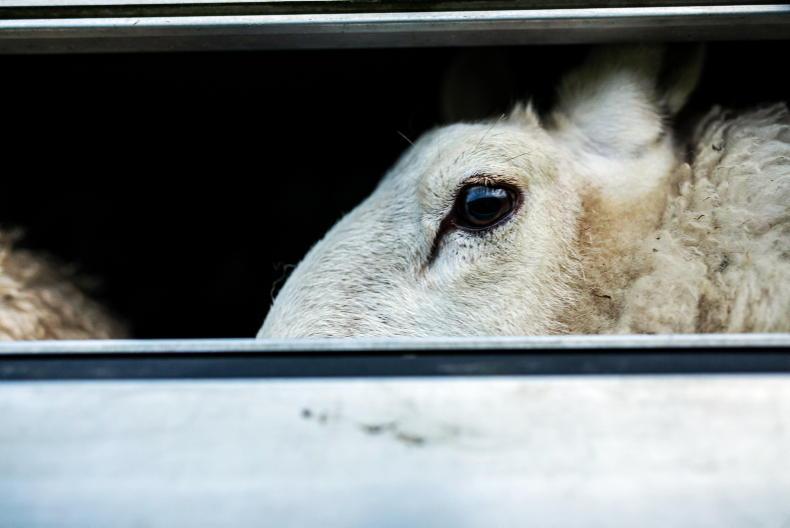
Sheep farmers in Northern Ireland are hoping that the lifting of movement restrictions for sheep exported live to Britain will help to steady the trade following a sharp fall in the value of lambs since the bluetongue virus was identified.
The Department of Agriculture, Environment and Rural Affairs (DAERA) announced on Tuesday night that the suspension on sheep exports to Britain introduced on 1 December in the wake of bluetongue virus being identified a few days earlier has been lifted with immediate effect.
A statement released by DAERA noted; “with immediate effect, farmers outside the Temporary Control Zones (TCZs) will be able to move livestock to Great Britain (GB) with no requirements beyond those normally in place. All types of these movements can now take place to GB including moves to slaughter, markets and for breeding and production. Those who wish to export livestock to GB should contact their private veterinary practitioner in the normal manner”.
It is hoped that the lifting of the suspension will insert some badly needed competition in to the sheep trade and help stem the sharp fall in price. Factory lamb quotes fell by upwards of 30p/kg to 40p/kg (34c-45c/kg), from £6.40/kg to £6-£6.10/kg, over the last two weeks with the live trade hit by an even greater extent by the absence of buyers purchasing sheep for export, with prices for finished lambs falling by upwards of £10 to £15 per head (€11-€17/head).
Figures published by DAERA show 1,564 sheep exported live to Britain for direct slaughter in the week preceding the suspension of exports.
It is estimated that a similar number of sheep moved live across the Irish Sea under the breeding and production certificate. Exports of sheep to Ireland have also reduced since bluetongue virus hit. The number of sheep exported live for direct slaughter last week was recorded at 3,482, a fall of 400 head on the previous week and 1,500 head lower than the previous three-week average. Exports to Ireland under the breeding and production certificate are still prohibited. With factories in Northern Ireland having little interest in increasing throughput it has left a surplus of sheep entering the market.
TCZ movements
DAERA said the move to allow some animal movements was taken “in the context of scientific advice, ongoing surveillance data and consultation in recent days with GB authorities and stakeholders”.
The organisation added that moves of susceptible livestock off farms in the two TCZs are still prohibited and that moves to slaughter remain permitted under a general licence available on DAERA’s website.
They added that movements of animals into the two 20km TCZs in Co Down will also be permitted with immediate effect, using a general licence that can also be downloaded from the DAERA website.
Chief Veterinary Officer, Brian Dooher explained: “Midges spread BTV but AFBI has now confirmed we are in the vector low period and this, coupled with ongoing results from our surveillance activities and colder weather, mean that from today [Tuesday 9 December], livestock outside of the TCZs can trade with Great Britain. Livestock will also be permitted to move into the current TCZs. Licences are available on the DAERA website”.
“Currently movements within and out of the TCZ are prohibited, with the exception of direct movements to slaughter only permitted. Ongoing surveillance in the zones, in addition to further stakeholder engagement, will support decisions on the way ahead and this will be communicated with industry in the immediate days ahead.”



SHARING OPTIONS