The Burren Programme in Co Clare is seen as a gold standard example of a flexible, farmer-friendly, agri-environment scheme that has delivered huge gains for nature.
A group of NI farmers visited the area last week as part of the CAFRE Farm Innovation Visit programme, with the focus being on upland biodiversity along the west of Ireland.
The Burren is limestone landscape, which is famous for rare wildflowers and a longstanding tradition of out-wintering cattle.
Cattle
Local farmers tend not to graze the vegetation that grows on and between the limestone rocks during the summer. This allows the plants to flower and produce seeds.
However, cattle are moved to the upland areas of the Burren for the winter where they graze off vegetation that has built up during the summer months.
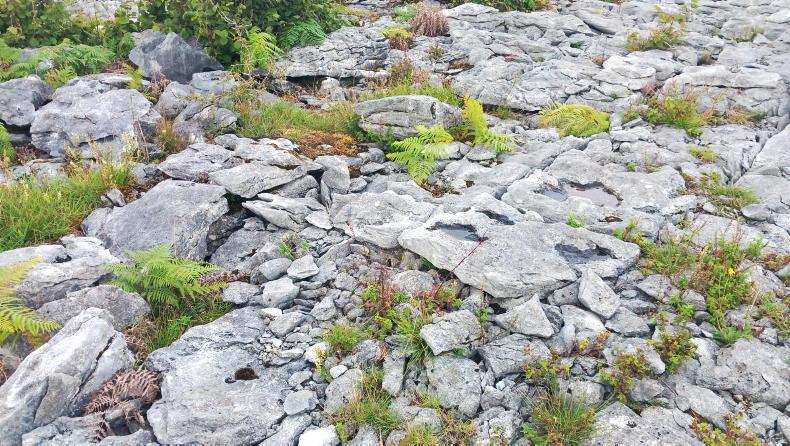
The Burren is a 280 square mile limestone landscape, of which 95% is farmland.
From a farming perspective, this provides low-cost forage, and the limestone rocks give cattle a dry, warm and clean bed throughout winter.
From an environmental viewpoint, the cattle provide an essential service by grazing off grasses and dead vegetation, which allows rare wildflowers to establish again the following year.
Dr Brendan Dunford, the Burren Programme manager, explained that a thatch of dense vegetation would form if the grass was not grazed off, and that this would block out light for wildflower seedlings in the spring.
The Burren Programme is a local agri-environment scheme, which gives farmers a financial incentive to graze cattle in a way that optimises biodiversity on their land.
‘Results-based’
It is a results-based scheme, so farmers receive payments based on the condition of their land.
Each field is assessed by an environmental adviser annually and is given a score out of 10.
The scoring system considers factors such as the different species of plants in swards, evidence of poaching or bare soil at drinking sites, and presence of weeds or scrub.
The better the score, the higher the payment. It is left up to the farmers to deliver high-scoring land, whatever way suits them best. This means there are no strict rules on closed periods for grazing, stocking rates or the type of cattle used.
As an example of the flexible nature of the scheme, Brendan was asked whether a farmer could graze their winterage during wet weather in the summer if ground conditions were poor on other parts of their farm.
This is allowed and it could in fact help the ecological condition of the Burren. “Nature doesn’t like calendar farming,” Brendan said.
He explained that a light grazing in the summer would help graze down the invasive species Molinia, which is also known as purple moor grass. Molinia is most palatable during summer months and cattle will initially choose to graze it before the wildflowers.
Farmer importance
The Burren Programme puts a strong emphasis on the critically important role that farmers have in delivering conservation.
“You can have all the schemes and all the money in the world, but unless you have a farmer to manage the land, you have nothing,” Brendan said.
To help drive farmer uptake in the scheme, all paperwork is sorted by office staff. “We just need a signature from the farmer at the end of the year,” he explained.
Efforts are also made to communicate the cultural and social aspects of farming in the Burren to the wider public. For example, a popular festival takes place each year in late October when cattle start to move on to the winterage.
Farmer focus: John Hynes,
Co Clare
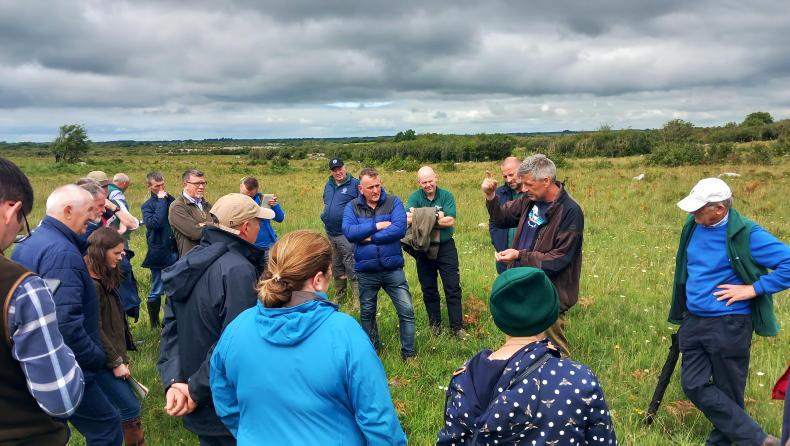
The group of NI farmers visited an upland winterage on the Burren owned by local farmer John Hynes. He runs a herd of 50 suckler cows and a small flock of 40 Dorset sheep.
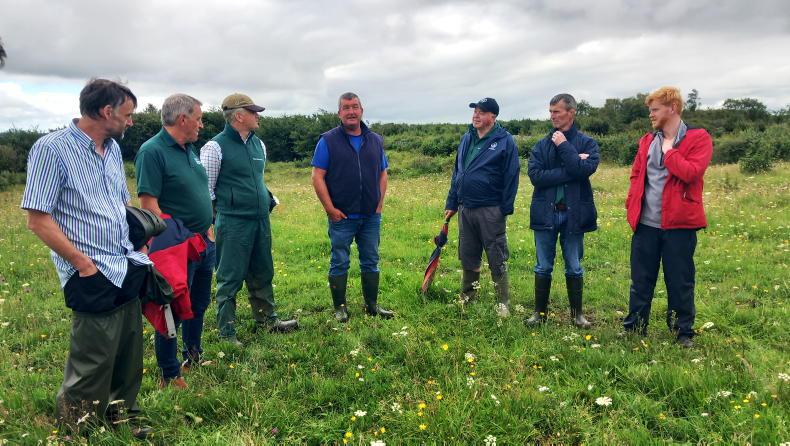
Burren farmer John Hynes (centre) speaking to the group of farmers visiting from NI.
John’s sucklers are a fairly typical commercial herd, with Charolais and Limousin bulls used. Calves are sold as weanlings or stores.

The winterage on John's farm will be grazed from November through to March.
There is an ongoing tradition of Burren cattle being bought by beef finishers from eastern counties, as the cattle have good compensatory growth when they go on to better quality grazing.
John’s cows are usually moved to the winterage in November and they stay there until they come close to calving in March. The only supplementary feeding is concentrates, which are fed on top of the ground from the end of February.
Brendan Dunford explained that this nut has been specifically formulated for the Burren, as it contains nutrients and minerals that were found to be lacking in the local vegetation.

There are 45 different plan species per square metre of John's winterage.
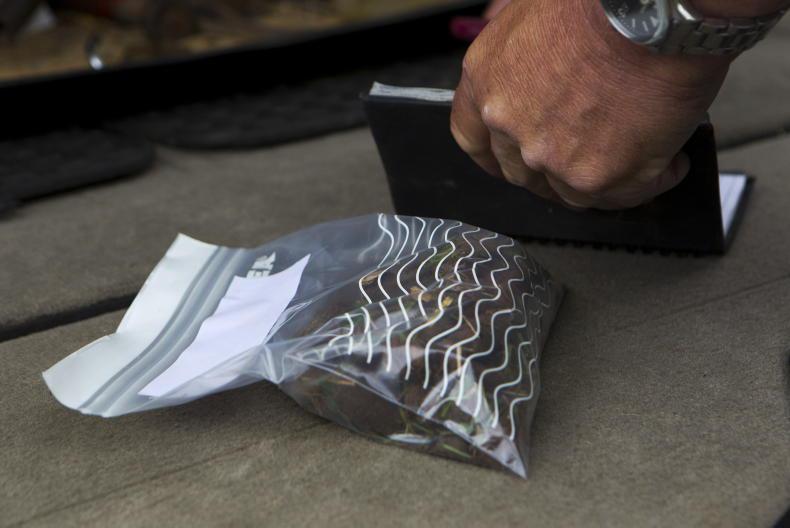
The process involved analysing blood and faecal samples from cows, as well as samples of grass from the Burren.
“Conservation doesn’t have to be about going backwards. We have been using science and technology to find solutions for the farmers,” Brendan said.
Feeding hay or silage is not recommended, as it can lead to poaching around feeders and once supplementary fodder is offered, cattle tend to graze less vegetation on the winterage.
It was notable that John runs mostly continental-bred cattle, as conservation grazing is usually associated with hardy, native breeds. “We found it was fine to use continental-cross cattle here,” Brendan said.
Scoring land
John’s winterage has been very well-managed and scores well in the Burren Programme. The land that we walked last week has been scored nine out of 10.
Half a point was deducted for some scrub encroachment (mainly hazel) and the other half point was lost due to bracken and Molinia being present in parts.
The most diverse parts of John’s land have 45 different species of plants per square metre. By comparison, intensive grassland typically has four or five different plant species.
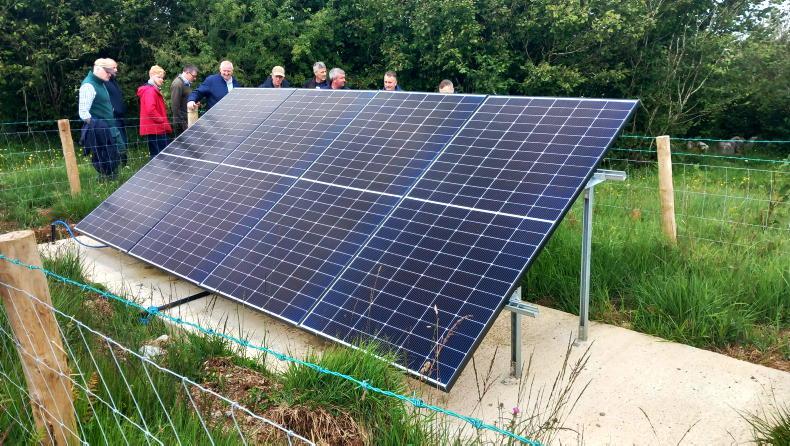
John has a solar-powered borewell to service water trough on his winterage.
The average score in the Burren Programme has gradually increased from 6.8 to 7.9, and the average payment is around €7,000 per farm.
Aside from the score-based habitat payment, the Burren Programme has action payments to help farmers cover the cost of investments that will help improve the condition of their land.
For example, John has received grant funding for scrub management and cattle handling facilities, as well as a solar-powered borewell and water trough system.
Burren farmers lose out under new scheme
The Burren Programme and other local conservation schemes are now being joined into a new national agri-environment scheme in the Republic of Ireland, known as ACRES.
Advisers are currently scoring land across 20,000 participating farms and, like the previous Burren Programme, these scores will be the basis for the new ACRES payments.
However, many farmers in the Burren are set to be worse off under the new national scheme. Annual payments will be capped at €10,500, with €7,000 of this for the score-based payment and €3,500 for additional investments.
Before now, many farmers in the Burren were able to avail of more money by claiming payments under both the Burren Programme and the old national agri-environment scheme, known as GLAS.
A major concern is that larger farmers in the Burren will not manage all their land under ACRES, because the payment cap means they can’t get money for their whole farm.
Ultimately, this means the environmental condition of some land could go backwards.
NEXT WEEK: ‘There is no such thing as bad land’
The Burren Programme in Co Clare is seen as a gold standard example of a flexible, farmer-friendly, agri-environment scheme that has delivered huge gains for nature.
A group of NI farmers visited the area last week as part of the CAFRE Farm Innovation Visit programme, with the focus being on upland biodiversity along the west of Ireland.
The Burren is limestone landscape, which is famous for rare wildflowers and a longstanding tradition of out-wintering cattle.
Cattle
Local farmers tend not to graze the vegetation that grows on and between the limestone rocks during the summer. This allows the plants to flower and produce seeds.
However, cattle are moved to the upland areas of the Burren for the winter where they graze off vegetation that has built up during the summer months.
The Burren is a 280 square mile limestone landscape, of which 95% is farmland.
From a farming perspective, this provides low-cost forage, and the limestone rocks give cattle a dry, warm and clean bed throughout winter.
From an environmental viewpoint, the cattle provide an essential service by grazing off grasses and dead vegetation, which allows rare wildflowers to establish again the following year.
Dr Brendan Dunford, the Burren Programme manager, explained that a thatch of dense vegetation would form if the grass was not grazed off, and that this would block out light for wildflower seedlings in the spring.
The Burren Programme is a local agri-environment scheme, which gives farmers a financial incentive to graze cattle in a way that optimises biodiversity on their land.
‘Results-based’
It is a results-based scheme, so farmers receive payments based on the condition of their land.
Each field is assessed by an environmental adviser annually and is given a score out of 10.
The scoring system considers factors such as the different species of plants in swards, evidence of poaching or bare soil at drinking sites, and presence of weeds or scrub.
The better the score, the higher the payment. It is left up to the farmers to deliver high-scoring land, whatever way suits them best. This means there are no strict rules on closed periods for grazing, stocking rates or the type of cattle used.
As an example of the flexible nature of the scheme, Brendan was asked whether a farmer could graze their winterage during wet weather in the summer if ground conditions were poor on other parts of their farm.
This is allowed and it could in fact help the ecological condition of the Burren. “Nature doesn’t like calendar farming,” Brendan said.
He explained that a light grazing in the summer would help graze down the invasive species Molinia, which is also known as purple moor grass. Molinia is most palatable during summer months and cattle will initially choose to graze it before the wildflowers.
Farmer importance
The Burren Programme puts a strong emphasis on the critically important role that farmers have in delivering conservation.
“You can have all the schemes and all the money in the world, but unless you have a farmer to manage the land, you have nothing,” Brendan said.
To help drive farmer uptake in the scheme, all paperwork is sorted by office staff. “We just need a signature from the farmer at the end of the year,” he explained.
Efforts are also made to communicate the cultural and social aspects of farming in the Burren to the wider public. For example, a popular festival takes place each year in late October when cattle start to move on to the winterage.
Farmer focus: John Hynes,
Co Clare
The group of NI farmers visited an upland winterage on the Burren owned by local farmer John Hynes. He runs a herd of 50 suckler cows and a small flock of 40 Dorset sheep.
Burren farmer John Hynes (centre) speaking to the group of farmers visiting from NI.
John’s sucklers are a fairly typical commercial herd, with Charolais and Limousin bulls used. Calves are sold as weanlings or stores.
The winterage on John's farm will be grazed from November through to March.
There is an ongoing tradition of Burren cattle being bought by beef finishers from eastern counties, as the cattle have good compensatory growth when they go on to better quality grazing.
John’s cows are usually moved to the winterage in November and they stay there until they come close to calving in March. The only supplementary feeding is concentrates, which are fed on top of the ground from the end of February.
Brendan Dunford explained that this nut has been specifically formulated for the Burren, as it contains nutrients and minerals that were found to be lacking in the local vegetation.
There are 45 different plan species per square metre of John's winterage.
The process involved analysing blood and faecal samples from cows, as well as samples of grass from the Burren.
“Conservation doesn’t have to be about going backwards. We have been using science and technology to find solutions for the farmers,” Brendan said.
Feeding hay or silage is not recommended, as it can lead to poaching around feeders and once supplementary fodder is offered, cattle tend to graze less vegetation on the winterage.
It was notable that John runs mostly continental-bred cattle, as conservation grazing is usually associated with hardy, native breeds. “We found it was fine to use continental-cross cattle here,” Brendan said.
Scoring land
John’s winterage has been very well-managed and scores well in the Burren Programme. The land that we walked last week has been scored nine out of 10.
Half a point was deducted for some scrub encroachment (mainly hazel) and the other half point was lost due to bracken and Molinia being present in parts.
The most diverse parts of John’s land have 45 different species of plants per square metre. By comparison, intensive grassland typically has four or five different plant species.
John has a solar-powered borewell to service water trough on his winterage.
The average score in the Burren Programme has gradually increased from 6.8 to 7.9, and the average payment is around €7,000 per farm.
Aside from the score-based habitat payment, the Burren Programme has action payments to help farmers cover the cost of investments that will help improve the condition of their land.
For example, John has received grant funding for scrub management and cattle handling facilities, as well as a solar-powered borewell and water trough system.
Burren farmers lose out under new scheme
The Burren Programme and other local conservation schemes are now being joined into a new national agri-environment scheme in the Republic of Ireland, known as ACRES.
Advisers are currently scoring land across 20,000 participating farms and, like the previous Burren Programme, these scores will be the basis for the new ACRES payments.
However, many farmers in the Burren are set to be worse off under the new national scheme. Annual payments will be capped at €10,500, with €7,000 of this for the score-based payment and €3,500 for additional investments.
Before now, many farmers in the Burren were able to avail of more money by claiming payments under both the Burren Programme and the old national agri-environment scheme, known as GLAS.
A major concern is that larger farmers in the Burren will not manage all their land under ACRES, because the payment cap means they can’t get money for their whole farm.
Ultimately, this means the environmental condition of some land could go backwards.
NEXT WEEK: ‘There is no such thing as bad land’







SHARING OPTIONS