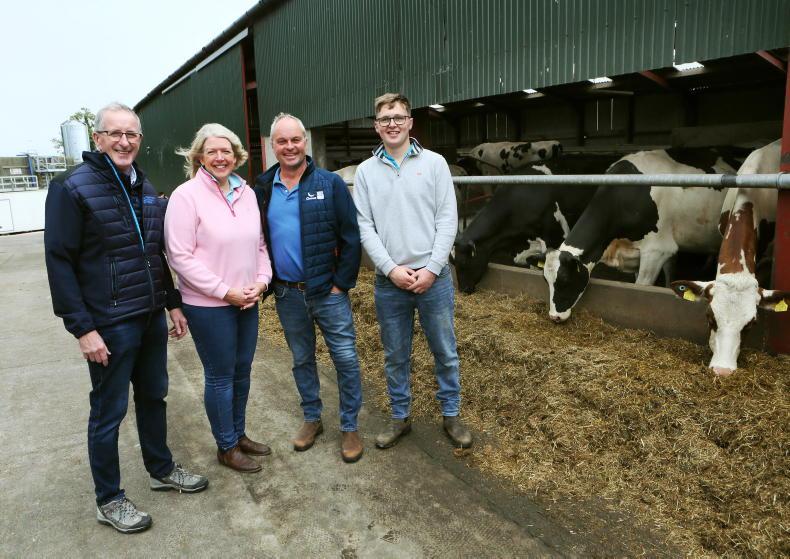
The importance of good dry cow management was the topic of a recent information day organised by Chestnutt Animal Feeds on the Beechvale Farm, run by the McNeilly family, outside Randalstown.
Addressing farmers at the event, Aaron Jones, a ruminant technical adviser with the company, put a huge emphasis on a successful transition period pre- and post-calving to help cows reach their maximum potential.
“The way we need to be looking at the transition stage is preparation for the next lactation,” said Jones.
“The same as if you are running a marathon, you need to be training to get yourself primed for what is ahead of you if you want to achieve your goals. Building a successful transition period starts from the ground up. Good management and good environment practices are essential,” he added.
Body condition scoring in late lactation is key, targeting a score of 2.75 to 3.5 at dry off. This reduces the risk of fatty liver diseases and ketosis due to cows carrying too much body fat and equally prevents cows from being too lean, and therefore lacking in reserves which can increase the incidence of problems such as lameness.
On the issue of lameness, Jones said hoof trimming before drying off reduces the risk of sole ulcers in the next lactation by 20%, while farmers should also consider a routine trim at 100-120 days in milk.
He quoted an AHDB study which found that a severely lame cow was costing herds in the UK £6.80/day in lost production. Decreasing lameness also improves colostrum yields and decreases the risk of metabolic disease.
Dry period
A dry off period of 60 days should be targeted.
“Not giving cows a sufficient dry period has a significant impact on the following lactation,” said Jones.
He said studies have shown that cows dried off for 40 days or less have a 5% to 30% drop in 305-day yield.

Liver health should also be considered when drying off, making sure cows are covered for liver fluke.
Poor liver health can lead to reduced colostrum quality and quantity, as well as immunity and fertility suppression, while also having a negative effect on milk yield and protein levels in the next lactation.
Housed
A lot of high-yielding herds now keep cows inside during the lactation, but might give them a few weeks outside at the start of the dry period.
Jones questioned this approach.
“In our opinion, from a nutritional point of view, if you are working with a fully housed system, we’d strongly advise keeping dry cows housed for the entire dry period,” he said.
“There is a big difference between grass silage and fresh grass. Fresh grass is inconsistent in terms of its dry matter and fibre, it is high in potassium and nitrogen and you’re changing the rumen environment for the sake of a couple of weeks. You want to have consistency and control.”
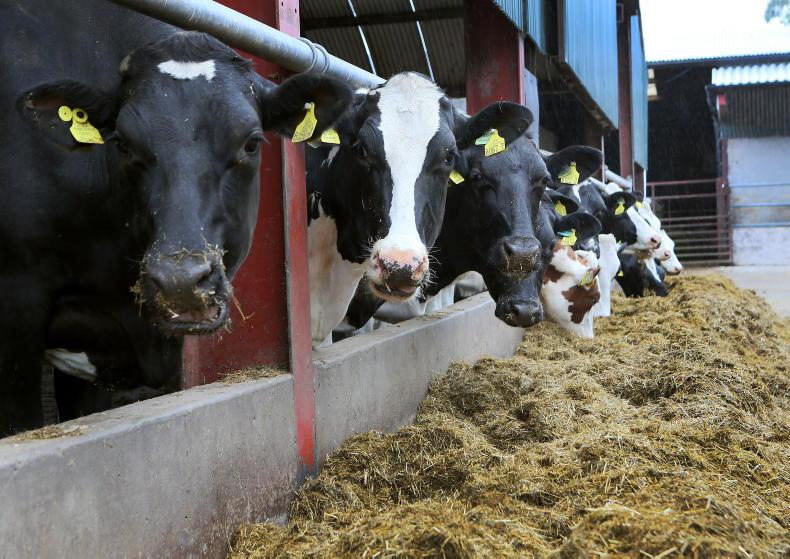
He suggested that in all cases, grazed cows should be housed four weeks pre-calving to ensure full control of diet, being mindful that dry cows require more feed space than lactating animals. Multiple feed groups are also optimal to allow for more targeted feeding.
Correct feed presentation is important and farmers should consider offering a total mixed ration (TMR) daily to dry animals rather than only feeding cows every 48 hours or more, as this is when a greater toxin challenge is present.
Jones suggested using Selko TMR preservative where daily feeding is not an option.
He also highlighted studies that have shown that the average colostrum yield in June is 6.5kg compared to a yield of 2.3kg in December. Part of that difference is thought to be due to light.
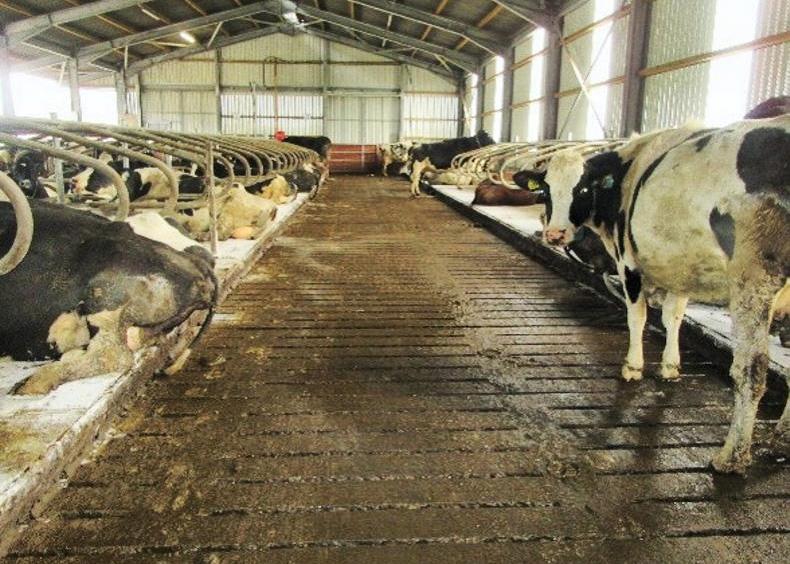
On the McNielly farm, clear roof sheeting has been installed, which should help with colostrum yield, said Jones.
Feeding a low dietary cation anion balance (DCAB) or a partial DCAB diet is an effective way of reducing milk fever risk and subsequent transition issues, maintained Chestnutt Feeds technical director, David Dunlop.
Within a cow, he explained that 98% of calcium is stored in bones and whenever the animal is dry, she is not using her calcium supply, so the mechanism and the pathway to which she accesses that calcium switches itself off.
“What you’re trying to do with a DCAB diet is bring the pH in the blood down. The cow will try to neutralise the blood pH by pulling calcium phosphate from her bones. This keeps that pathway switched on and allows her access to the calcium when she needs it at calving,” said Dunlop.
He said a forage mineral analysis is essential to calculate DCAB. For a full DCAB diet, the DCAB in the ration needs to be adjusted to a minus figure.
Partial DCAB diets are most common in NI due to variation in grass silage and this is achievable by having a DCAB figure between 0 and 50 milliequivalent per kg (mEq/kg).
“Forage selection, the use of straw and the use of anionic salts will help you to achieve this,” said Dunlop. He suggested that farmers consider the variations within silage, bearing in mind that young grass silage can have DCAB levels of 376mEq/kg, while mature grass silage can have a DCAB of 133 mEq/kg, which is much better suited to dry cows.
DCAB levels can be monitored after cows have consumed the diet for three days through urine testing. A partial DCAB diet should lead to a urine pH of 6.8 to 7.5.
Dry cow silage also requires forward planning, said Dunlop and ideally a separate pit or dry cow specific bales.
For a dry cow ration, farmers should aim for silage with low potassium content, ideally under 1.5%. Slurry application is not advisable on ground where dry cow silage will be cut. Soil should be tested to allow for fields with low potassium indexes to be selected.
Study
Dunlop also quoted an American study which suggested that straw chopped to one inch in a dry cow feed, compared with straw chopped to four inches, had a host of benefits. Dry matter intake (DMI) increased by 0.6kg, rumen pH was higher during the first week post-calving and there was a lower risk of negative energy balance by the third week of lactation.
He said DMI can drop 20-30% in the last three weeks pre-calving, so he suggested that farmers should also consider additional starch supply to enhance glucose production, reducing fat mobilisation and subsequent issues such as ketosis.
“Cows will start to mobilise muscle protein two to three weeks before calving. This is because 70% of foetal growth occurs in the last 60 to 70 days of pregnancy and she starts to produce colostrum,” said Dunlop.
He also suggested dry cow protein reserves should be built up before calving by feeding metabolisable protein such as soyabean meal.
Richard Beattie from Chestnutt Animal Feeds launched the company’s Transition Pro Pack at the event on the McNeilly farm.
Alongside ensuring that the basics are covered, he said feeding Transition Pro Pack can contribute towards a successful transition period, protecting dry cows from a multitude of issues.
“The liver is the linchpin to success,” said Beattie, adding that supporting liver function through nutrition is key to a successful transition period as excessive liver fat leads to a significant ketosis challenge.
When a cow mobilises body fat, non-estrified fatty acids (NEFA) are transported to the liver.
Chestnutt’s Transition Pro Pack contains both ReaShure (rumen protected choline) and LipoAktiv L-Met 60 (methionine).
Both play a vital role in preventing ketosis, fatty liver disease and supporting liver function, while also helping to boost milk yields and components during lactation.
Beattie also discussed calcium management and how maintaining blood calcium levels around calving reduces the risk of hypocalcaemia and milk fever, while also supporting feed intake and overall cow performance.
He suggested that some studies have pointed to calcified seaweed as being a more effective source of this than traditional limestone. Transition Pro Pack contains Mag12, a neutral rumen buffer containing both magnesium and calcium. A multi-component toxin binder (DeviSafe) is also present.
“A toxin binder is an investment, not a cost. Look at it as an insurance,” said Beattie.