



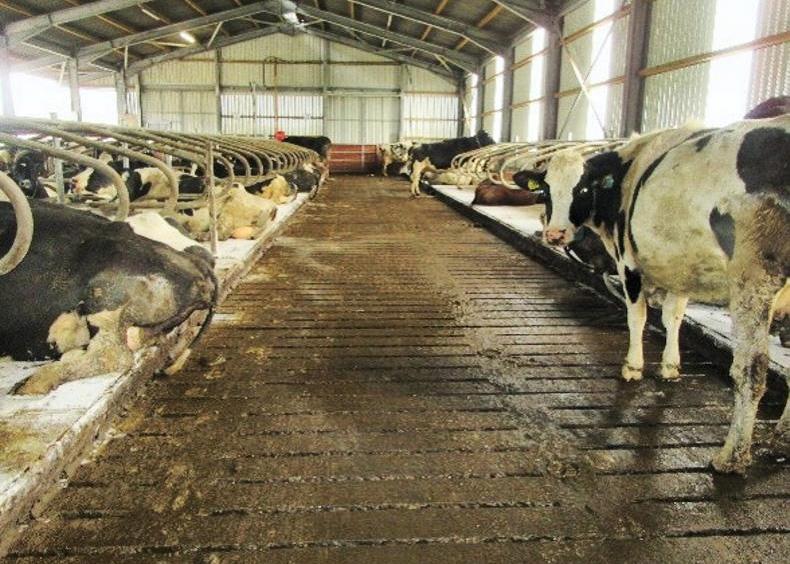
Selective dry cow therapy (ie the selective treatment with antibiotic of cows with an infection at dry-off) should be common practice in Ireland, given the need to move away from unnecessary antibiotic use in animal production systems.
Before 2022, when EU regulation on veterinary medicinal products came into Irish legislation, blanket dry cow therapy (ie administering intramammary antibiotics to all cows at dry-off) had been the norm in Irish herds. Estimates from 2019 showed that dry cow antibiotics sold in Ireland were enough to treat all dairy cows in the country.
The dry period is a critical time in relation to intramammary infection and SCC management. The highest risk periods for cows to acquire intramammary infections are the two weeks from dry-off (including the moment of dry-off) and the two to three weeks around calving.
The use of antibiotics at the end of lactation has historically served two purposes: to cure existing infection (with higher cure rates than treatment in lactation) and prevent new infections over the dry period.
In the current context, where antibiotics cannot be used to prevent new infections, we rely on Internal Teat Sealants (ITS) which contribute to prevention by creating a physical barrier and blocking the entrance of bacteria into the quarter.
In this article, we review Teagasc studies and evidence around the impact of selective dry cow therapy in Irish herds, management practices that can reduce SCC on farms, how to select cows for ITS use, and how to adequately dry-off the cows to safely implement selective dry cow therapy in Ireland.
A study conducted on five commercial herds tested the impact of ITS alone versus antibiotics plus ITS.
Cows with every milk recording <200,000 cells/mL during the lactation were randomly treated with ITS alone or ITS plus antibiotics.
We collected milk samples at dry-off and after calving to detect infections in both periods and we accessed the following lactation SCC data.
Cows that were treated with ITS alone had roughly 50% higher SCC in the following lactation compared to cows receiving ITS plus antibiotic.
Although most of the cows (even in the ITS alone group) had an SCC <200,000 cells/mL, there were more cows with a high SCC in the ITS alone group.
There were big differences between herds, with some not showing differences in SCC between ITS alone and ITS plus antibiotic cows.
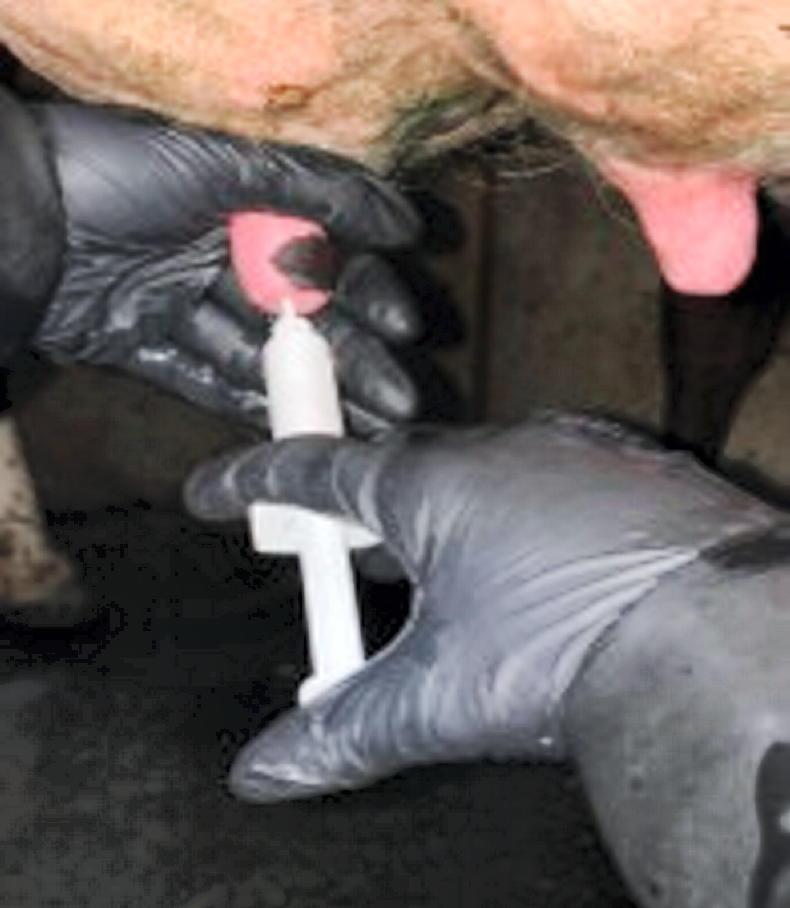
From the milk samples collected, we found that cows treated with ITS alone had higher levels of new infections at calving (ie did not have infection at dry-off but did at calving) compared to ITS plus antibiotic cows.
This was surprising as the function of ITS is to prevent infections during the dry period.
The spontaneous cure rates during the dry period for cows with a low SCC (<200,000 cells/mL) is high, even in cows treated with ITS alone as this study showed that 82% (40/49 cows) with an infection at dry-off and treated with ITS had cured at calving.
This study highlighted that herd-level mastitis control, management, dry-off procedure and adequate selection could play an important role in successfully implementing selective dry cow therapy.
It also showed that even using 200,000 cells/mL as a cut-point to assign cows to ITS alone, farmers can have good results if dry-off and dry cow management are adequate.
Teagasc has conducted two studies to determine the ideal selection criteria and SCC cut-points to assign cows ITS alone at dry-off.
A study conducted on 21 commercial dairy farms and over 2,000 cows investigated herd bulk tank SCC and cow data such as milk recording SCC and milk yield to predict infection at dry-off.
This study showed that 18.7% of cows had an infection at dry-off, with 29% of first-lactation and 16% multiparous cows. The last milk recording SCC was found as the main information to predict infection, with other SCC data collected during lactation also important.
The SCC cut-point that maximised the detection of infected cows while minimising misclassification of uninfected cows was 65,000 cells/mL.
The average SCC at the last test-day for non-infected cows was 58,000 cells/mL compared to 132,000 cells/mL for infected cows.
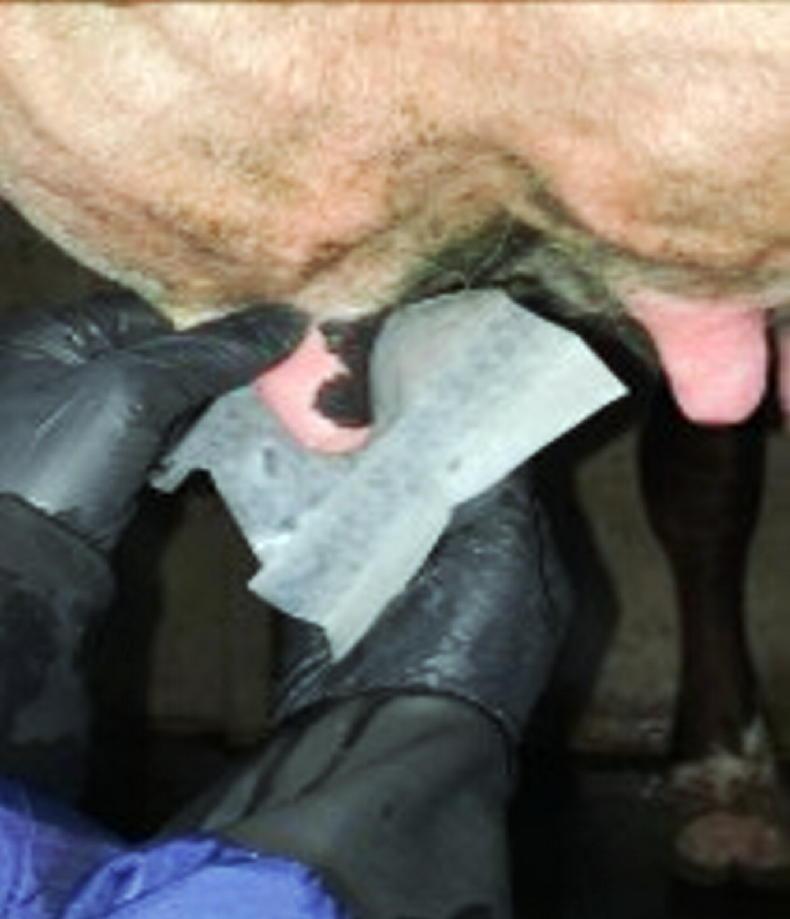
A second study in the same 21 commercial herds looked at the SCC at the quarter level that could contribute to detection of infection at dry-off.
At the quarter-level, an SCC of 61,000 cells/mL was best to detect infection in first lactation cows and 101,000 cells/mL in multiparous cows.
Follow-up studies have shown that other factors could be more important to determine whether a cow will have a high SCC in the following lactation.
A follow-up study compared several SCC cut-points (up to 150,000 cells/mL) to assign cows ITS alone treatment in research herds and found no differences in SCC in the following lactation between them.
In the past, the blanket use of antibiotics could have masked the negative impact of certain management practices on SCC in early lactation.
Therefore, to successfully implement selective dry cow therapy, it is important to improve management of dry cows.
We looked at cow and management practices associated with SCC in lactation in commercial dairy herds. At the cow level, older cows, cows with an infection at dry-off and a high SCC (>200,000 cells/mL) in the previous lactation increased the chances of cows having a high SCC the following lactation.
From the management practices, farmers that cleaned, scraped and limed the cubicles twice per day had lower SCC cows compared to farmers doing it just once a day.
The importance of how cows are dried off is critical in ensuring that animals remain low SCC in the following lactation.
The next lactation starts at dry-off. Guidelines have been developed to ensure this process is done cleanly.
Teagasc conducted a study in a research herd, investigating the impact of a guidelines-based dry-off procedure versus normal farm practice in cows treated with ITS alone and ITS with antibiotics. The steps of the guidelines-based dry-off procedure are highlighted in Figure 2.
The steps for the normal farm practice included steps 2, 5, 8, and 9.
The study showed that cows treated with the “normal” farm practice and teat sealant alone, had a higher SCC in the following lactation compared to the other groups (115,000 cells/mL vs 35,000 cells/mL, respectively).
This highlights that, especially in cows treated with ITS alone, being extra clean and thorough improves the chances of the cows being low SCC in the following lactation. Teagasc is conducting a follow-up study in 15 commercial herds, comparing a guidelines-based dry-off procedure with that of normal farm practice in cows treated with ITS alone.
Farmers taking part in the trial noted that the guideline-based dry-off took longer and the addition of full coverage of teat disinfectant using a dip cup was an added step from their normal routine. Despite the extra time, farmers reported back better udder health results in the guideline-based dry-off group, with one farmer commenting “I was very happy with the results”.
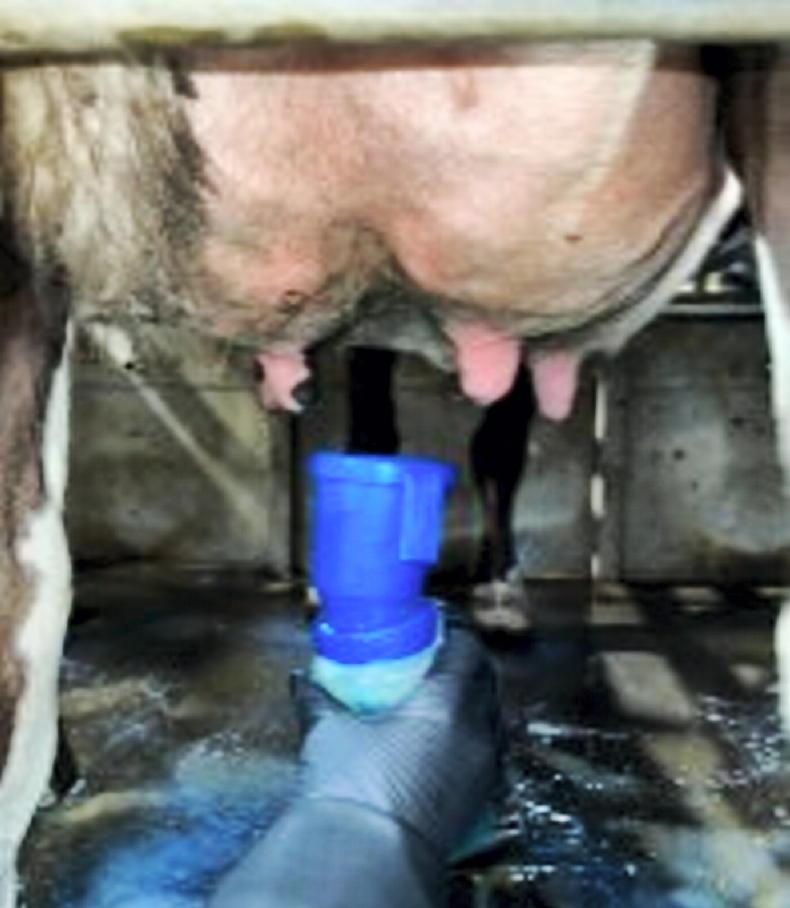
Most farmers said they intended to incorporate pre-dipping and more thorough teat end cleaning into their own routine going forward, even if they didn’t adopt every step of the full protocol, with one farmer advising
“Drying off cows is so very important, and I’d recommend 100% to spend the time doing it right.”
End of lactation is a good opportunity to review udder health records and make decisions regarding culling cows on mastitis grounds.
If a cow has been consistently above 200,000 cells/mL (eg >2 times in the lactation), was high SCC in the previous lactation and was treated with antibiotic at the previous dry-off, the infection is unlikely to cure and that cow should leave the herd.
Keeping these cows in the herd will only contribute to infecting other cows and increase SCC, as these persistently high cows act as a reservoir for bacteria.
Use the end of lactation as an opportunity to identify cows that need culling and, if not planning on culling at dry-off, consider not breeding them during the following lactation if they persist being high SCC and then remove from the herd.



SHARING OPTIONS