



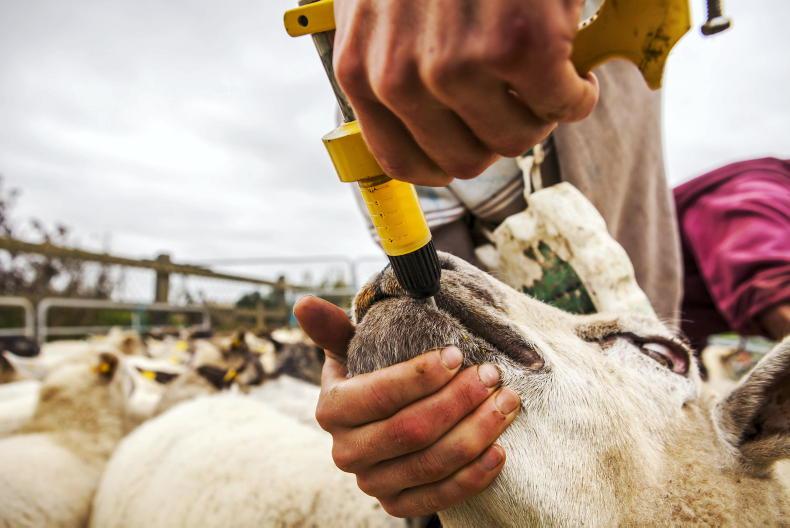
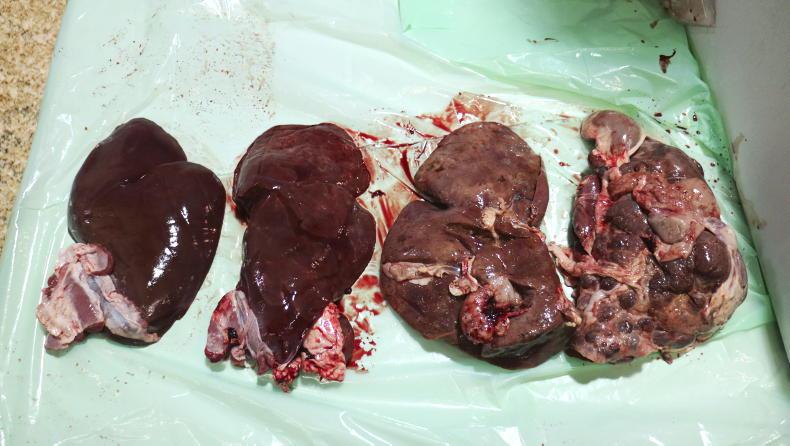
There is a risk that liver fluke treatments are taking place too early on some livestock farms, animal health experts have warned.
Philip Skuce from the Moredun Research Institute said laboratory reports indicate that the current liver fluke season is following the pattern of recent years and will be later than usual.
“Even in areas where we traditionally expect a very high challenge in the autumn, we are still not seeing any significant signs of liver fluke in the first half of November,” he said.
Rebecca Mearns from the Animal and Plant Health Agency explained that flukicides have no residual effect, so treated animals will still be vulnerable to picking up liver fluke later in the winter.
“Farmers who are sticking with traditional treatment windows in the autumn, for example ewes around tupping, are often giving treatments too early, leaving livestock susceptible to disease,” she said.
The advice from animal health experts is to make use of diagnostic tests so that liver fluke treatments are used at the most appropriate time.
Tests that identify antibodies in the blood are described as “the earliest line of attack” because they can detect liver fluke burdens soon after infection. This type of test includes an ELISA test from a blood sample or a lateral flow test from ear or nose pricks.
However, these tests are only suitable for lambs and calves, so they should not be used on older animals that have had exposure to liver fluke in previous years.
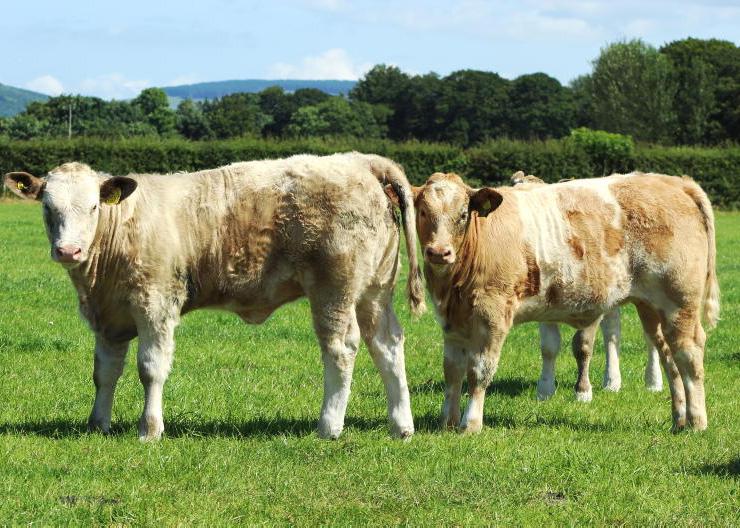
The advice is to use livestock in their first season as “sentinels” which means tests on these animals are used to assess fluke burdens in other livestock groups.
Faecal egg counts from dung samples can also be used to detect egg laying adult fluke, but it is not effective at identifying immature fluke which is the main risk in the autumn and early winter.





SHARING OPTIONS