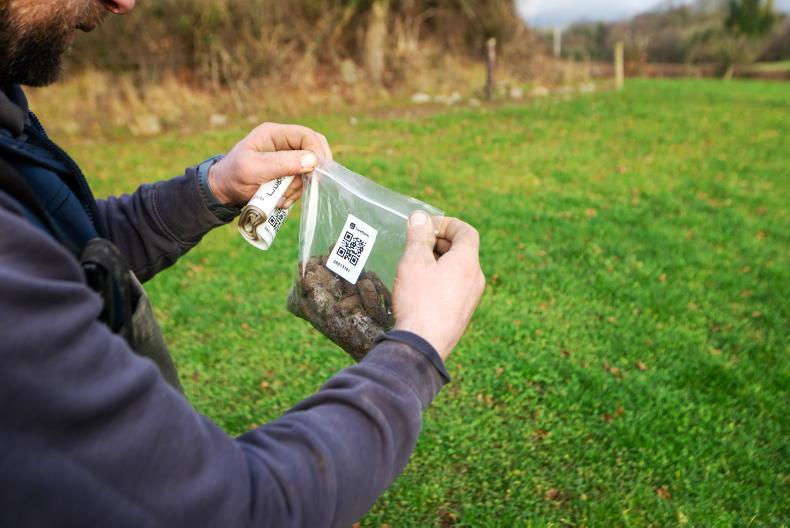
More than 536,000 fields have now been sampled under the Soil Nutrient Health Scheme (SNHS), with results highlighting significant potential to improve soil fertility and farm productivity.
The Agri-Food and Biosciences Institute (AFBI) is preparing for the final phase of sampling this autumn and winter.
Since the scheme began in 2022, around 22,700 eligible farm business’ have registered, representing approximately 93% of farm payment applicants.
According to AFBI project leader, Alex Higgins, soil pH remains the most important issue emerging from the results.
Average pH levels stand at 5.8 on mineral soils and 5.5 on organic soils, both below optimum levels.
He suggested that raising mineral soil pH from 5.8 to the target of 6.2 could increase dry matter offtake by up to two tonnes per hectare without additional fertiliser use.
Phosphorus
While pH is below optimum on many farms, 40% of sampled fields are above the target Phosphorus Index of 2+ for intensively managed grassland.
The advice from AFBI is to use individual soil reports and runoff risk maps to guide nutrient applications, and thereby reduce losses to waterways.