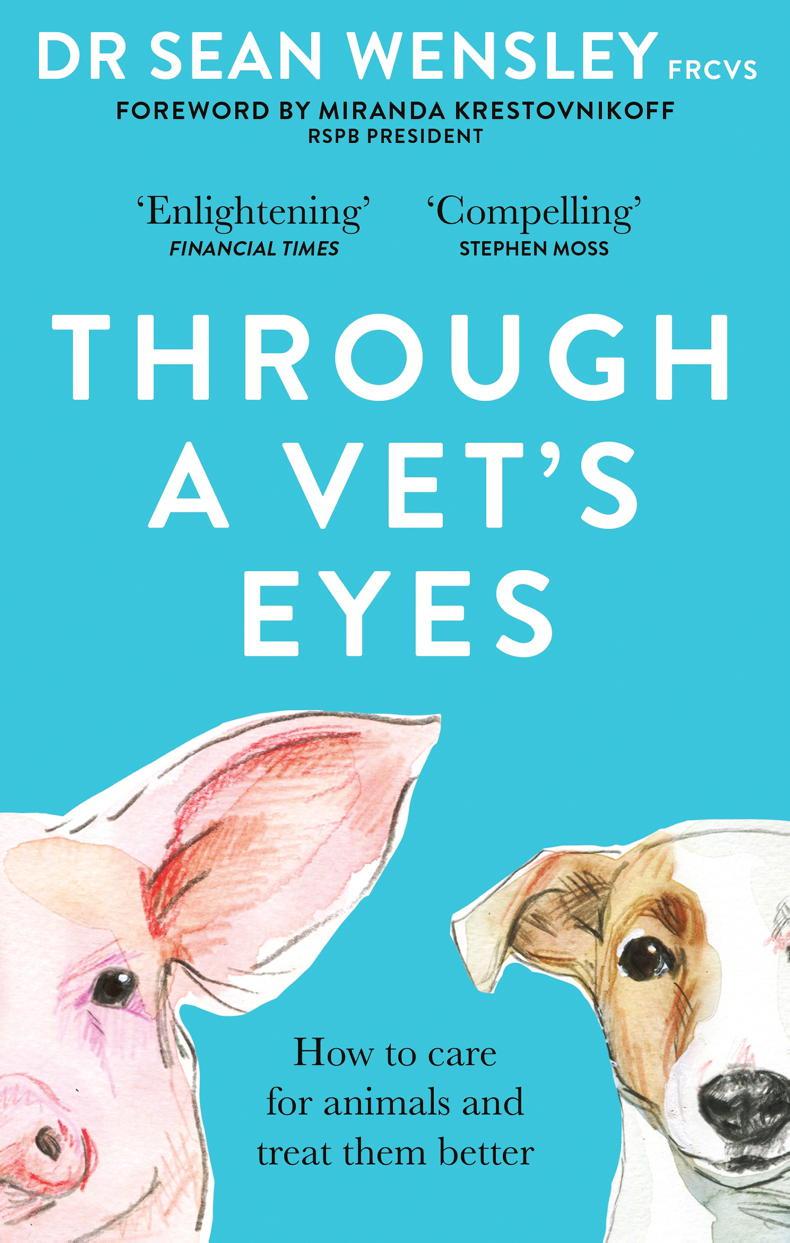
A recently published book by well-known vet Dr Sean Wensley does exactly what it says on the cover by offering a different perspective on how animals are treated in society.
Wensley said a key reason for writing the book, titled Through a Vet’s Eyes, was to help give members of the public a better understanding of animal welfare science.
“It is the science of understanding how animals perceive the world and finding out what they need and want from their perspective,” he said in an interview with the Irish Farmers Journal.
So how do we define animal welfare in a farm setting? If an animal is healthy and is putting on liveweight or producing plenty of milk or eggs, surely it has good welfare. Right?
Wensley disagrees and explains that although physical health is necessary for animal welfare, it is not the be-all and end-all.
“If you have poor health, you have poor welfare. But if you have good health, you don’t necessarily have good welfare,” he said.
He gives a simple example which shows there is much more to animal welfare than just health and productivity.
“In a barren battery cage, even if a hen is laying well, the evidence would prove that mental well-being and the broader concept of welfare isn’t good,” he said.
Scientific techniques
Wensley explained that there are “interesting and clever scientific approaches” for assessing what it feels like to be an animal under certain situations.
Many of these techniques are mentioned throughout the book when he refers to experiments within animal welfare science. A common technique is the use of weighted doors to assess an animal’s motivation to have access to something.
For example, weighted doors were used in experiments in the early 2000s to evaluate how important perches were to hens for roosting. This was then compared to how birds pushed doors to access food.
The researchers found that to access a perch, hens were prepared to push through a door that was 75% of the weight they would overcome to reach food when they were hungry. The findings fed into an EU report which concluded that battery cages did not allow hens to express normal behaviour.
This goes against one of the “five freedoms” which are outlined in the box opposite and are widely recognised as key principles for assessing animal welfare.
Livestock farming
Through a Vet’s Eyes covers much more than just livestock farming, with other topics of discussion ranging from the nutrition of pet rabbits to the ethics of horse racing.
That said, a significant amount of the book is focused on livestock with individual chapters dedicated to different farming sectors.
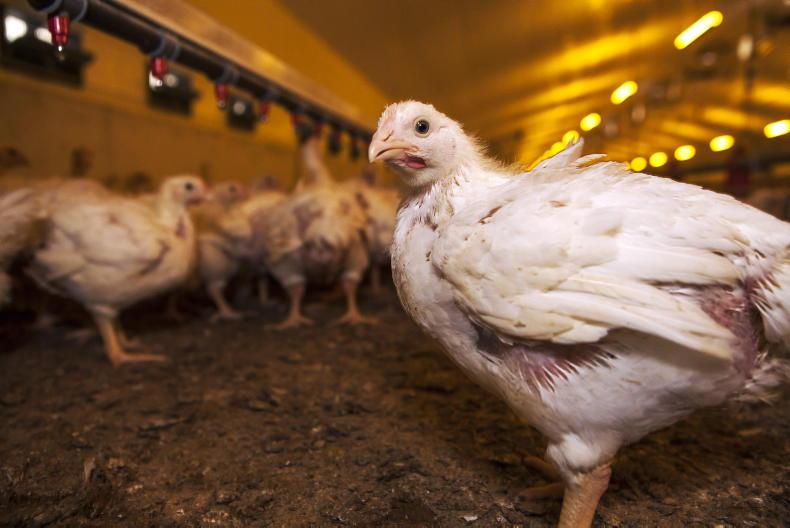
Intensive farming sectors tend to come under the most scrutiny for animal welfare and the usual issues are covered in the book, such as farrowing crates for sows and lameness in fast-growing broilers.
However, it is noteworthy that less obvious welfare issues are covered in detail too, including tail-docking lambs and disbudding calves.
Wensley argues that looking critically at farming systems can help identify areas where gradual improvements can be made to better achieve the key aim of giving farm animals “a good life and a humane death”.
“If we agree that we would like these problems tackled in the fullness of time, then we can put our heads together and start working towards that idea,” he said.
Assured products
Throughout the book, Wensley recommends that readers who are concerned about animal welfare should buy products that are labelled under high welfare quality assurance schemes.
But does he think that readers will follow up on his advice at the supermarket checkout, given that these products tend to be more expensive?
“There is evidence of consumer behaviour that expressing a willingness to pay more isn’t always the same as what actually happens at the till,” he acknowledges.
He argues that the broader question for consumers should boil down to “the expectation and the value” that is placed on animal-based food.
“We should point out that just demanding very cheap meat and dairy doesn’t mean there are no implications for how we house and husband the animals, steward the environment, and make sure farmers get a fair return for all their hard work,” he said.
Wensley acknowledges that the overwhelming majority of farmers care deeply about the welfare of their livestock, but razor-thin profit margins mean higher welfare systems are usually not economical.
The point is neatly summed up in the book by a short conversation that Wensley had with a farmer about how animal welfare could be further improved in agriculture.
“I’d give each of my animals golden slippers if someone would pay for the product,” the farmer said.
Who is Sean Wensley?
Dr Sean Wensley is a graduate of Liverpool Vet School and is a former president of the British Veterinary Association.
He now lives in Bangor, Co Down and works as animal welfare expert for PDSA, a national veterinary charity.
The Five Freedoms of Animal Welfare
Freedom from hunger and thirst.Freedom from discomfort.Freedom from pain, injury, or disease.Freedom to express normal behaviour.Freedom from fear and distress.
A recently published book by well-known vet Dr Sean Wensley does exactly what it says on the cover by offering a different perspective on how animals are treated in society.
Wensley said a key reason for writing the book, titled Through a Vet’s Eyes, was to help give members of the public a better understanding of animal welfare science.
“It is the science of understanding how animals perceive the world and finding out what they need and want from their perspective,” he said in an interview with the Irish Farmers Journal.
So how do we define animal welfare in a farm setting? If an animal is healthy and is putting on liveweight or producing plenty of milk or eggs, surely it has good welfare. Right?
Wensley disagrees and explains that although physical health is necessary for animal welfare, it is not the be-all and end-all.
“If you have poor health, you have poor welfare. But if you have good health, you don’t necessarily have good welfare,” he said.
He gives a simple example which shows there is much more to animal welfare than just health and productivity.
“In a barren battery cage, even if a hen is laying well, the evidence would prove that mental well-being and the broader concept of welfare isn’t good,” he said.
Scientific techniques
Wensley explained that there are “interesting and clever scientific approaches” for assessing what it feels like to be an animal under certain situations.
Many of these techniques are mentioned throughout the book when he refers to experiments within animal welfare science. A common technique is the use of weighted doors to assess an animal’s motivation to have access to something.
For example, weighted doors were used in experiments in the early 2000s to evaluate how important perches were to hens for roosting. This was then compared to how birds pushed doors to access food.
The researchers found that to access a perch, hens were prepared to push through a door that was 75% of the weight they would overcome to reach food when they were hungry. The findings fed into an EU report which concluded that battery cages did not allow hens to express normal behaviour.
This goes against one of the “five freedoms” which are outlined in the box opposite and are widely recognised as key principles for assessing animal welfare.
Livestock farming
Through a Vet’s Eyes covers much more than just livestock farming, with other topics of discussion ranging from the nutrition of pet rabbits to the ethics of horse racing.
That said, a significant amount of the book is focused on livestock with individual chapters dedicated to different farming sectors.
Intensive farming sectors tend to come under the most scrutiny for animal welfare and the usual issues are covered in the book, such as farrowing crates for sows and lameness in fast-growing broilers.
However, it is noteworthy that less obvious welfare issues are covered in detail too, including tail-docking lambs and disbudding calves.
Wensley argues that looking critically at farming systems can help identify areas where gradual improvements can be made to better achieve the key aim of giving farm animals “a good life and a humane death”.
“If we agree that we would like these problems tackled in the fullness of time, then we can put our heads together and start working towards that idea,” he said.
Assured products
Throughout the book, Wensley recommends that readers who are concerned about animal welfare should buy products that are labelled under high welfare quality assurance schemes.
But does he think that readers will follow up on his advice at the supermarket checkout, given that these products tend to be more expensive?
“There is evidence of consumer behaviour that expressing a willingness to pay more isn’t always the same as what actually happens at the till,” he acknowledges.
He argues that the broader question for consumers should boil down to “the expectation and the value” that is placed on animal-based food.
“We should point out that just demanding very cheap meat and dairy doesn’t mean there are no implications for how we house and husband the animals, steward the environment, and make sure farmers get a fair return for all their hard work,” he said.
Wensley acknowledges that the overwhelming majority of farmers care deeply about the welfare of their livestock, but razor-thin profit margins mean higher welfare systems are usually not economical.
The point is neatly summed up in the book by a short conversation that Wensley had with a farmer about how animal welfare could be further improved in agriculture.
“I’d give each of my animals golden slippers if someone would pay for the product,” the farmer said.
Who is Sean Wensley?
Dr Sean Wensley is a graduate of Liverpool Vet School and is a former president of the British Veterinary Association.
He now lives in Bangor, Co Down and works as animal welfare expert for PDSA, a national veterinary charity.
The Five Freedoms of Animal Welfare
Freedom from hunger and thirst.Freedom from discomfort.Freedom from pain, injury, or disease.Freedom to express normal behaviour.Freedom from fear and distress. 





SHARING OPTIONS