John Lanigan from Thurles believes that new lucrative markets are available to farmers if they choose to breed cattle specially tailored to supplying health-conscious consumers. More importantly, by supplying loyal customers with a premium product, farmers would be protected from fluctuations in price. As we all know, the price for mainstream commodity beef that most farmers produce varies wildly, from high prices during times of scarcity, to very low prices when there is sufficient supply.
According to John, you have to be different to avoid this unpredictability: “If you want to receive a high price consistently, you must mark yourself out from the crowd and produce a designer product."
New strain
With this in mind, John has dedicated 25 years to developing a new strain of Angus cattle that have been genetically selected to have the most tender beef in the world. He started two decades ago with Angus cross Piedmontese females and through rigorous selection, graded up these animals using specially selected Angus bulls, until he had bred the first pedigree Angus in the world to have the beneficial C313Y Myostatin gene.
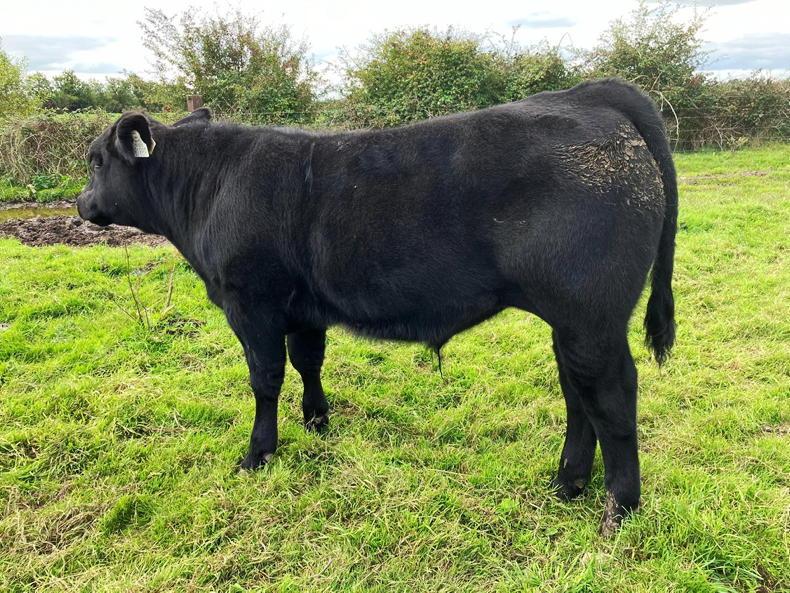
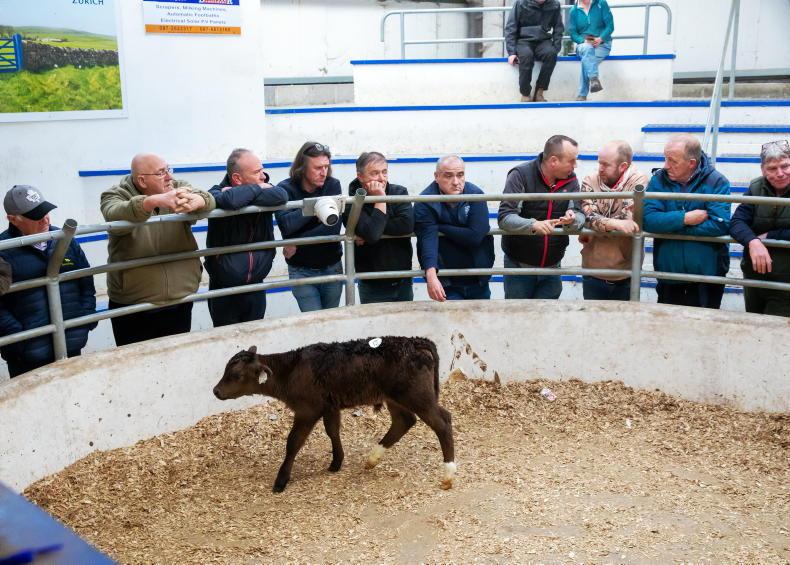
A typical five-month-old bull calf on Lanigan's farm.
The advantages of the C313Y gene are seen in single copy carriers, with leaner meat, improved muscling, higher killout and a much higher meat yield.
"There is improved feed conversion efficiency, with three times less feed required to produce a kilo of lean meat versus a kilo of fat", John added.
This improved feed efficiency has knock on benefits for reducing the carbon footprint of every kilo of beef produced and increases the profitability for the farmer.
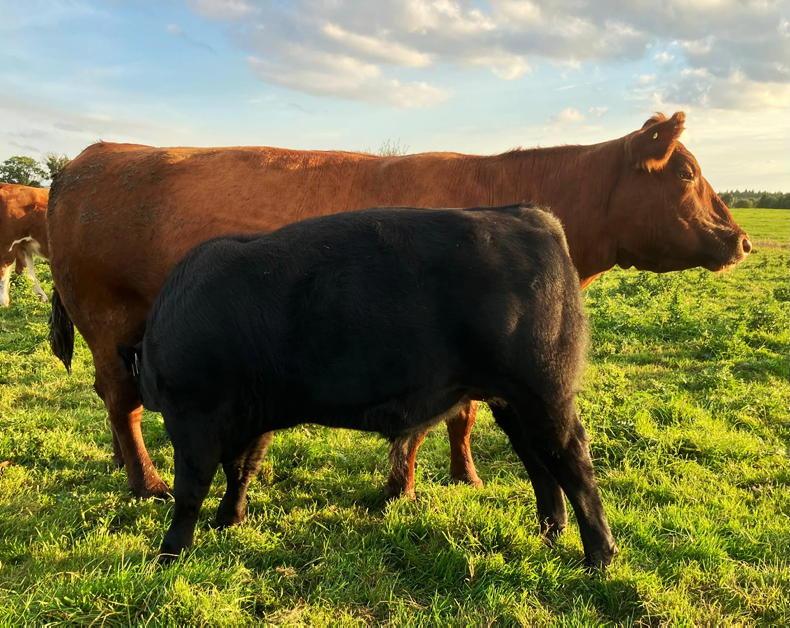
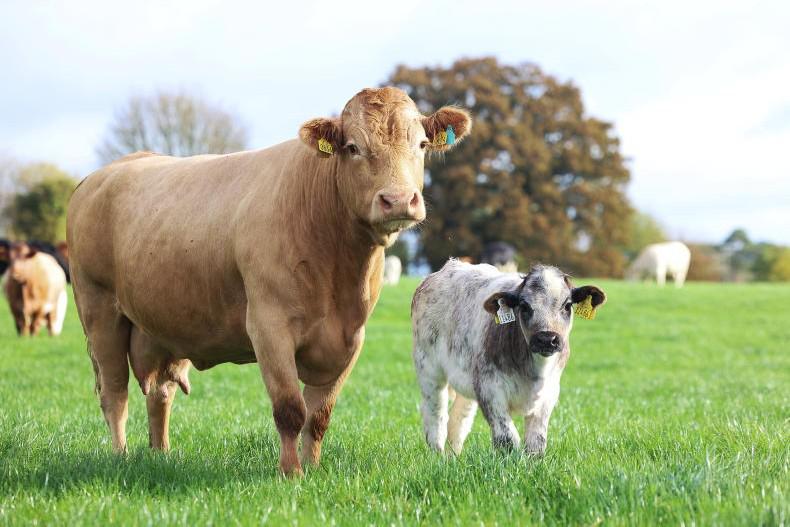
A six-month-old bull calf with it's mother on the farm.
High-value steaks make up only a small proportion of an animal, with approximately 66% of the carcase being lower value cuts. Results from trials by the US Department of Agriculture (USDA) indicated that cattle with C313Y have improved in tenderness matching the better cuts and improving the overall carcass value. In these trials, round steaks with a single copy of the tenderness gene practically matched striploins from non carriers for tenderness.
Health benefits
In addition to having extremely tender meat, these cattle also have health benefits, with less saturated fat, while also having higher levels of beneficial fatty acids, including Conjugated Linoleic Acid (CLA). It is widely accepted that CLA has proven health benefits, including reducing the risk of some cancers and heart disease.
Dr Koohmaraie, previous director at Meat Animal Research Centre at the US Department of Agriculture, stated that C313Y “inactivate Myostatin provides a much more positive effect on beef tenderness than any other genetic feature”.
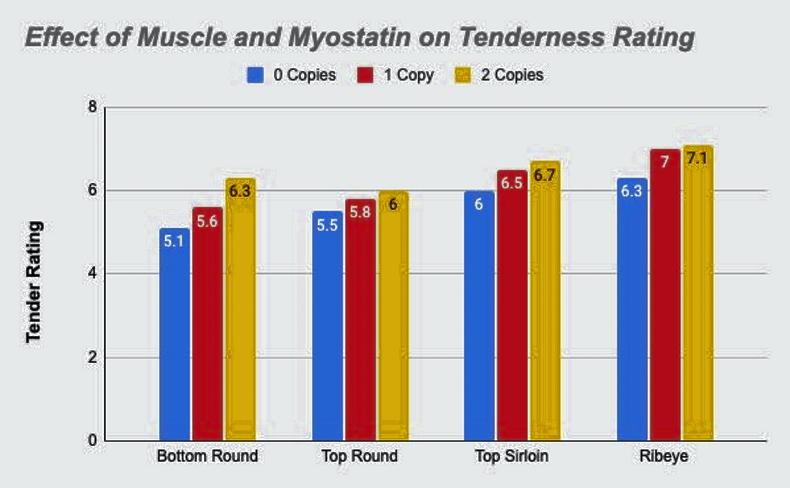
A table from the U.S. Department of Agriculture (USDA) highlighting the effect of myostatin on the tenderness rating of beef.
Last year, John bred 44 calves using these genetics in his own dairy herd, with excellent results.
“I believe Angus genetics are the ideal combination with the tenderness gene, as they are already synonymous with short gestation, eating quality, easy fleshing and ease of management,” he said.
John believes farmers now have the opportunity to improve their income by producing high-value beef for a growing market of health-conscious consumers, who are willing to pay that little bit extra for a healthy, high-quality product.
"When I imported the first Red Angus embryos into Ireland 25 years ago, it was a highly unpopular move. Since then, Red Angus have gone on to achieve top prices and I am equally confident that these new cattle will be a game changer in the future."
John Lanigan from Thurles believes that new lucrative markets are available to farmers if they choose to breed cattle specially tailored to supplying health-conscious consumers. More importantly, by supplying loyal customers with a premium product, farmers would be protected from fluctuations in price. As we all know, the price for mainstream commodity beef that most farmers produce varies wildly, from high prices during times of scarcity, to very low prices when there is sufficient supply.
According to John, you have to be different to avoid this unpredictability: “If you want to receive a high price consistently, you must mark yourself out from the crowd and produce a designer product."
New strain
With this in mind, John has dedicated 25 years to developing a new strain of Angus cattle that have been genetically selected to have the most tender beef in the world. He started two decades ago with Angus cross Piedmontese females and through rigorous selection, graded up these animals using specially selected Angus bulls, until he had bred the first pedigree Angus in the world to have the beneficial C313Y Myostatin gene.
A typical five-month-old bull calf on Lanigan's farm.
The advantages of the C313Y gene are seen in single copy carriers, with leaner meat, improved muscling, higher killout and a much higher meat yield.
"There is improved feed conversion efficiency, with three times less feed required to produce a kilo of lean meat versus a kilo of fat", John added.
This improved feed efficiency has knock on benefits for reducing the carbon footprint of every kilo of beef produced and increases the profitability for the farmer.
A six-month-old bull calf with it's mother on the farm.
High-value steaks make up only a small proportion of an animal, with approximately 66% of the carcase being lower value cuts. Results from trials by the US Department of Agriculture (USDA) indicated that cattle with C313Y have improved in tenderness matching the better cuts and improving the overall carcass value. In these trials, round steaks with a single copy of the tenderness gene practically matched striploins from non carriers for tenderness.
Health benefits
In addition to having extremely tender meat, these cattle also have health benefits, with less saturated fat, while also having higher levels of beneficial fatty acids, including Conjugated Linoleic Acid (CLA). It is widely accepted that CLA has proven health benefits, including reducing the risk of some cancers and heart disease.
Dr Koohmaraie, previous director at Meat Animal Research Centre at the US Department of Agriculture, stated that C313Y “inactivate Myostatin provides a much more positive effect on beef tenderness than any other genetic feature”.
A table from the U.S. Department of Agriculture (USDA) highlighting the effect of myostatin on the tenderness rating of beef.
Last year, John bred 44 calves using these genetics in his own dairy herd, with excellent results.
“I believe Angus genetics are the ideal combination with the tenderness gene, as they are already synonymous with short gestation, eating quality, easy fleshing and ease of management,” he said.
John believes farmers now have the opportunity to improve their income by producing high-value beef for a growing market of health-conscious consumers, who are willing to pay that little bit extra for a healthy, high-quality product.
"When I imported the first Red Angus embryos into Ireland 25 years ago, it was a highly unpopular move. Since then, Red Angus have gone on to achieve top prices and I am equally confident that these new cattle will be a game changer in the future."





SHARING OPTIONS