


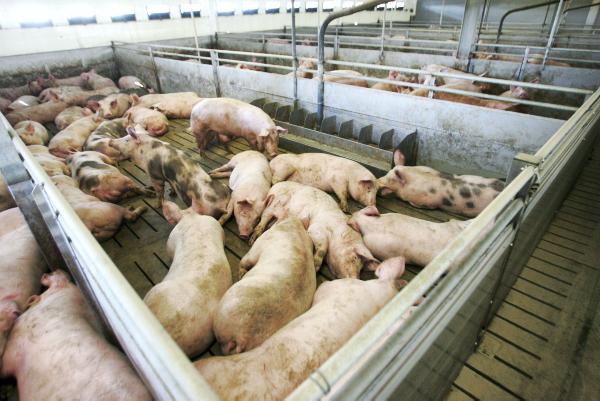
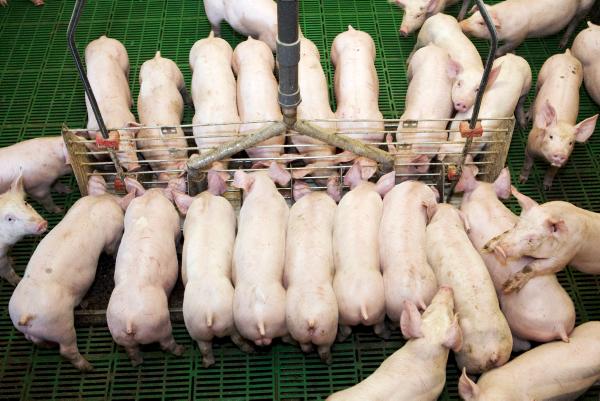
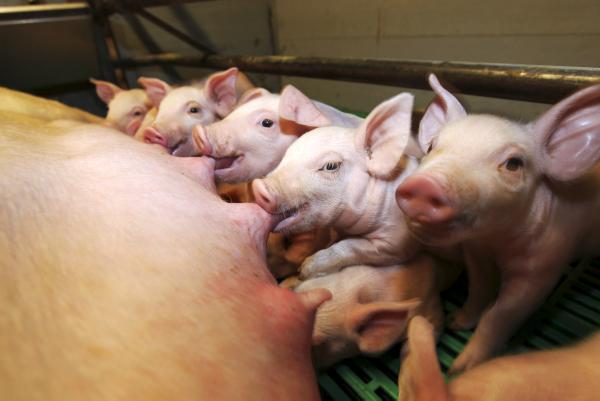
Pig farmers have had their fair share of trials and tribulations over the past number of years. The pork dioxin scare, the blue ear disease which affected in the region of 50,000 sows last year, fluctuating input costs and the current situation with African swine fever, which has resulted in Russia banning European pork imports, are just a number of issues pig farmers here have had to contend with.
There are in the region of just 300 commercial pig farmers in the country – it is a small, but focused industry. They are totally market reliant, receiving no Single Farm Payment.
According to the Central Statistics Office (CSO), there are just over 1.5 million pigs in the country. Most of these come from Cavan, Cork, Tipperary, Waterford and Longford.
However, despite all these hurdles, pig farmers have continuously been investing in their business. The value of buildings on pig farms in Ireland is estimated to be in the region of €600m, with further investments expected. According to Bord Bia figures the value of pigmeat exports in 2013 was €525m, up €10m in a year.
Ciaran Carroll, head of pig development with Teagasc, explained: “Pig farming is a bit of an unusual one. We’ve always seen investment but it ebbs and flows depending on the market. We’re in the middle of a tough period for the sector at the minute.
“Traditionally, the pig sector had one good year, one bad year, but for the past 15 years or so it’s turned into a two bad, one good. All the while, there has been investing and upgrading. The lifespan of a pig unit is about 20 years before it has to be rebuilt but ventilation and other systems also need regular upgrading,” he added.
The loose sow housing regulations, introduced in 2003, saw major investments on almost every pig farm in the country as tight specifications and regulations had to be met.
“Broadly speaking, we’ve seen about €600m invested in housing over the past 10 years as a result of the housing rules and we would estimate that another €50m will be needed in the coming years,” Carroll added.
Brian Brady runs a substantial pig business in Balljamesduff, Cavan. In 2007, he invested heavily to become compliant with EU regulation.
“I spent a huge amount of money at the time,” Brady said. “It worked out at €750/sow for the works. That included a total shed build as well as slurry storage, feeding and ventilation systems. It was a big bit of business and money just to become compliant. I was no different to any other pig farmer – we all pumped masses of money into our farms,” he added.
The industry is not one that sees many new entrants. The start-up costs are phenomenal and to make a viable living, a pig farmer needs to have a relatively high number of sows to be a standalone business without having to rely on other farming enterprises.
“To get into pig farming today, you’re looking at a cost of between €5,000 and €6,000 per sow if you have a greenfield site and want to get into the business,” Carroll said.
“In all reality, you would need in the region of 300-400 sows to make a living when prices are good. The average herd in Ireland is in or around the 500-550 figure. There are others below that figure that are doing well but that would be the accepted figure. The accepted figure is about 600 sows to make a good living out of pigs,” Carroll added.
Vincent Conefrey is a pig farmer from Longford who is a relatively new entrant to the sector. He renovated a small byre to hold a few pigs in the early 1990s after coming out of Teagasc in Athenry. Under the loose sow housing regulations, he had to upgrade his entire system.
“I had to build everything from scratch to be honest,” Conefrey explained. “I only had a very basic system at the time and to keep in line with the regulations, I had to build everything both inside and outside on the farm. I’m up to about 150 sows now and things are motoring away fine.”
Access to finance
Access to finance from banks is something that has stymied Conefrey from further expansion. He received approval under the sow welfare scheme, which closes this week, for more upgrade works. However, he has been unable to secure lending from the bank to develop his enterprise.
“If the money was there I’d kick on with the development. I had full approval under the sow welfare scheme but banks aren’t so keen to lend in a major way to pig farmers. We’ve definitely seen a contraction in the number of pig farmers in my time. When I started there were about 800-1,000. Now all we have is little over 200. It has consolidated a bit, but it’s a tough one at the same time,” Conefrey added.
Ciaran Carroll is worried that with Food Harvest 2020 targets to be reached, a lack of funding could prevent the sector from growing.
“Under Food Harvest 2020, there’s a target of 50% increase in value of output from the pigmeat sector. The challenge is increase the herd size by 50,000 sows. This will require an investment of €300m with approximately 50% from producers’ own funds and 50% from new borrowings. Pig farmers have always showed their willingness to investment and develop but there needs to be a backing from the banks too,” Carroll added.


SHARING OPTIONS