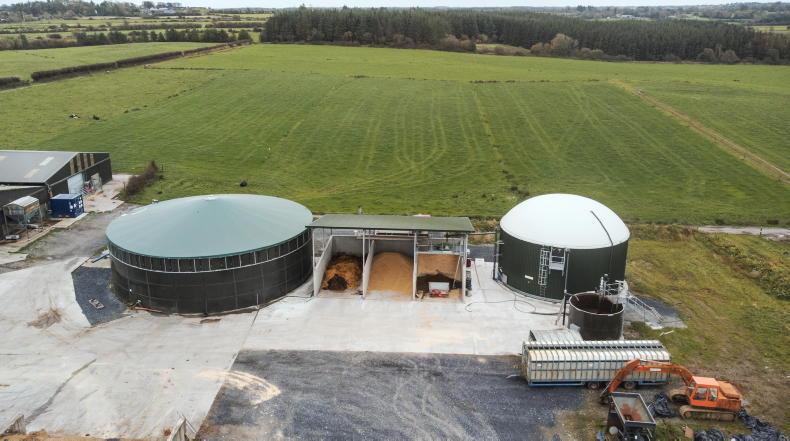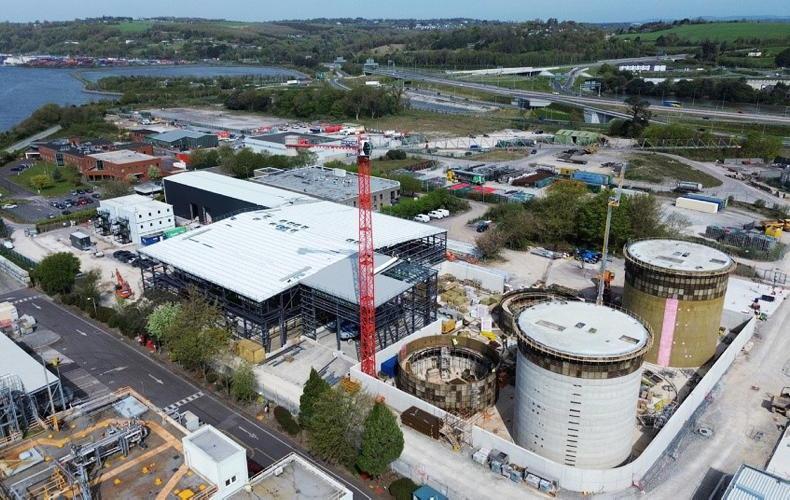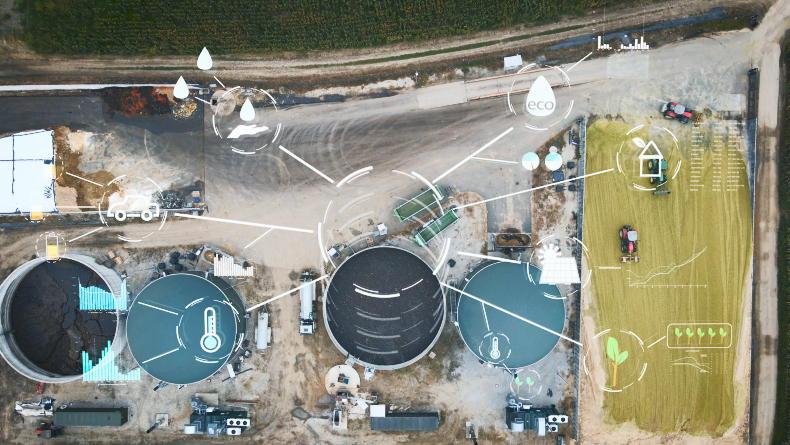
At the current pace of development, Ireland’s anaerobic digestion (AD) sector is expected to grow from virtually zero to approximately 50-60 operational large-scale plants by 2030. Although this falls far short of the 200 plants envisaged in the National Biomethane Strategy, it is still a significant build-out. Each plant is likely to be between 50,000t and 100,000t in annual capacity. These plants will interact with farms across hundreds of thousands of acres, either through feedstock production or digestate management.
The question is, how will this sector grow without causing unintended consequences?
The dairy sector is concerned about competition for land; environmental groups worry about digestate management and potential methane leakage; and local communities are anxious about traffic, odour and general disruption. The list of concerns is long.
Last week, the Biomethane Environmental Sustainability Charter was co-launched by the Minister for Climate, Energy and the Environment, Darragh O’Brien, and the Minister for Agriculture, Food and the Marine, Martin Heydon.
While some of the measures in the new guidelines reflect existing legal obligations, the remainder represent best practice recommendations, all intended to prevent negative unintended consequences as the sector expands.
Who does this apply to?
The charter focuses on four key principles: digestate management, sustainable feedstock production, plant design and operation, and community and local engagement.
The charter applies to AD plant developers, owners and operators, suppliers of feedstock to AD plants, and those acting as off-takers for digestate.
For developers, the charter applies to all biomethane plants being developed in Ireland that receive any form of public funding, operate under a national AD/biomethane support scheme, or produce gas eligible for the issuance of RHO or RTFO certificates. The only exemptions are Animal By-Products (ABP) Type 9 plants and plants below 1 MW thermal output (or producing less than 100Nm³ of biomethane per hour).
Digestate management
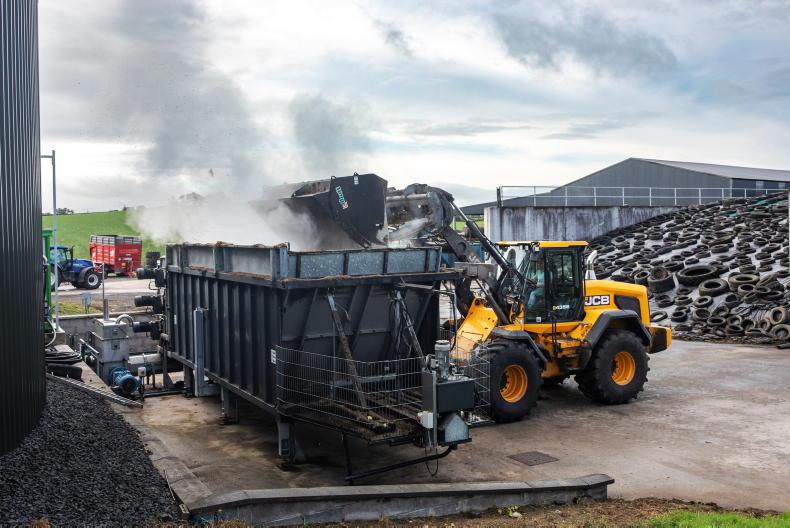
The further expansion of biomethane production in Ireland will result in significant volumes of digestate being produced. The charter outlines that replacing one tonne of artificial fertiliser with digestate can save one tonne of oil, 108t of water and seven tonnes of CO2 emissions. AD will also enable the centralised management of manure in areas with surplus nutrients and increase the value of slurry, citing the new ReNure rules.
The charter states that by-products of AD must comply with all commitments under the nitrates directive and relevant EU regulations. Plant operators must ensure that whole digestate or the separated liquid fraction is stored in a leak-proof tank, covered if possible (though covering is not a legal requirement). The solid fraction of digestate must not be stored in a field at any time during the closed spreading period.
The permitted spreading period for digestate is equivalent to the rules for spreading organic fertiliser under the nitrates regulations. The last permitted date for spreading digestate is currently 30 September in any given calendar year.
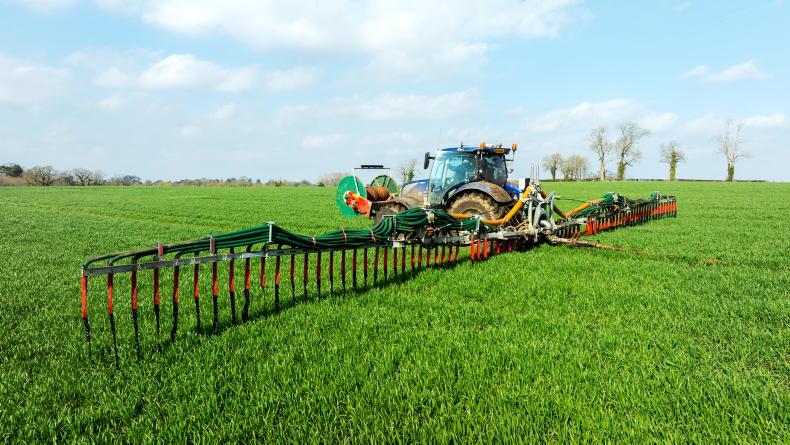
The further expansion of biomethane production in Ireland will result in significant volumes of digestate being produced.
If feedstock composition varies, periodic sampling and laboratory testing must be conducted to analyse nutrient levels (NPK). Up-to-date test results must be provided to farmers receiving the digestate. Any farmer accepting digestate must have soil sample results that are no more than five years old. Clear and current record-keeping will be required for all digestate recipients. The Government also requires AD operators to ensure that farmers receiving digestate for land spreading are informed of the feedstocks used to produce it.
Low Emission Slurry Spreading (LESS) techniques should be used where practical, although it is not mandatory for all farmers.
Feedstock production
The charter reaffirms that the Government wants this sector to be agri-centric. It states that waste is the preferred feedstock and that there is enough of it to meet the 2030 target. However, slurry and crops will also be used. The idea is that AD will allow farmers to grow grass using digestate obtained from a nearby AD plant. In reality, more than just grass crops will be used, something the charter does not appear to acknowledge.
The charter outlines expectations around land-use protection, environmental compliance, and feedstock traceability as Ireland prepares to expand AD capacity.
Under the charter, AD plant operators and farmers must ensure that no feedstock originates from land with high environmental value, including areas with high biodiversity, high carbon stocks, or former peatlands. Farmers supplying feedstocks to AD plants are explicitly responsible for full compliance with the nitrates regulations, particularly where slurry or other organic manures are moved off-farm to an AD facility. The charter also requires farmers to minimise the use of chemical fertilisers and pesticides when growing feedstocks for AD plants.
AD operators are encouraged to source agricultural feedstocks as locally as possible to reduce transport-related emissions and to support regional farming communities, it states. Farmers are encouraged to explore sustainable forage options, including red clover, multi-species swards, or other regenerative cropping systems, which can reduce fertiliser requirements, fix nitrogen naturally, and improve on-farm biodiversity. To support consistent fuel quality and traceability, AD operators are advised to carry out regular monitoring and laboratory testing of feedstocks before they enter the digestion process.
Farmers are encouraged to explore sustainable forage options, including red clover, multi-species swards.
Plant design and operation
The charter’s section on plant design and operation is arguably the weakest part, as it offers minimal guidance. It states that AD plant operators should implement a methane-leakage mitigation programme but provides no detail on what this should entail.
It also recommends carrying out an energy efficiency assessment and meeting the majority of the plant’s energy demand from renewable sources. However, the section also lacks clear direction on how these objectives should be achieved.
Community and local engagement
The final section focuses on one of the most controversial aspects of AD development: community and local engagement.
When developers get engagement wrong, projects can be stopped entirely. Conversely, even when developers make efforts to engage, many still find themselves in planning disputes.
The charter emphasises that effective engagement with local stakeholders is essential and should involve building meaningful relationships and fostering trust.
It proposes developing a community engagement plan, providing opportunities for local feedback, and enabling meaningful two-way communication.
The charter also recommends appointing a community liaison officer or representative to act as a key point of contact and to maintain ongoing relationships with local communities and representative organisations.
Welcomed
The charter was welcomed by the industry. PJ McCarthy, CEO of the Renewable Gas Forum Ireland, said the charter sets the right foundation, combining ambition with accountability in an already highly regulated industry.
Seán Finan CEO of the Irish Bioenergy Association said that “this charter will be important to promote the positive and sustainable benefits an Agri-centric biomethane industry can play in Ireland and the benefits it can bring across many aspects of society”.
The author Stephen Robb is currently involved in a family/community proposal for an anaerobic digestion facility in Co Donegal.
At the current pace of development, Ireland’s anaerobic digestion (AD) sector is expected to grow from virtually zero to approximately 50-60 operational large-scale plants by 2030. Although this falls far short of the 200 plants envisaged in the National Biomethane Strategy, it is still a significant build-out. Each plant is likely to be between 50,000t and 100,000t in annual capacity. These plants will interact with farms across hundreds of thousands of acres, either through feedstock production or digestate management.
The question is, how will this sector grow without causing unintended consequences?
The dairy sector is concerned about competition for land; environmental groups worry about digestate management and potential methane leakage; and local communities are anxious about traffic, odour and general disruption. The list of concerns is long.
Last week, the Biomethane Environmental Sustainability Charter was co-launched by the Minister for Climate, Energy and the Environment, Darragh O’Brien, and the Minister for Agriculture, Food and the Marine, Martin Heydon.
While some of the measures in the new guidelines reflect existing legal obligations, the remainder represent best practice recommendations, all intended to prevent negative unintended consequences as the sector expands.
Who does this apply to?
The charter focuses on four key principles: digestate management, sustainable feedstock production, plant design and operation, and community and local engagement.
The charter applies to AD plant developers, owners and operators, suppliers of feedstock to AD plants, and those acting as off-takers for digestate.
For developers, the charter applies to all biomethane plants being developed in Ireland that receive any form of public funding, operate under a national AD/biomethane support scheme, or produce gas eligible for the issuance of RHO or RTFO certificates. The only exemptions are Animal By-Products (ABP) Type 9 plants and plants below 1 MW thermal output (or producing less than 100Nm³ of biomethane per hour).
Digestate management
The further expansion of biomethane production in Ireland will result in significant volumes of digestate being produced. The charter outlines that replacing one tonne of artificial fertiliser with digestate can save one tonne of oil, 108t of water and seven tonnes of CO2 emissions. AD will also enable the centralised management of manure in areas with surplus nutrients and increase the value of slurry, citing the new ReNure rules.
The charter states that by-products of AD must comply with all commitments under the nitrates directive and relevant EU regulations. Plant operators must ensure that whole digestate or the separated liquid fraction is stored in a leak-proof tank, covered if possible (though covering is not a legal requirement). The solid fraction of digestate must not be stored in a field at any time during the closed spreading period.
The permitted spreading period for digestate is equivalent to the rules for spreading organic fertiliser under the nitrates regulations. The last permitted date for spreading digestate is currently 30 September in any given calendar year.

The further expansion of biomethane production in Ireland will result in significant volumes of digestate being produced.
If feedstock composition varies, periodic sampling and laboratory testing must be conducted to analyse nutrient levels (NPK). Up-to-date test results must be provided to farmers receiving the digestate. Any farmer accepting digestate must have soil sample results that are no more than five years old. Clear and current record-keeping will be required for all digestate recipients. The Government also requires AD operators to ensure that farmers receiving digestate for land spreading are informed of the feedstocks used to produce it.
Low Emission Slurry Spreading (LESS) techniques should be used where practical, although it is not mandatory for all farmers.
Feedstock production
The charter reaffirms that the Government wants this sector to be agri-centric. It states that waste is the preferred feedstock and that there is enough of it to meet the 2030 target. However, slurry and crops will also be used. The idea is that AD will allow farmers to grow grass using digestate obtained from a nearby AD plant. In reality, more than just grass crops will be used, something the charter does not appear to acknowledge.
The charter outlines expectations around land-use protection, environmental compliance, and feedstock traceability as Ireland prepares to expand AD capacity.
Under the charter, AD plant operators and farmers must ensure that no feedstock originates from land with high environmental value, including areas with high biodiversity, high carbon stocks, or former peatlands. Farmers supplying feedstocks to AD plants are explicitly responsible for full compliance with the nitrates regulations, particularly where slurry or other organic manures are moved off-farm to an AD facility. The charter also requires farmers to minimise the use of chemical fertilisers and pesticides when growing feedstocks for AD plants.
AD operators are encouraged to source agricultural feedstocks as locally as possible to reduce transport-related emissions and to support regional farming communities, it states. Farmers are encouraged to explore sustainable forage options, including red clover, multi-species swards, or other regenerative cropping systems, which can reduce fertiliser requirements, fix nitrogen naturally, and improve on-farm biodiversity. To support consistent fuel quality and traceability, AD operators are advised to carry out regular monitoring and laboratory testing of feedstocks before they enter the digestion process.

Farmers are encouraged to explore sustainable forage options, including red clover, multi-species swards.
Plant design and operation
The charter’s section on plant design and operation is arguably the weakest part, as it offers minimal guidance. It states that AD plant operators should implement a methane-leakage mitigation programme but provides no detail on what this should entail.
It also recommends carrying out an energy efficiency assessment and meeting the majority of the plant’s energy demand from renewable sources. However, the section also lacks clear direction on how these objectives should be achieved.
Community and local engagement
The final section focuses on one of the most controversial aspects of AD development: community and local engagement.
When developers get engagement wrong, projects can be stopped entirely. Conversely, even when developers make efforts to engage, many still find themselves in planning disputes.
The charter emphasises that effective engagement with local stakeholders is essential and should involve building meaningful relationships and fostering trust.
It proposes developing a community engagement plan, providing opportunities for local feedback, and enabling meaningful two-way communication.
The charter also recommends appointing a community liaison officer or representative to act as a key point of contact and to maintain ongoing relationships with local communities and representative organisations.
Welcomed
The charter was welcomed by the industry. PJ McCarthy, CEO of the Renewable Gas Forum Ireland, said the charter sets the right foundation, combining ambition with accountability in an already highly regulated industry.
Seán Finan CEO of the Irish Bioenergy Association said that “this charter will be important to promote the positive and sustainable benefits an Agri-centric biomethane industry can play in Ireland and the benefits it can bring across many aspects of society”.
The author Stephen Robb is currently involved in a family/community proposal for an anaerobic digestion facility in Co Donegal.
SHARING OPTIONS