



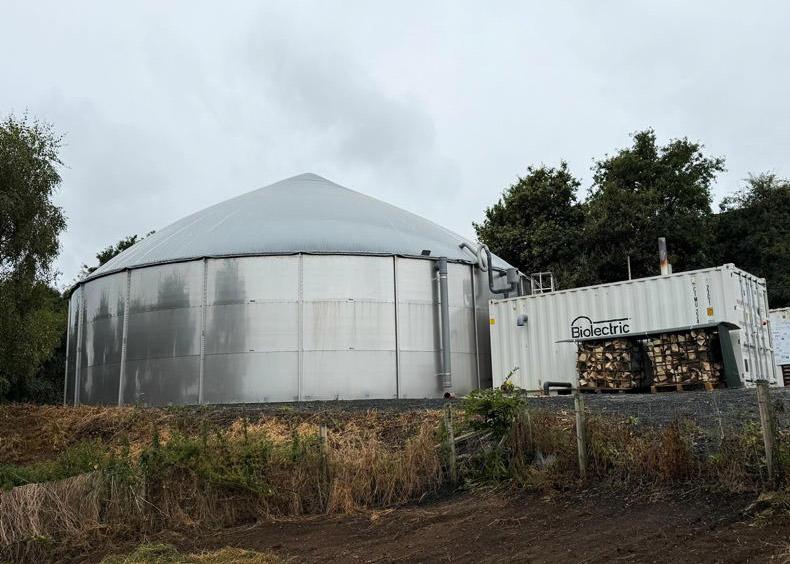
TThe Republic of Ireland’s anaerobic digestion (AD) sector has focused on large commercial plants to rapidly increase biomethane production.
However, small-scale, farm-based AD has received little policy attention despite offering farms lower electricity costs, improved slurry management and reduced methane emissions.
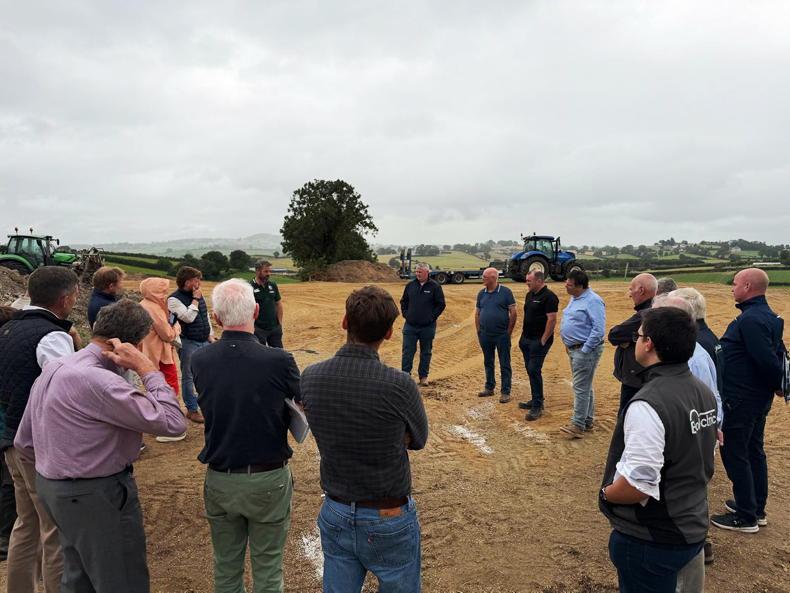
A dairy farm near Rathfriland, Co Down, is proving the potential of small-scale AD with a 44kW slurry-only plant that meets almost all of its electricity demand. The Irish Farmers Journal recently visited the farm.
Electricity
Robert McCauley, who farms near Rathfriland, has installed a 44kW Biolectric AD plant that runs entirely on cow slurry. Instead of producing biomethane gas, it produces electricity continuously for the farm.
Unlike many larger AD facilities, the plant relies solely on slurry as its feedstock, with no maize silage or other energy crops required.
Instead, fresh slurry from the dairy herd is collected several times each day and fed directly into the digester.
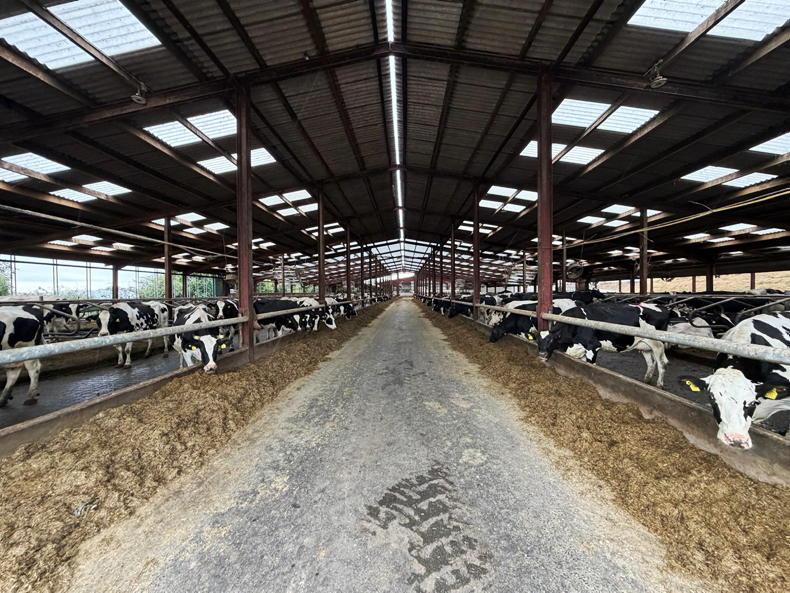
McCauley currently milks around 700 cows in a fully housed system, with plans to expand towards 1,000 cows.

The herd averages approximately 11,000 litres of milk per cow annually and is milked through a 72-unit rotary parlour.
Fresh slurry is critical
The success of the system depends on the quality and freshness of the slurry entering the digester.
Slurry is scraped from the cubicle sheds three times daily before being transferred to a holding tank. Parlour washings are also directed into the system.
From there, the slurry is gravity fed into a 10,000-litre mixing tank where it is agitated for around 10 minutes before entering the digester.
The plant feeds automatically every six hours, needing a total of around 24 tonnes, or approximately 5,000 gallons, of fresh slurry daily.
According to McCauley, fresh slurry is essential because methane production begins to decline quickly once slurry is stored.
“The slurry is fed directly into the plant within a few hours of leaving the cow,” he explained. “The plant works best on fresh slurry.”
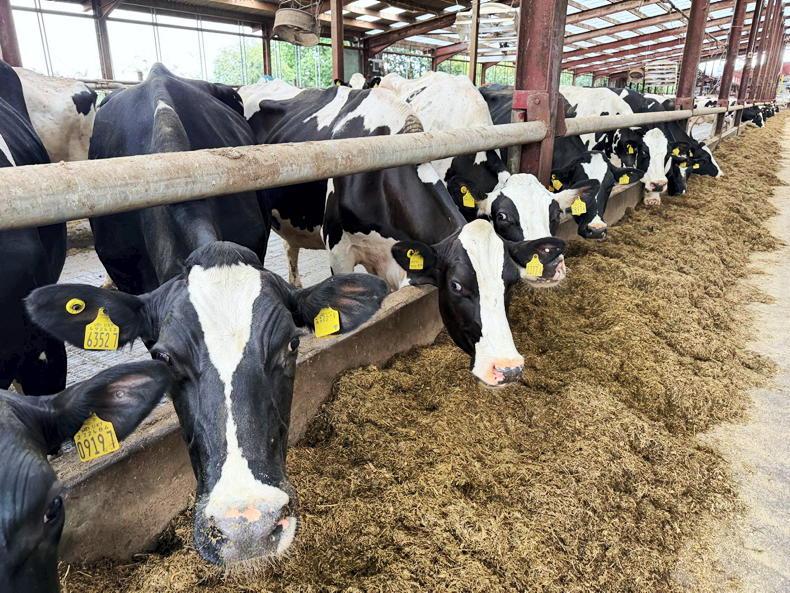
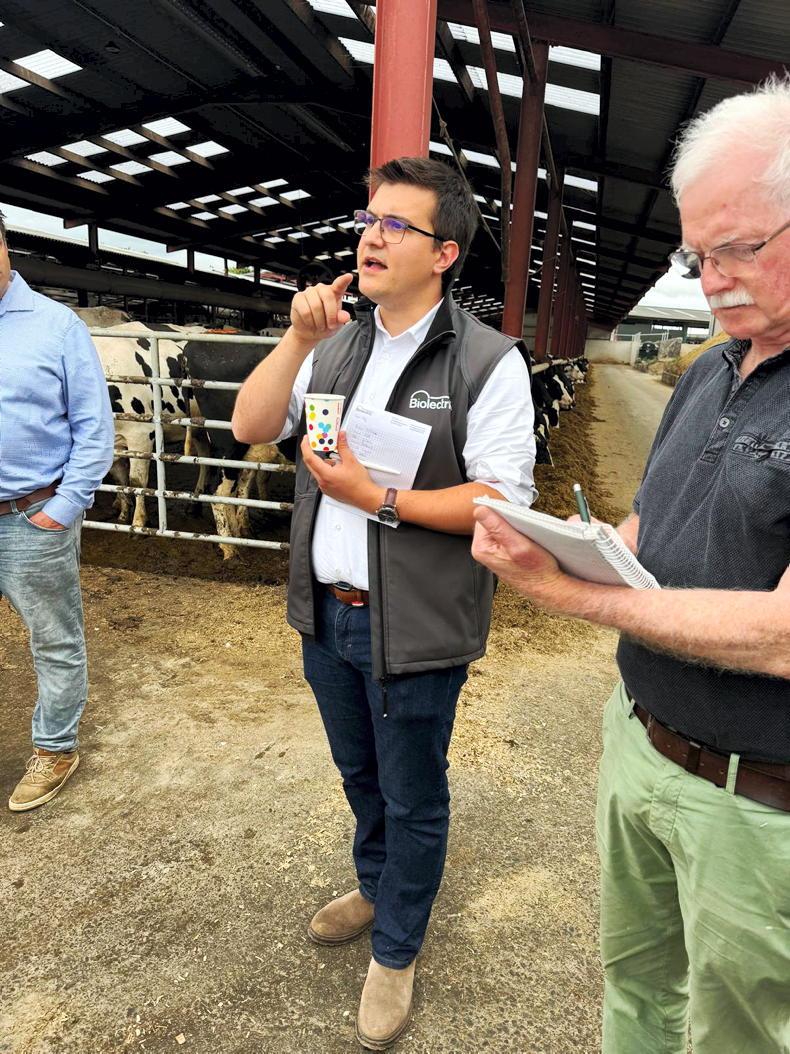
Biolectric operations manager Joseph Fayolle explained that slurry from high-producing dairy cows generally contains more available methane because of their concentrate-based diets.
As long as slurry remains pumpable and contains no more than around 13-14% dry matter, it can be processed successfully.
While some European plants supplement slurry with food waste to increase gas production, the Rathfriland installation uses slurry only.
The digestate is used to fertilise silage ground, although McCauley said it required careful management this year to avoid scorching during periods of high temperatures.
Compact design
The Biolectric system is designed specifically for individual farms rather than large, centralised AD plants.
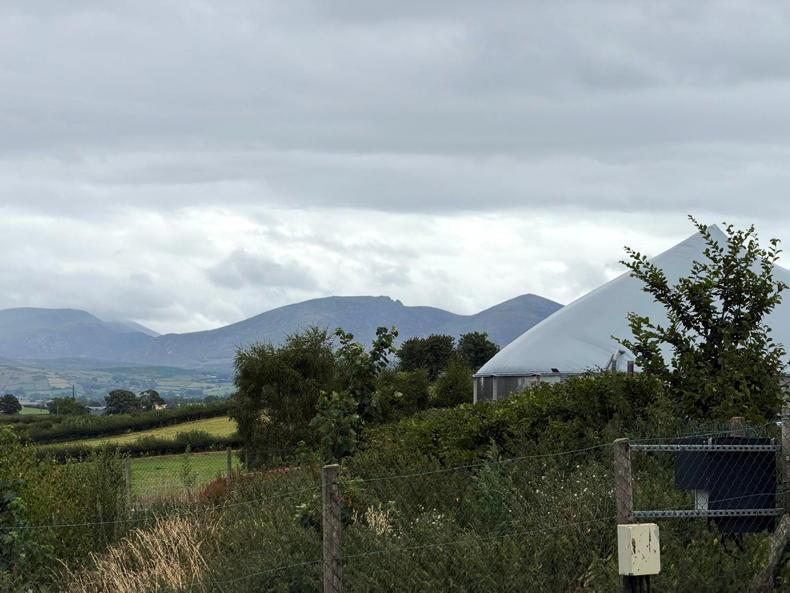
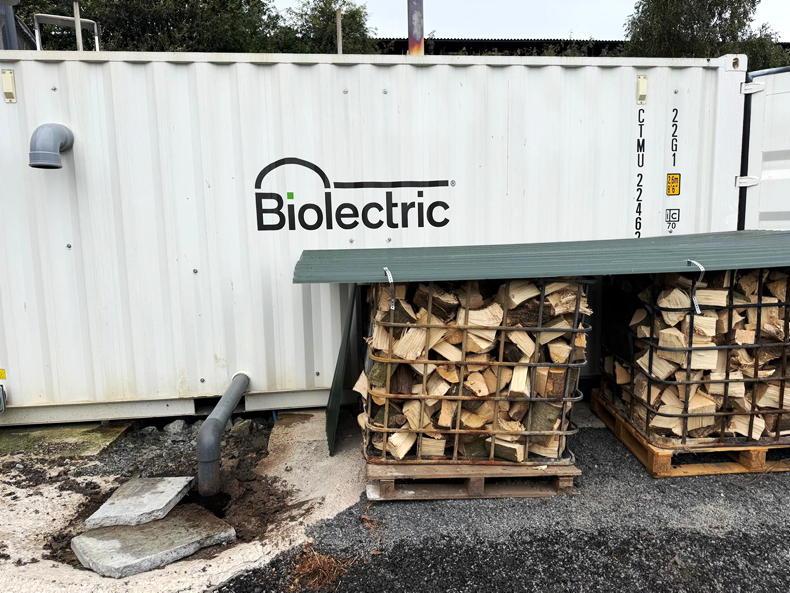
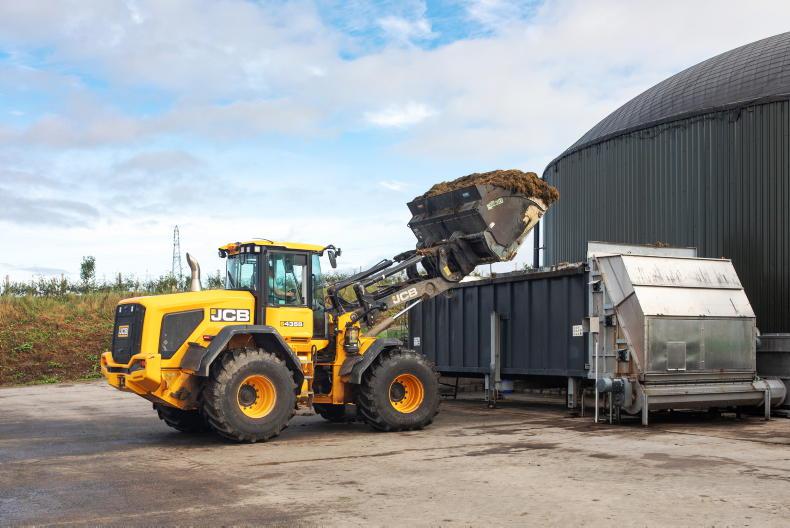
The plant consists of a single, 16m diameter insulated digester with an adjacent steel container housing the gas treatment equipment, controls and two 22kWh combined heat and power (CHP) engines.
Inside the digester, the slurry remains at approximately 42-45°C and undergoes anaerobic digestion for between 28 and 30 days. Two internal mixers continuously agitate the contents to maximise gas production.
The methane-rich biogas produced during digestion fuels the CHP engines, generating electricity around the clock. Heat recovered from the engines keeps the digester operating at the required temperature while surplus heat can also be used to produce hot water at temperatures of 85°C.
The plant operates under a full maintenance contract with Biolectric, while day-to-day management requires relatively little labour.
McCauley said most of the operation can be monitored remotely using his mobile phone.
Electricity savings
The continuous nature of biogas production distinguishes the system from renewable technologies such as solar power.
The plant produces 44kWh of electricity 24 hours a day provided it receives a regular supply of slurry. Around 7-9% of the electricity generated is consumed by the AD plant itself, with the remainder available for farm use.
McCauley estimates the installation has reduced his purchased electricity by approximately 96%.
Only a relatively small quantity of electricity is exported to the grid each month, with most being consumed on-farm.
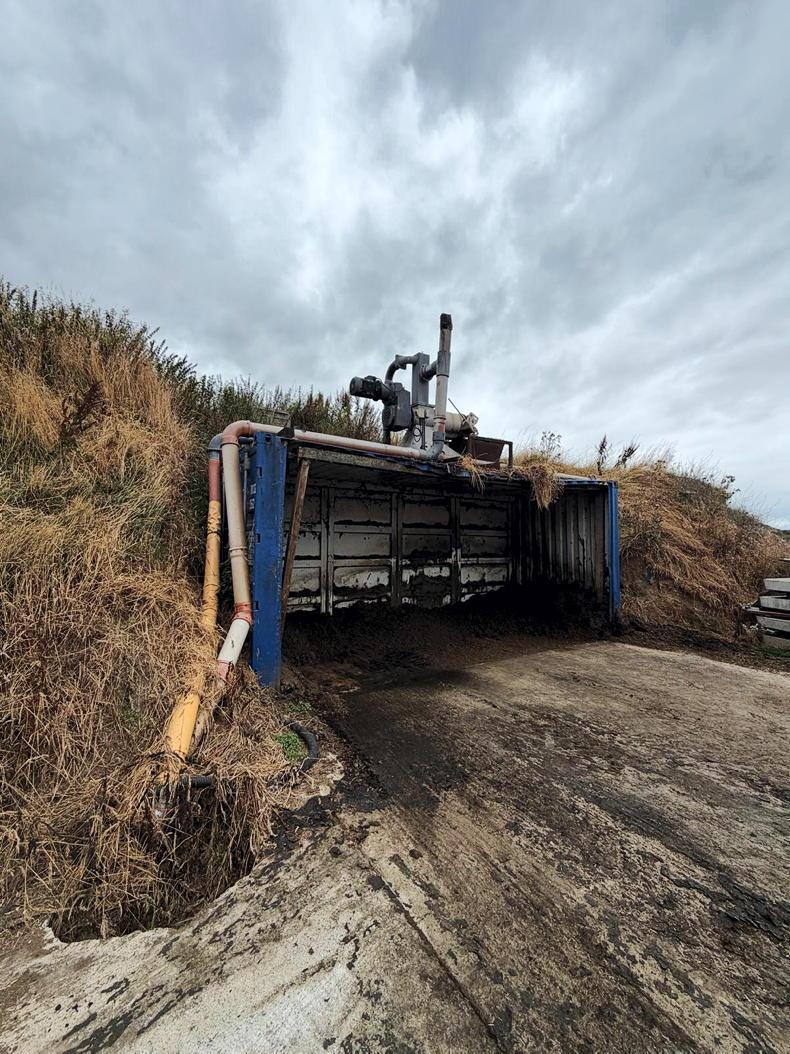
To maximise self-consumption, electricity demand has been carefully managed across the farm. Equipment such as the slurry separator, grain mill and other high-energy processes are programmed to operate overnight when possible, while pumps, milk cooling and other electrical loads are staggered throughout the day to avoid demand peaks.
The electricity also powers an older farmhouse located on the farm.
McCauley believes a solar PV installation would need to be in the region of 350kW to generate a similar annual electricity output because the AD plant operates continuously rather than depending on daylight.
Economics
The project is supported through Northern Ireland’s Renewables Obligation Certificates (ROCs) scheme, under which the farm receives payments for eligible electricity generated and consumed on-site or exported.
Combined with the significant reduction in electricity purchases, McCauley estimates the investment has a payback period of approximately two to two-and-a-half years.
Without ROC support, he believes the payback period would extend to around four to five years based on current electricity prices.
He estimates that the combined value of electricity savings and ROC payments adds approximately two pence per litre to the farm business.
“It helps buffer the business when milk prices fall” he said.
Biolectric states that the capital cost of systems at approximately €10,000 per installed kilowatt, placing a 44kW installation at around €440,000 before grant support or incentives.
Suitable for housed dairy systems
Around one-third of the farm’s slurry feeds the AD plant, with the remainder separated for recycled bedding.
McCauley believes slurry-only AD systems are best suited to housed dairy farms with a consistent supply of fresh slurry, while grazing systems face challenges due to reduced slurry availability. Biolectric has installed more than 470 slurry-only AD systems across Europe, with the Rathfriland unit the only one currently operating on the island of Ireland.




SHARING OPTIONS