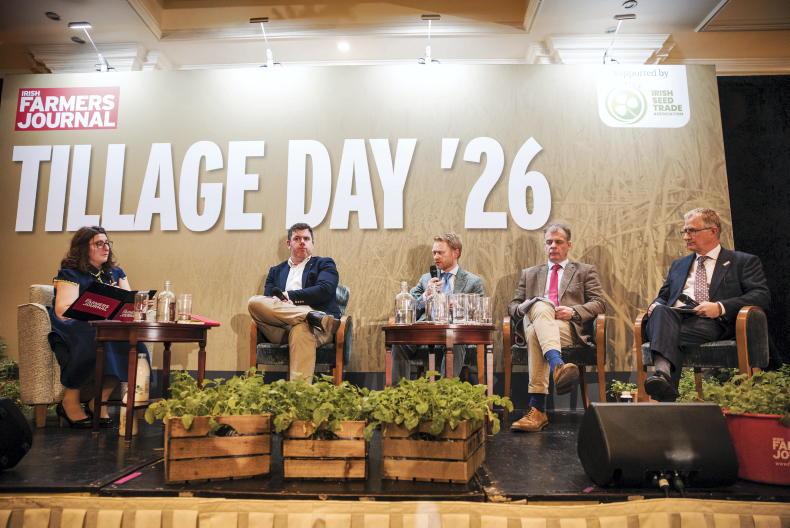
Anaerobic digesters have the potential to create competition in the market for Irish tillage crops and create a better margin for growers, according to Michael Hoey of Country Crest in Co Dublin. Country Crest has just received planning permission for an anaerobic digester.
Speaking at Tillage Day last week, Michael said that growing crops for anaerobic digestion can provide some certainty and risk reduction for tillage farmers. The farmer would have a guaranteed price for their crop before they even put seeds in the ground.
“You would be given a three- or five-year contract and then it’s up to that person to grow the green material,” he said. “If we can get to a situation where a man or lady can get €65 to €70/t for green materials to go into a digester, maybe that’s a better alternative to growing cereals for the livestock industry.”
The presence of another market should also help to increase the overall demand for Irish tillage crops.
Crop rotation
These contracts could also help to improve and lengthen the crop rotation in place on farms, with a variation of crops needed to feed the digester and to maximise the tonnage of green material coming off the land.
“The world is your oyster” as far as what crops can be grown to feed into the digester is concerned, according to Michael. Farmers can choose crops that suit their own land and farming system.
“People are even talking about putting in two crops of oats in the one year,” he said. The earlier harvest due to the crop being wholecropped allows an earlier planting date for a following crop.
Highly productive short-term leys were also mentioned by Michael as another option in tillage rotations to feed digesters. They would provide an additional break for diseases and weeds in the tillage rotation. A key point that came up during this discussion was that growers can also benefit from applying the digestate that is produced by the digester to the land that is growing the crops.
“We will be able to return the digestate back to the grower and that would reduce their input costs as well,” noted Michael. At a time when fertiliser prices are so high, this could greatly help tillage farmers to reduce their costs and reduce their exposure to large fluctuations in fertiliser prices on the world market.