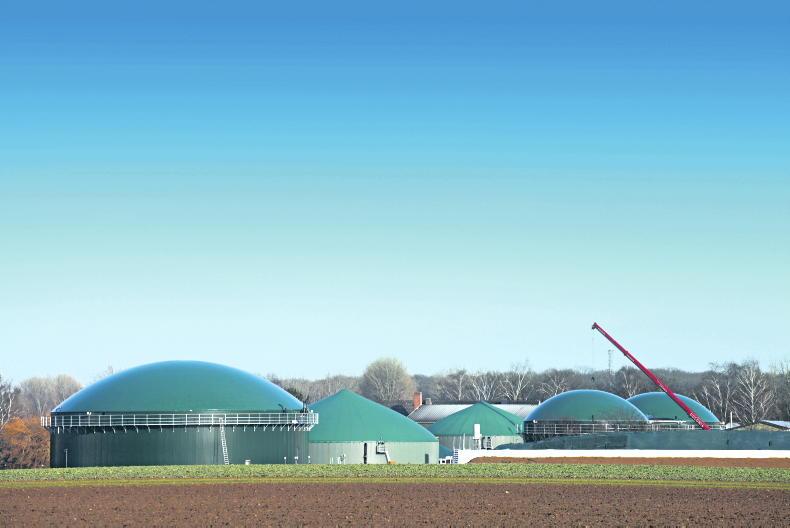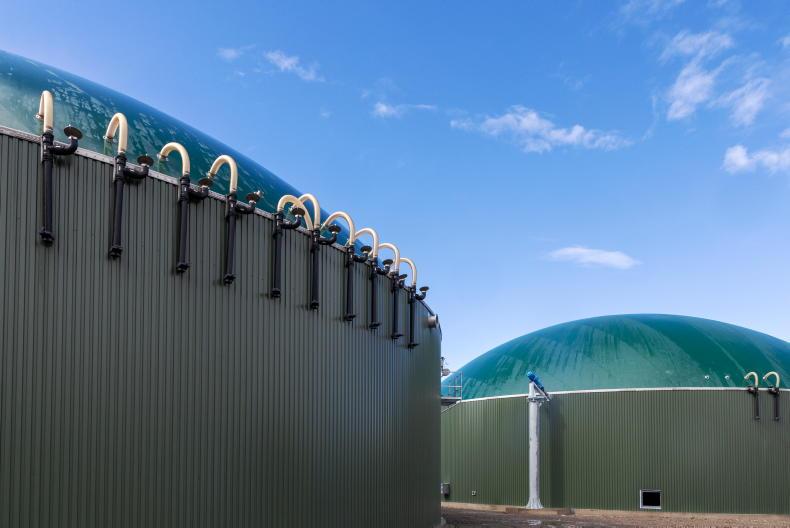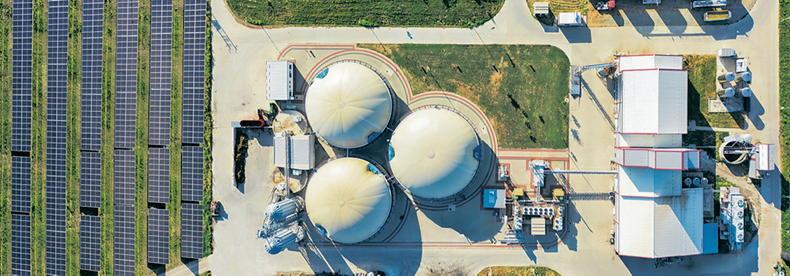
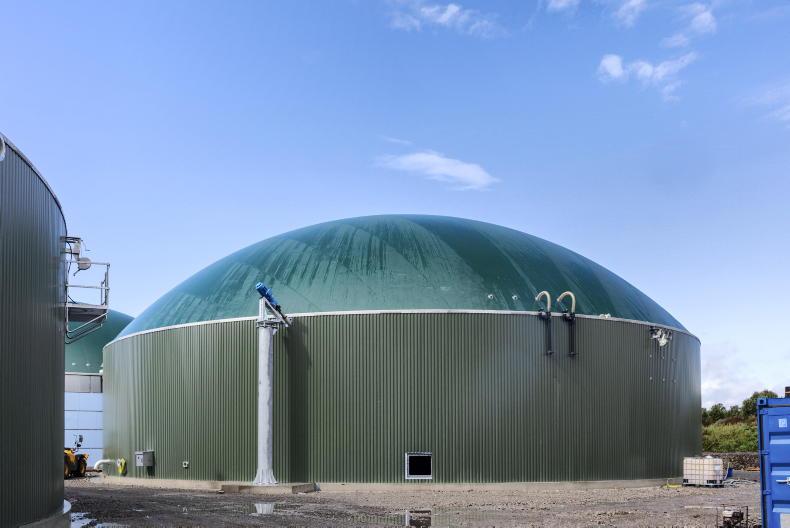
Integrating anaerobic digestion (AD) into the wider farming system can transform local agriculture and create major new revenue streams, attendees at the Slurry Live event held at the Eikon Exhibition Centre last Thursday were told.
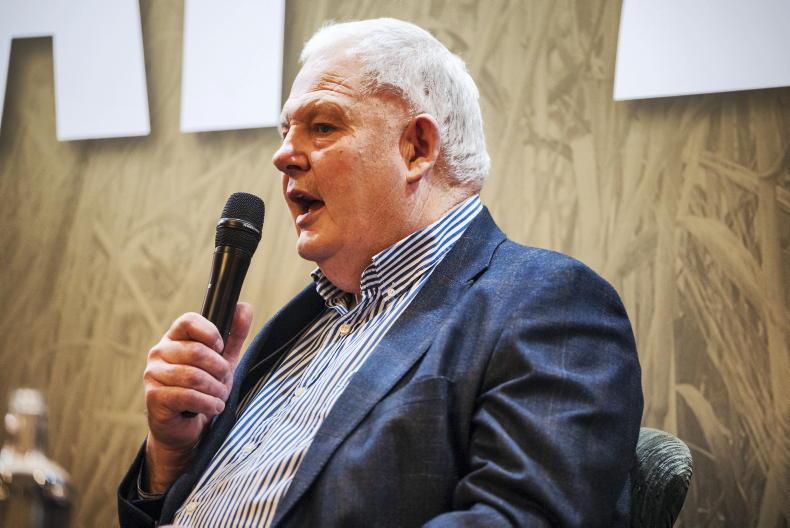
Taking part in a seminar, Ian Marshall from Queen’s University Belfast (QUB) outlined an exciting new vision where farming embraces the opportunities provided by AD.
The alternative, suggested the former UFU President, is to maintain the status quo and end up with an industry where “unworkable restrictions” are placed on farmers and the industry is left highly vulnerable to global energy price spikes.
At the heart of his argument is a study done by researchers in 2022 which found that biomethane originating from AD plants could potentially meet around 82% of NI gas demand. To achieve that would require more livestock manure diverted to AD, while also maximising the potential of “under-utilised land” – the grass silage from this would be used as a feedstock in the AD process.
Given that NI currently consumes £5bn of gas each year, the 82% figure equates to annual revenue of over £4bn. But as well as this potential income, AD opens up the possibility to recover excess nutrients and lock away carbon, said Marshall.
Separation
Rather than take raw slurry to AD, the focus has shifted to mobile separation on farm, with the solids fraction used as a feedstock. These slurry solids typically recover around 24% of the phosphorus (P) in the raw product, so by taking it away, it can potentially reduce P surpluses on individual farms.
NI has a surplus of 6,000t of P each year, over and above that needed for plant growth – most of this P comes from concentrate feed. Surplus P getting into waterways is a major cause of poor water quality in NI.
Centralised facility
But the AD process doesn’t remove P and this is where the vision of a centralised facility combining both AD and processing of resultant digestate, comes in.
Alongside biomethane for injection into the gas grid, the combined heat and power from AD can be used to drive other processes, creating the likes of a high P biofertiliser which could be exported out of NI or used to reduce our reliance on chemical fertiliser.
There is also the potential to process digestate into a high carbon product known as biochar, which can be used as a soil conditioner or to displace a proportion of cement in construction.
Cement in itself carries high carbon emissions, so displacing some of it is a “win : win” scenario, especially when the high carbon biochar is effectively locked away in the resultant concrete.
Add-up
“Nutrient, energy and carbon services – lots of these things don’t add up on their own, but when you put them together, they do,” said Marshall.
But ultimately, he said the fundamental issue is that AD and digestate processing can help to rebalance agriculture and mean it doesn’t face cuts due to environmental pressures.
“It’s about delivering on cleaner and healthier watercourses; lower emissions; production of food sustainably. It’s about repositioning agriculture as a solutions sector to mitigate and adapt to climate change,” said Marshall.
Funding
When asked whether government subsidies will be necessary to make the vision stack up, Marshall was clear that it has to be commercially viable in the longer term.
“Subsidy is like heroin – it’s a drug if you get on it, it is pretty hard to get off it. It’s going to need support at the start, but if we can build a model that is sustainable and stands on its own two feet, that is where the big opportunity lies,” he responded.
New biorefinery planned for mid-Ulster
A major investment is planned for a site outside Cookstown, Co Tyrone, involving the creation of a 10MW biorefinery to produce biomethane, biofertiliser and low carbon cement and bricks.
The project is being taken forward by a consortium of companies; Alltech Ireland, Cemcor Ltd, RSC Group and Tobermore, working together as Adtrac Bioenergy.
The same cluster of four companies have now been co-operating for a number of years and are among those receiving support under the DAERA Sustainable Use of Livestock Slurry (SULS) initiative to help fund mobile separators to produce feedstock for AD. Providing an update at the Slurry Live event, Dr James Young from the Centre for Competitiveness said Adtrac Bioenergy are “currently in the process of going for planning” for the biorefinery.
In the meantime, the cluster of companies have been working with a couple of AD plants as part of the SULS project, to include Lakeland Ballyrashane.
Linkage
Assuming planning is achieved and once the new biorefinery is built, Young said it would represent a new “three-point linkage” for NI agriculture, with energy, nutrients and carbon all prioritised as part of the investment.
However, to fully realise the potential for decarbonisation, he said changes will be required to building standard regulations to allow biochar to be utilised in cement. Biochar can currently be included in non-structural items, such as decorative bricks, however, trials have shown a 5-10% inclusion rate does not compromise strength.
Both Young and Marshall argued that if biochar could be utilised in the A5 project, it would significantly reduce the carbon impact of the new road.
Slurry – a valuable resource on farm
At current prices for chemical fertiliser, every 1,000 gallons of 6% dry matter slurry is worth around £31, Declan O’Neill from Alltech told attendees at the Slurry Live event.
In general, pig slurry has the highest nitrogen and phosphorus content, followed by finishing cattle, lactating dairy cows and store cattle. Dairy cow slurry tends to have the highest potassium content.
However, the likes of nitrogen in slurry is easily lost during spreading, especially in dry conditions and to protect the value of the product, low emission slurry spreading equipment should be used, said O’Neill.
But as well as losses during spreading, stored slurry also gives off emissions of potent greenhouse gases such as methane and nitrous oxide, with Alltech now among a number of companies selling slurry additives which aim to cut emissions during storage.
According to O’Neill, studies have shown that the Alltech product, Eminex can reduce methane losses during storage by 88% and nitrous oxide losses by 74%. With more nitrogen retained, there is also a 15% increase in subsequent grass growth.