


Welcome to Fertiliser Focus 2026, brought to you by the Fertiliser Association of Ireland in conjunction with the Irish Farmers Journal.
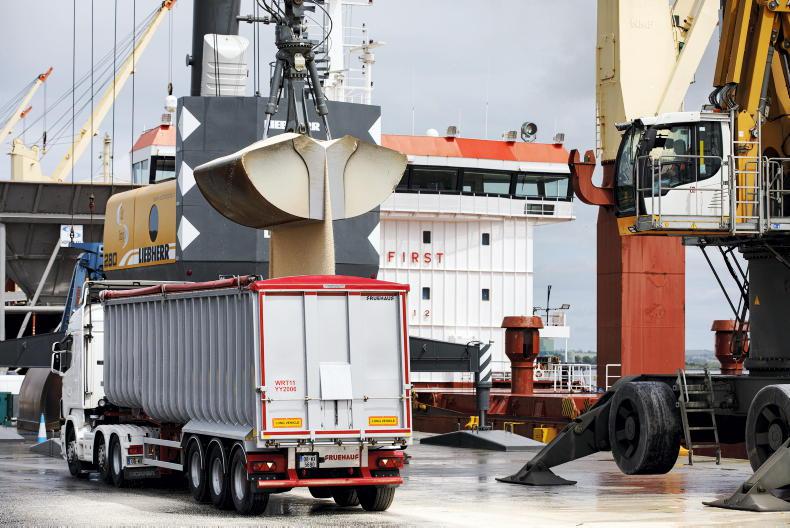
European food security is increasingly tied to the affordability and stable supply of fertilisers, a sector currently navigating significant regulatory and geopolitical shifts.
While the European Union remains a large producer of agri-food products with no immediate risk of regional food shortages, high input costs driven by energy prices and dependence on imports continue to pressure farmer margins.
The introduction of the Carbon Border Adjustment Mechanism (CBAM) in January 2026, which imposes carbon taxes on fertiliser imports, will raise the costs for fertiliser products like ammonia and urea by 10% to 20%.
To mitigate these pressures, the European Commission (EC) has announced a temporary suspension of import tariffs on essential fertiliser components to offset CBAM-related costs and prevent further spikes in consumer food prices. However, it should be noted that long-term food security strategies, such as the EU Farm to Fork strategy, also aim to reduce fertiliser use by at least 20% by 2030 through precision farming and the expansion of organic alternatives, ultimately seeking to decouple food production from volatile fossil fuel markets.
Regulations
In 2026, fertiliser management across farms in Ireland is central to balancing agricultural productivity with ambitious environmental targets under the Sixth Nitrates Action Programme (2026-2028).
In order to help reduce nutrient losses to water and help protect the nitrates derogation for the longer term, new regulations have been mandated. One that directly affects fertiliser is the restriction of the application of unprotected granular urea in 2026. However, farmers are increasingly transitioning to protected urea, which can reduce nitrous oxide emissions by up to 71% and ammonia losses by 78% compared to standard fertilisers.
Efforts to improve the efficiency of nutrient use on farms, which will help protect water quality and reduce gaseous emissions are further supported by the Farming for Water Campaign, the Teagasc Signpost Programme and the Water EIP to name but a few initiatives that are ongoing across the country.
These joined-up efforts by all of agricultural industry to move the dial on water quality and greenhouse gas emissions are critical to preserve a vibrant and economically viable farming sector for future generations.
Additionally, the official extension of Ireland’s nitrates derogation through 2028 allows intensive farms to maintain higher stocking rates, provided they adhere to strict environmental conditions, such as mandatory soil sampling (now required for any farm stocked from 130kg Organic N/ha and above to identify their soil P allowance), lime use and the incorporation of clover into newly reseeded swards, etc.
These measures, alongside the maintenance of soil fertility through careful selection and application of fertilisers, will help to ensure that grass-based livestock production systems prevail and maintain high crop yields which contribute massively to the long-term viability of Ireland’s family farm model.
Mission
The mission of the Fertiliser Association of Ireland (FAI) is to promote the efficient use of fertilisers to produce quality food in an economically and environmentally sustainable manner.
In 2026, the FAI supports this mission by acting as a multidisciplinary forum, uniting farmers, fertiliser and agri-industry, research and Government officials, to accelerate the adoption of science-based fertiliser technologies and best management practices.
Central to its current strategy is the promotion of nutrient management planning (NMP) that moves beyond simple application of fertilisers and organic manure nutrients, to focus on achieving balanced soil fertility (pH, N, P, K, S and micro-nutrient levels) management on farms, which is critical for maximising nitrogen (N) use efficiency.
The use of nitrogen (N) fertilisers “akin to the fuel” for plant growth in farming systems is coming under increased scrutiny due to its potential for loss to the environment, linked with water quality and gaseous emissions. However, when N fertilisers are used efficiently and according to the 4R principles of nutrient stewardship, “right N source, at the right time and the right application rate and the right place”, they are very effective in producing high grass and crop yields; and quality food in a sustainable manner.
The association actively advocates best practice in fertiliser management by providing farmers and farm advisers with technical resources, by facilitating technical meetings, training events and study tours.
Through these channels the FAI ensures that the latest information on fertiliser technologies, best practice management and research to help enhance sustainability in agriculture is translated into practical on-farm actions.
Grassland and tillage
In Fertiliser Focus 2026, key considerations and information for fertiliser use on grassland and tillage farms are discussed for the year ahead.
It’s critical that farmers consult their advisers to develop fertiliser plans for their farms in order to calculate what quantities of different fertilisers they require for 2025, based on their N and P allowances.
The latest FAI technical fact sheets on “Fertiliser 4 Rs for better water quality” and “Five steps for improving nitrogen use efficiency on farms” provide timely updates for farmers and the wider agricultural industry on how to maximise the efficient fertiliser use on farms.
Technical papers
The key points from the technical papers presented at the Fertiliser Association of Ireland’s Spring Meeting on Tuesday 10 February are also discussed. New research investigating soil nitrogen balances across grass-based dairy farms is outlined in Fertiliser Focus 2026 in an article by Dr Philip Murphy.
This research, conducted at Teagasc, Johnstown Castle, has developed new insights as to why soil nitrogen balances are different from farm to farm and from field to field and what potential actions a farmer can take to increase N use efficiency, and reducing potential losses of N from their soils.
This work provides valuable information on how farmers can maintain or improve grass production while adhering to the reduced N fertiliser allowances under nitrates regulations.
Dairygold Co-Op’s Grassroots Programme
An update on the Dairygold Co-Op’s Grassroots Programme is also presented by Liam Stack from Dairygold. This article discusses how the programme enables its farmer suppliers to evaluate current soil fertility on their farms. Farmers are incentivised to conduct soil testing and this provides a number of key agronomic and environmental metrics and performance indicators for their farms and individual fields.
Overall, the aim is to use farm-specific information to tailor fertiliser plans to help increase nitrogen-use efficiency. Farmers involved in the Grassroots Programme are further supported by advisers to implement these fertiliser plans and to help calculate nitrogen balances for each farm as a basis to identify how to progress to the targets set out.
This programme enables each farmer to access the key information related to their own farm and will help guide their path to increasing the sustainability and profitability of their farming business.
New Zealand’s nitrogen management
An insight into nitrogen management on pastures in New Zealand is presented by Dr Brendon Welten from AgResearch NZ.
The various sources of N inputs to pasture soils that become available to support grass growth are identified with NZ pasture-based farms and also the challenges for farmers to mitigate potential N leaching losses, originating from surplus N not taken up by the grass.
Management strategies that target the timing and composition of feeds and fertilisers, including partial substitution of pasture with low-protein supplements, temporary removal of animals from pasture during high-risk periods, and precision application of fertiliser to match pasture nutrient demand, are discussed.
Brendon concludes that many tools and management strategies are available to enhance N use efficiency and that big efforts are being made by AgResearch to increase adoption at the farm level. These experiences from practitioners and advice from experts demonstrate that farming systems can be supported to produce quality food in a sustainable manner.
The Fertiliser Association of Ireland strives to support farmers and the industry to do just that.
More information is available through our website (www.fertiliser-assoc.ie/). I want to thank my colleagues in the Fertiliser Association of Ireland for their work throughout the last year and would also like to wish the FAI members and all readers the very best success for the year ahead.


SHARING OPTIONS