Agricultural science students working towards Leaving Cert 2021 have been unable to carry out the project that makes up 25% of their mark. Amii McKeever writes
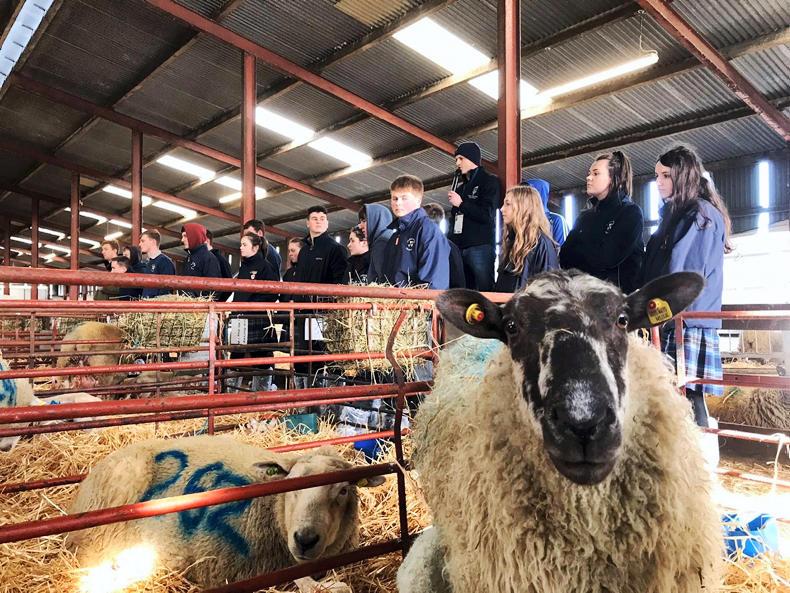
Johnny Gleeson (far left) teacher and PRO IASTA with a group of his students listening to Professor Tommy Boland, UCD, at the AgriAware Farm Walk and Talk event in Lyons.
ADVERTISEMENT
According to the Irish Agricultural Science Teachers’ Association (IASTA), major problems lie in the examination of the new ag science course particularly in the area of the Individual Investigative Study (IIS).
PRO of the IASTA Johnny Gleeson explained: “The major stumbling block is the IIS, which accounts for 25% of the grade. We feel this cannot be completed.”
“A good chunk of the project must be done in fifth year, to submit in April of sixth year. Students need a full year on a farm to collect their data but COVID-19 has resulted in many students not being able to collect this data.
ADVERTISEMENT
Teachers claim that they are also in the dark about how the exam paper will be made up and are urgently seeking sample papers. “Because this is a new course, we have no idea how to prioritise topics. We knew the structure of the old course and we could adapt our teaching to that but because this is a new course, we can’t. We lost on average 15% of the teaching year due to COVID-19. We are therefore calling for a wide variety of questions in the Leaving Certificate to allow for the strong possibility that some topics may not be covered.”
At time of press, IASTA had sought a meeting with the National Council for Curriculum and Assessment (NCCA), the State Examinations Commission and the Department of Education.
Register for free to read this story and our free stories.
This content is available to digital subscribers and loyalty code users only. Sign in to your account, use the code or subscribe to get unlimited access.
The reader loyalty code gives you full access to the site from when you enter it until the following Wednesday at 9pm. Find your unique code on the back page of Irish Country Living every week.
CODE ACCEPTED
You have full access to the site until next Wednesday at 9pm.
CODE NOT VALID
Please try again or contact support.
According to the Irish Agricultural Science Teachers’ Association (IASTA), major problems lie in the examination of the new ag science course particularly in the area of the Individual Investigative Study (IIS).
PRO of the IASTA Johnny Gleeson explained: “The major stumbling block is the IIS, which accounts for 25% of the grade. We feel this cannot be completed.”
“A good chunk of the project must be done in fifth year, to submit in April of sixth year. Students need a full year on a farm to collect their data but COVID-19 has resulted in many students not being able to collect this data.
Teachers claim that they are also in the dark about how the exam paper will be made up and are urgently seeking sample papers. “Because this is a new course, we have no idea how to prioritise topics. We knew the structure of the old course and we could adapt our teaching to that but because this is a new course, we can’t. We lost on average 15% of the teaching year due to COVID-19. We are therefore calling for a wide variety of questions in the Leaving Certificate to allow for the strong possibility that some topics may not be covered.”
At time of press, IASTA had sought a meeting with the National Council for Curriculum and Assessment (NCCA), the State Examinations Commission and the Department of Education.
If you would like to speak to a member of our team, please call us on 01-4199525.
Link sent to your email address
We have sent an email to your address. Please click on the link in this email to reset your password. If you can't find it in your inbox, please check your spam folder. If you can't find the email, please call us on 01-4199525.
ENTER YOUR LOYALTY CODE:
The reader loyalty code gives you full access to the site from when you enter it until the following Wednesday at 9pm. Find your unique code on the back page of Irish Country Living every week.







SHARING OPTIONS