Watch: New Zealand-style rotary for 600 cow Meath herd
The difficulty in sourcing good labour has led average size dairy farms to examine to use of robotic milking systems while for larger herds a rotary may be an option. William Conlon writes
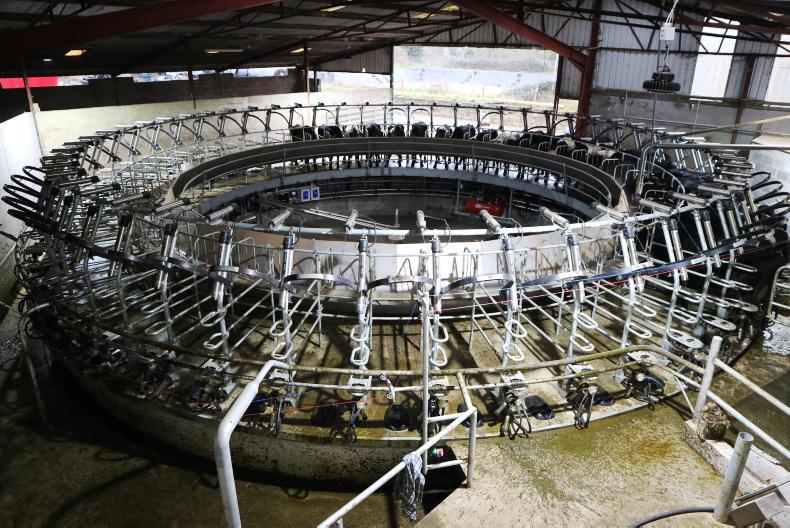
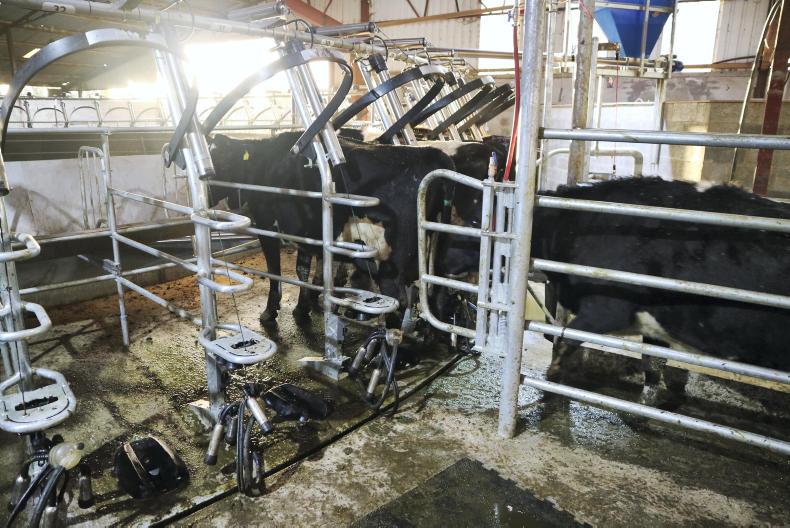
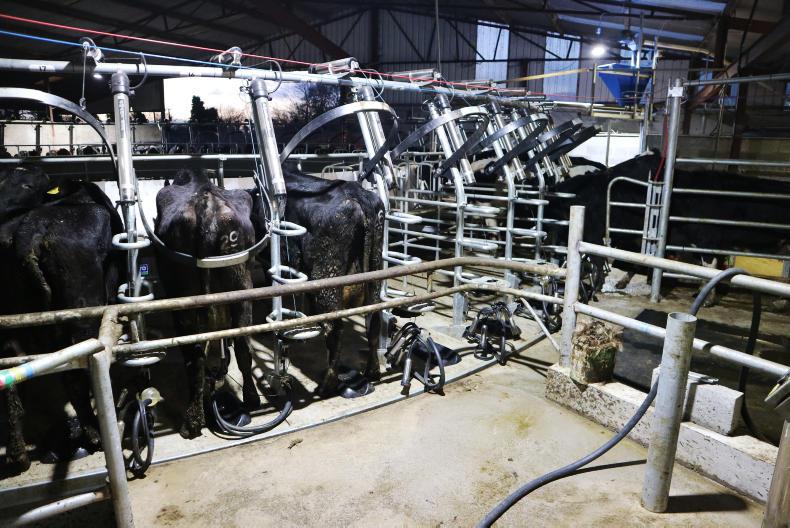
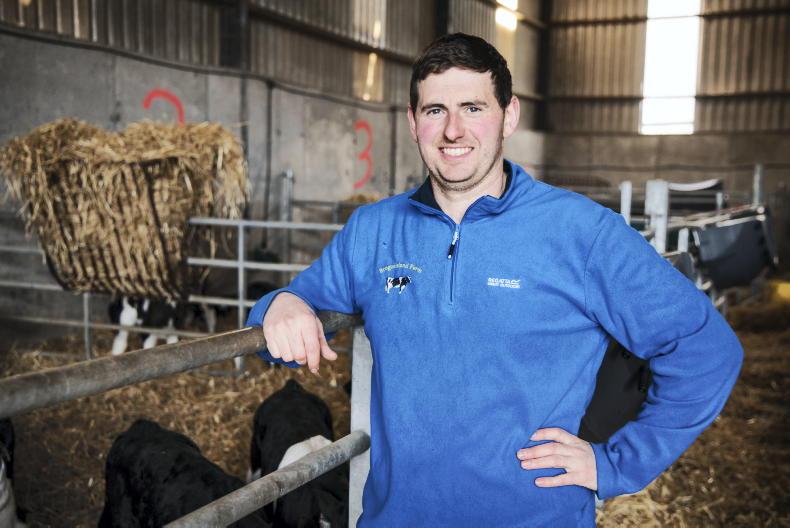
Work has completed on a 54-bail rotary on the farm of Joe Leonard, who farms near Stamullen, Co Meath. The farm has moved up to milking 600 cows this spring, from 520 cows over the past few years. This increase in cow numbers will be facilitated by the extra capacity in the rotary parlour.
The farm generally employs four full-time labour units – Joe, his brother Matthew, John Arnold and Robert Loosley. A fifth labour unit will generally be on the farm for most of the year too, with a student often out for work placement or labour employed through Farm Relief Services (FRS).
ADVERTISEMENT
The parlour
Previously in place on the farm was a 40-unit herringbone parlour. However, as the herd size grew, the length of time in the parlour was also increasing.
Joe said: “Putting in the rotary parlour will allow us to go up in numbers without having to go up another labour unit. When the parlour is up and running, the aim is that one man will be able to do the milking by themselves, with the hope to be able to run 300 cows through the rotary in an hour.
“Labour is getting more and more difficult to source and to keep, so this had to be considered when deciding how to move forward.”
The 600 cows currently graze a milking platform of approximately 180ha, with cows on/off grazing when the weather permits.
Heifers were due to calve down on 1 February, with all heifers synchronised. Cows were due to begin on 7 February. However, calving began in earnest about a week before this, which Joe puts down to the use of short-gestation bulls on cows and heifers, who themselves came from short-gestation sires. By mid-February, over 50% of the herd had calved down.
The diameter of the rotary is 17.5m, with one full rotation lasting about 10 minutes. This can be increased or decreased if needs be.
Joe said: “One full rotation of the platform will last approximately 10 minutes. You don’t really want all cows to be finished milking after one rotation, as this means that the speed of the rotation is too slow, which would in turn lead to an increased milking time.”
Work began on the project in October 2017, with a TAMS application submitted in June 2017. Conor and David Dowling completed all site and concrete work for the project. A team of two then arrived from Waikato in New Zealand in mid-Novemeber to install the rotary, with the help of Cookstown Dairy Services, who will also provide back-up service on the parlour into the future.
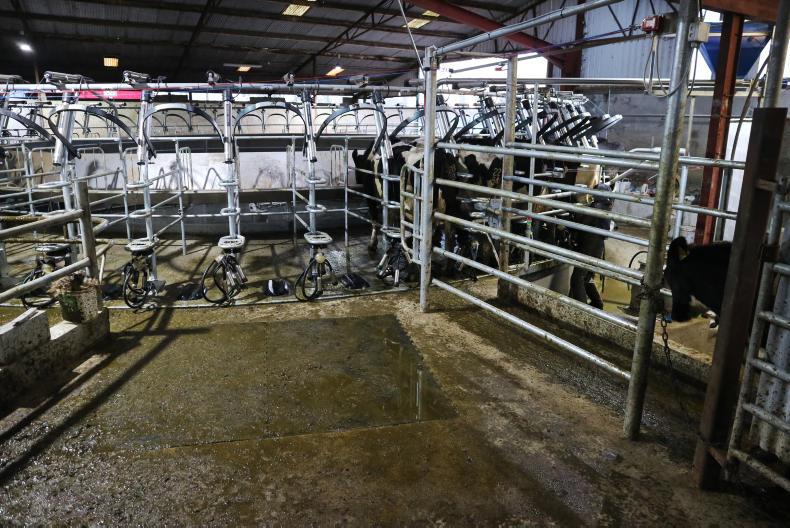
They were about two and a half weeks installing the platform. The team from Waikato then returned in January to commission the rotary. The project was made as cost-effective as possible by constructing the rotary into an existing shed, which used to house a 40-unit herringbone parlour.
This also meant the collecting yard, dairy and bulk tank from the existing setup could be used, with only slight alterations needed. This greatly reduced the overall cost of the project.
“With the old parlour, you had to wait until all of the cows were milked out before you could let out the row. Now, a slow milker can just do another rotation and doesn’t hold up the process at all,” said Joe.
The current backing gate is not in place and needs to be adjusted before it becomes operational.
Simple and robust
The decision to install a Waikato rotary, as opposed to any other make, was taken as Joe feels they are a simpler more robust system.
“Waikato are relatively new to the Irish market, but they have 30 years or more experience in New Zealand, so they know what they are at.
“The only issue with a Waikato could be with follow-up service. However, the more of them installed in the country, the more people there will be to service them.”
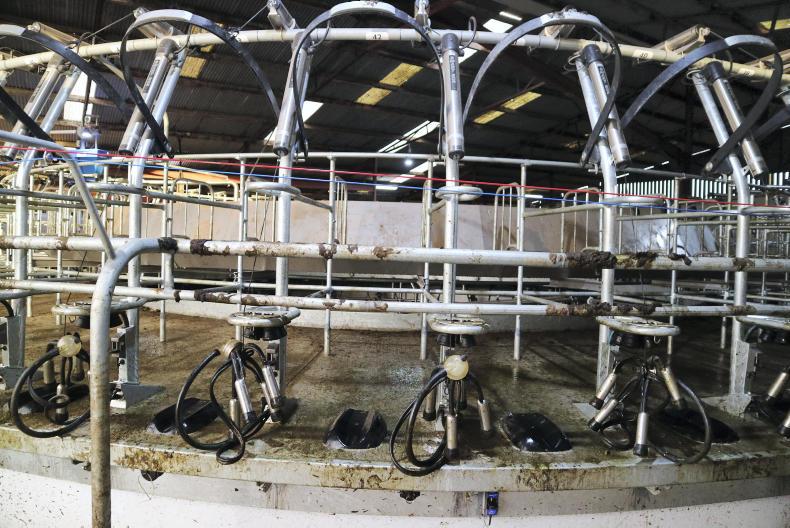
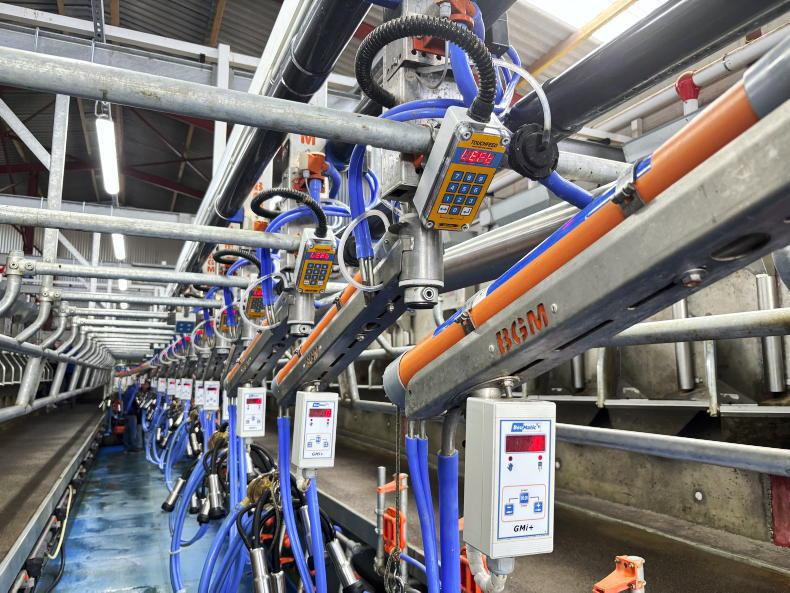
Each bail of the rotary measures approximately 680mm. Some additions were chosen for the rotary, including installing automatic cluster removers (ACRs), retention bars and on-platform teat spraying.
One-man operation
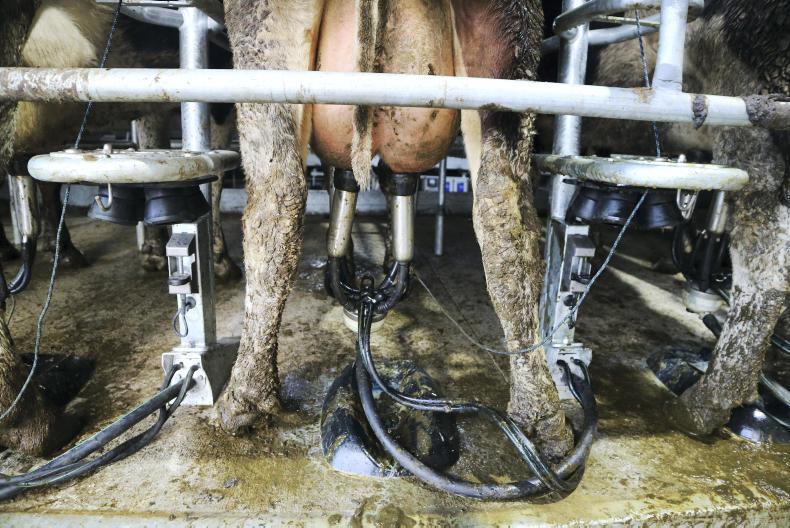
ACRs were installed to allow the rotary to be operated as a one-man job once all cows are trained.
“The younger cows are taking to it quicker than the older cows, but it takes a while for everyone to adjust,” Joe said.
Retention bars also complement ACRs. Retention bars will drop down once cows begin milking. Once cows are finished milking, and the ACRs pull off the clusters, the retention bar will lift up, allowing the cow to back out of the rotary once they come to the end of the rotation.
The auto-retention feature will ensure that a cow is kept on the platform if she was to knock off the clusters as she goes around. This is to ensure that clusters can be reapplied and the cow can do another rotation, ensuring she is fully milked out.
It also allows any slow milkers to be kept on the rotary and also to do another rotation.
All cows will receive meal on the rotary from a single meal feeder that is located at the start of the rotation. This reduces the cost of having to have individual feeders in a parlour. All cows will receive the same level of meal.
Cost
“At the size we had gone to, I think a rotary is more labour-efficient than a herringbone,” said Joe. The cost of the entire project will come to approximately €330,000, excluding VAT. The parlour itself, including fitting, will cost approximately €215,000 plus VAT, while all groundworks, concrete and alterations to the collecting yard and shed will cost approximately €115,000 plus VAT. Included is the cost of upgrading the drafting system that is in place when cows exit the parlour. Grant aid of 40% on the first €80,000 invested will mean that a grant of €32,000 will be received. This leaves the net cost at approximately €300,000 plus VAT.
This content is available to digital subscribers and loyalty code users only. Sign in to your account, use the code or subscribe to get unlimited access.
The reader loyalty code gives you full access to the site from when you enter it until the following Wednesday at 9pm. Find your unique code on the back page of Irish Country Living every week.
CODE ACCEPTED
You have full access to the site until next Wednesday at 9pm.
CODE NOT VALID
Please try again or contact support.
Work has completed on a 54-bail rotary on the farm of Joe Leonard, who farms near Stamullen, Co Meath. The farm has moved up to milking 600 cows this spring, from 520 cows over the past few years. This increase in cow numbers will be facilitated by the extra capacity in the rotary parlour.
The farm generally employs four full-time labour units – Joe, his brother Matthew, John Arnold and Robert Loosley. A fifth labour unit will generally be on the farm for most of the year too, with a student often out for work placement or labour employed through Farm Relief Services (FRS).
The parlour
Previously in place on the farm was a 40-unit herringbone parlour. However, as the herd size grew, the length of time in the parlour was also increasing.
Joe said: “Putting in the rotary parlour will allow us to go up in numbers without having to go up another labour unit. When the parlour is up and running, the aim is that one man will be able to do the milking by themselves, with the hope to be able to run 300 cows through the rotary in an hour.
“Labour is getting more and more difficult to source and to keep, so this had to be considered when deciding how to move forward.”
The 600 cows currently graze a milking platform of approximately 180ha, with cows on/off grazing when the weather permits.
Heifers were due to calve down on 1 February, with all heifers synchronised. Cows were due to begin on 7 February. However, calving began in earnest about a week before this, which Joe puts down to the use of short-gestation bulls on cows and heifers, who themselves came from short-gestation sires. By mid-February, over 50% of the herd had calved down.
The diameter of the rotary is 17.5m, with one full rotation lasting about 10 minutes. This can be increased or decreased if needs be.
Joe said: “One full rotation of the platform will last approximately 10 minutes. You don’t really want all cows to be finished milking after one rotation, as this means that the speed of the rotation is too slow, which would in turn lead to an increased milking time.”
Work began on the project in October 2017, with a TAMS application submitted in June 2017. Conor and David Dowling completed all site and concrete work for the project. A team of two then arrived from Waikato in New Zealand in mid-Novemeber to install the rotary, with the help of Cookstown Dairy Services, who will also provide back-up service on the parlour into the future.
They were about two and a half weeks installing the platform. The team from Waikato then returned in January to commission the rotary. The project was made as cost-effective as possible by constructing the rotary into an existing shed, which used to house a 40-unit herringbone parlour.
This also meant the collecting yard, dairy and bulk tank from the existing setup could be used, with only slight alterations needed. This greatly reduced the overall cost of the project.
“With the old parlour, you had to wait until all of the cows were milked out before you could let out the row. Now, a slow milker can just do another rotation and doesn’t hold up the process at all,” said Joe.
The current backing gate is not in place and needs to be adjusted before it becomes operational.
Simple and robust
The decision to install a Waikato rotary, as opposed to any other make, was taken as Joe feels they are a simpler more robust system.
“Waikato are relatively new to the Irish market, but they have 30 years or more experience in New Zealand, so they know what they are at.
“The only issue with a Waikato could be with follow-up service. However, the more of them installed in the country, the more people there will be to service them.”
Each bail of the rotary measures approximately 680mm. Some additions were chosen for the rotary, including installing automatic cluster removers (ACRs), retention bars and on-platform teat spraying.
One-man operation
ACRs were installed to allow the rotary to be operated as a one-man job once all cows are trained.
“The younger cows are taking to it quicker than the older cows, but it takes a while for everyone to adjust,” Joe said.
Retention bars also complement ACRs. Retention bars will drop down once cows begin milking. Once cows are finished milking, and the ACRs pull off the clusters, the retention bar will lift up, allowing the cow to back out of the rotary once they come to the end of the rotation.
The auto-retention feature will ensure that a cow is kept on the platform if she was to knock off the clusters as she goes around. This is to ensure that clusters can be reapplied and the cow can do another rotation, ensuring she is fully milked out.
It also allows any slow milkers to be kept on the rotary and also to do another rotation.
All cows will receive meal on the rotary from a single meal feeder that is located at the start of the rotation. This reduces the cost of having to have individual feeders in a parlour. All cows will receive the same level of meal.
Cost
“At the size we had gone to, I think a rotary is more labour-efficient than a herringbone,” said Joe. The cost of the entire project will come to approximately €330,000, excluding VAT. The parlour itself, including fitting, will cost approximately €215,000 plus VAT, while all groundworks, concrete and alterations to the collecting yard and shed will cost approximately €115,000 plus VAT. Included is the cost of upgrading the drafting system that is in place when cows exit the parlour. Grant aid of 40% on the first €80,000 invested will mean that a grant of €32,000 will be received. This leaves the net cost at approximately €300,000 plus VAT.
If you would like to speak to a member of our team, please call us on 01-4199525.
Link sent to your email address
We have sent an email to your address. Please click on the link in this email to reset your password. If you can't find it in your inbox, please check your spam folder. If you can't find the email, please call us on 01-4199525.
ENTER YOUR LOYALTY CODE:
The reader loyalty code gives you full access to the site from when you enter it until the following Wednesday at 9pm. Find your unique code on the back page of Irish Country Living every week.









SHARING OPTIONS