



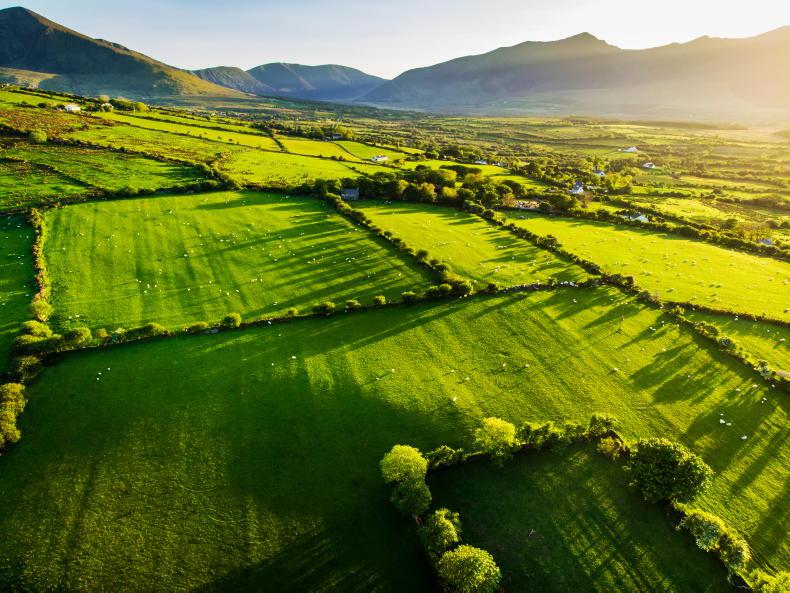
Wednesday 22 April was World Earth Day 2026.
It’s a good moment for each of us to look at what we are doing as individuals, and what we are doing collectively as a society, to protect our planet.
The ecosystem is fragile and under unprecedented pressure from the largest human population there’s ever been, each consuming more of the earth’s resources than those of any previous generation did.
The footage beamed back by Artemis II from the far side of the moon was a stark reminder of how beautiful, unique and fragile our planet is.
Farming is primarily about two things – food production and stewardship of the land
All the life that we are aware of in the universe exists on this rock, and its future is in our hands.
Farming is primarily about two things – food production and stewardship of the land. Taking care of our fields, hedges, rivers and streams is something that is passed down to us as children.
Livestock and wildlife alike rely on farmed land being in good health; crops won’t grow in poorly maintained soil.
This doesn’t happen by itself. Land requires management, otherwise the National Parks and Wildlife Service wouldn’t have needed to pay over €30m in wages to staff last year.
Perhaps city people just think of farmers as food producers, but they are also the custodians of the vast majority of the countryside
To keep the countryside looking well, gates and sheds must be maintained and painted, with hedges trimmed in line with best practice.
Boundaries must be fenced, and vegetation responsibly managed along the banks of rivers, streams and drains.
Perhaps city people just think of farmers as food producers, but they are also the custodians of the vast majority of the countryside. And in Ireland farmers do a good job of this.
When the “space for nature” requirement came in for farming in the last CAP reform, not only did every Irish farm meet the minimum 4% required under GAEC, almost every farm in the country met the 10% higher standard for the greening measure (there was also a lower 7% greening target).
Of course, mistakes were made, with some hedges removed by farmers where they provided shelter and soil structure.
It should be remembered that farmers were encouraged to do this by State agencies, as the prevailing wisdom at the time was that bigger fields were more efficient.
Imagine just how much work it takes to keep a 100ac farm looking as well as the typical Irish family farm does
However, any city dweller who thinks farmers aren’t pulling their weight might reflect on just how much work it takes to have their garden healthy, sustainable and looking its best.
And then imagine just how much work it takes to keep a 100ac farm looking as well as the typical Irish family farm does. It might be something to ponder the next time you’re driving down the country. Especially if you happen to be a former Taoiseach.


SHARING OPTIONS