



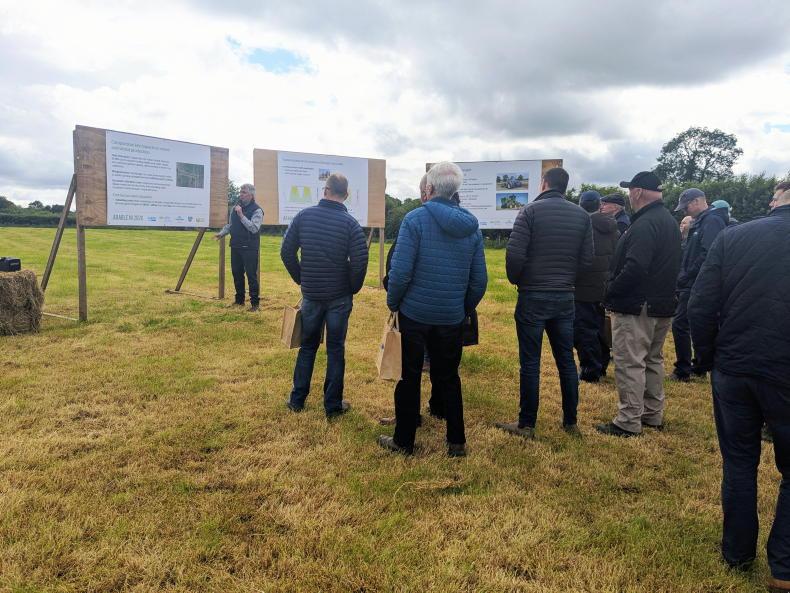
Soil damage can cause gross margin losses of between £600 and £1,200/ha, according to Harry Henderson of BASIS, who ran a demonstration on soil compaction at Arable NI 2026.
“Yield is king, but not at any cost,” remarked Henderson, as compaction can reduce wheat yields by 10-15% due to reduced rooting depth, poor water uptake and restricted nutrient uptake. Compaction can also result in lower crop uniformity.
This leads to increased cultivation costs, especially where sub-soiling is used for compaction remediation. Sub-soiling can reduce gross margins by £10 to £28/ha. Where sub-soiling is being carried out, Henderson urged growers to inspect their soil first.
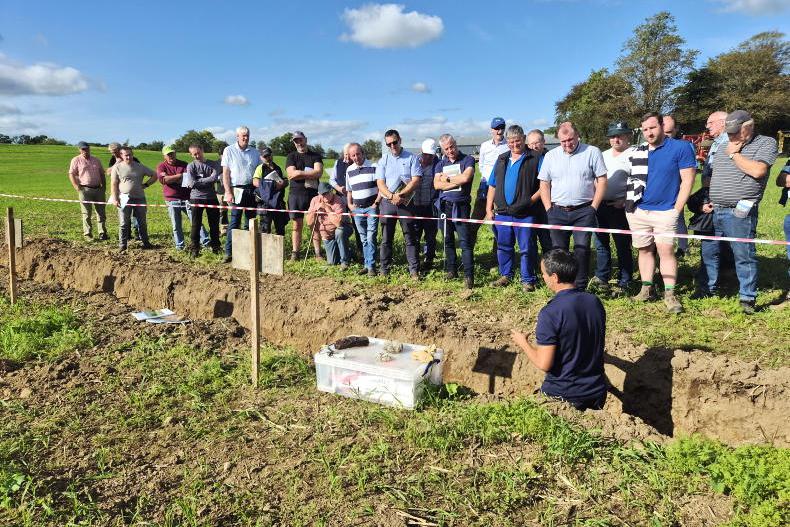
“Buy a spade, leave it in the back of the jeep and go and have a dig,” he suggested. When doing this, if the cracking of the soil is mostly vertical, there is good soil structure. If the soil is cracking horizontally, there is likely a compaction issue.
Henderson commented that it can take a while to get your eye in, but it is very valuable information and can help farmers to learn more about their own farms. Once the depth of the problem is identified, a sub-soiler should be set just below this depth.
Compaction usually occurs on field headlands.
This is down to the amount of turning and also the use of mounted machinery according to Henderson. He explained that when a tractor lifts a mounted machine, most of the weight is on the rear wheels and causes compaction. Therefore, farmers should try to reduce the number of passes they do and where possible, convert to trailed equipment.
“While linkage-mounted equipment is really handy, trailed equipment where you can finely ballast the tractor just to pull the equipment rather than pick it up, it’s much better for the soil,” he said.
Tyre pressure
An easy way to reduce the risk of compaction occurring is to pay close attention to the pressure of the tractor’s tyres. While central tyre inflation systems can be helpful, they are not essential. However, farmers must remember to lower tyre pressures before working the land.
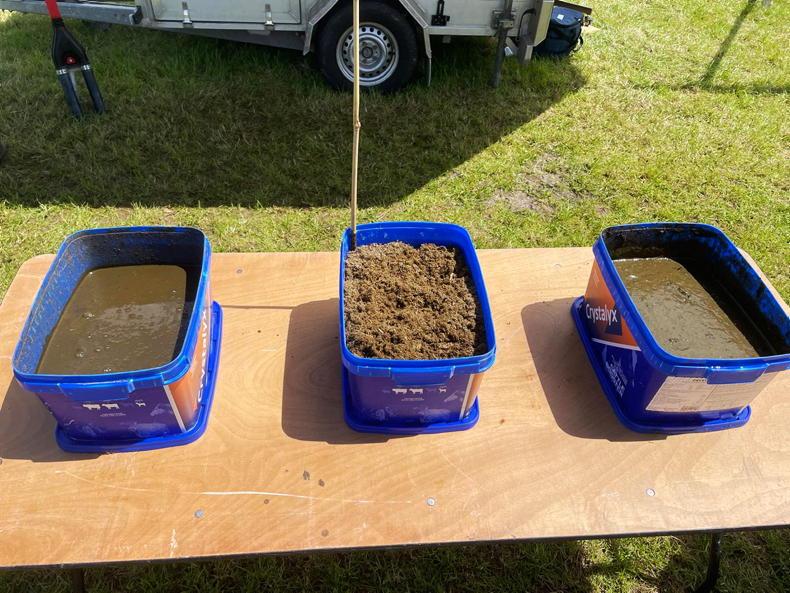
There were two soil pits on the day too. These had been filled with layers of sand and soil before being driven over by the same tractor with the same tyres but at two different tyre pressures. The higher pressure (23.2psi) showed a much deeper impression than when the tyre was deflated to 10.2psi. Henderson shared a handy rule of thumb: add 2psi to the tyre pressure to calculate ground pressure. The ground pressure is the pressure exerted on the ground by the tyres.
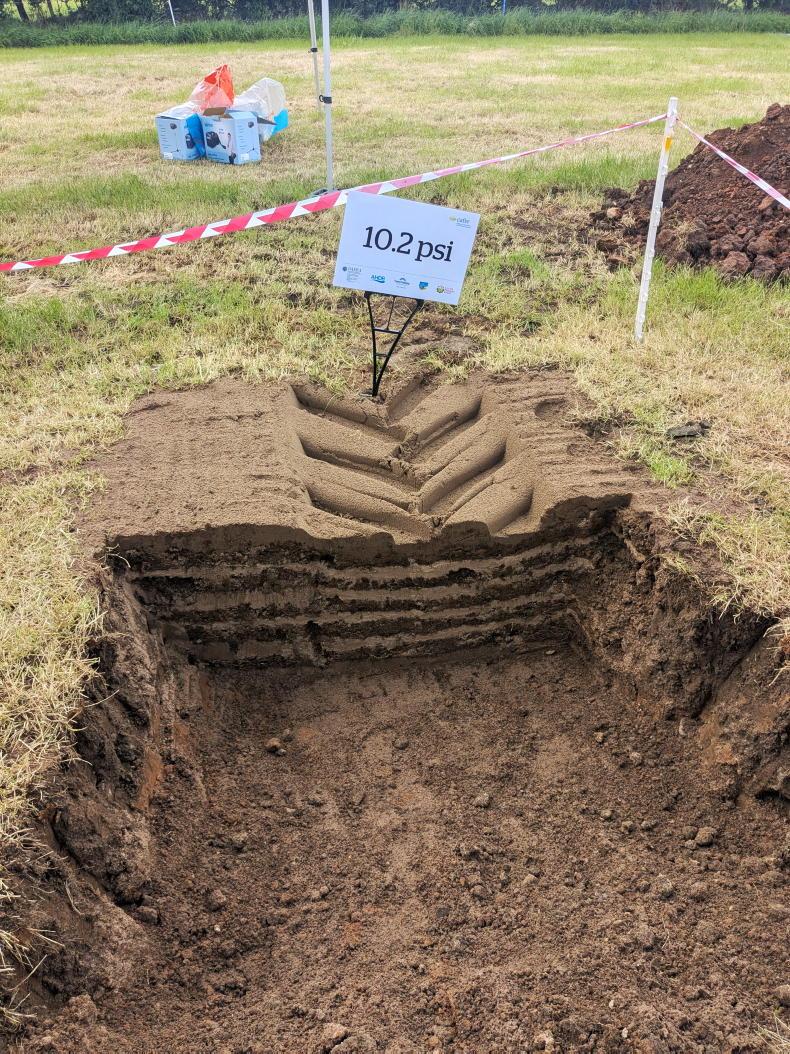
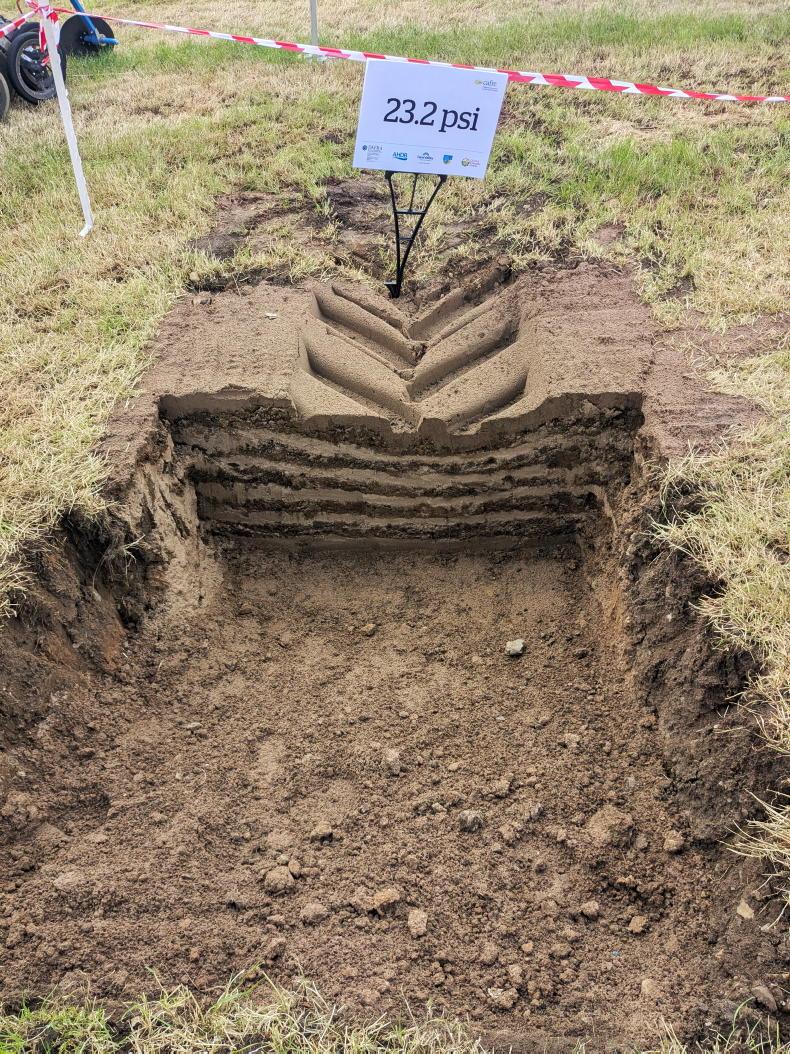
Even where tracks are used, Henderson noted that they are designed for traction, not to reduce ground pressure. Sometimes a lot of the weight can be on the idler wheels and not spread out over the full track surface area.
Top tips to reduce compaction


SHARING OPTIONS