



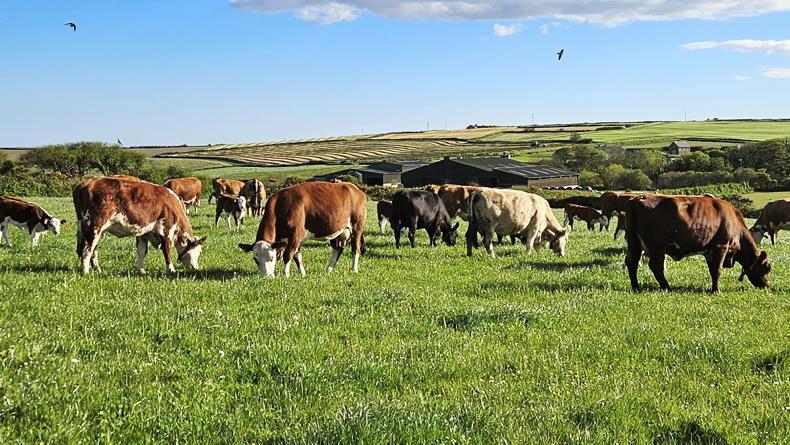
I never thought I’d be farming in a time where the price of a kilo of beef was ahead of milk but that’s how it’s been for the best part of a year now. Beef price slipping by almost €1/kg in the last year has taken a shine off things a bit but last year’s surge in cattle prices offered to breath new life into the sector.
It’s one that will need a bit of it over the next decade as a fall off in farmer numbers could pick up. Generational renewal, or the lack of it, in beef circles in the USA is starting to hit home in a big way in recent years. At 27.6m head, the US beef cow herd is at its lowest ebb since 1961 and has been dwindling steadily over the last 10 years or so.
Although, their land mass allows for a larger scale of production it doesn’t mean they’re immune from the same challenges we face here.
Price trends and unsustainable financial returns led to no one willing to take over in some cases and a “job in town” being needed to help financially too. That might be OK for one generation to do but part-time farming is full-time working and the long-term sustainability of it is questionable.
Some commentators there believe that the price rises ultimately came too late and that encouraging younger people to remain in cow/calf operations there will be challenging.
US v Europe
An unexpected ripple effect of fewer young people entering beef production in the US is being felt on European dairy farms at present. There’s an insatiable appetite for beef in America and they have turned to dairy-beef to plug the gap. As a result, some dairy farmers there are opting to put cows in calf that would otherwise have been culled. It’s creating a glut of milk globally but when you see the prices they’re getting for calves, you can see why they’re doing it.
I took a look at a few calf sales in the States recently and while calf prices here hit new highs this spring, they’re nothing in comparison to what they’re making stateside.
Dairy-beef calves in the mid-west dairy areas there are making from $1,200 to $2,100. That’s the equivalent of €1,020 to €1,790. Holstein bull calves there are making $1,000 to $1,550 that’s about €850 to €1,280.
I think we’re a while away from those kinds of prices here but it caught my attention in how consequences can be felt in unexpected places.
The goings on in the US beef herd may have less of an influence on the Irish herd but international policies will still impact it. Mercosur is the one most eyes have been on but it’s only now that Brexit is being felt more in the Irish beef sector.
Trade deals the UK made with Australia and New Zealand and taking market share and combined with a cost-of-living crisis, the volumes of Irish beef making their way across the Irish Sea don’t have more competition than we’ve probably been accustomed too since the 1970s.
That competition is being seen at factory level with reduced working weeks and redundancies in a number of cases this year.
It’s hard to see what impact it will have on farms yet.
Getting a handle on shifting prices hasn’t been easy and while traditionally, prices for forward cattle and lighter stores haven’t always made sense, they’re even harder to comprehend this spring. An increase in suckler numbers, small as it was, showed there’s potential there to hold production at least but is the wider appetite there to do so?


SHARING OPTIONS