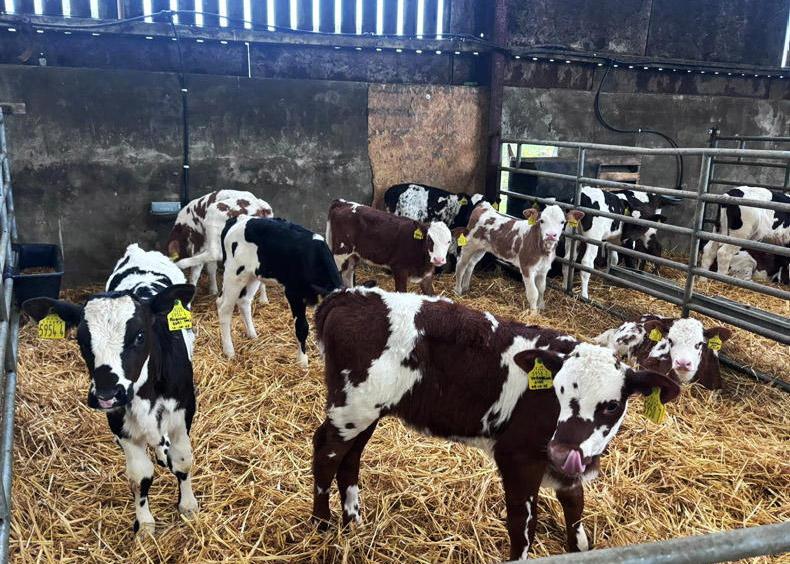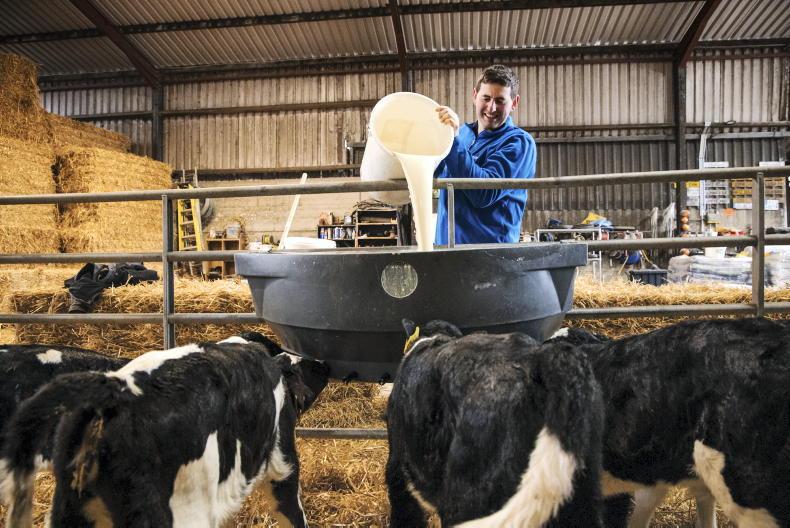
Calving is under way on the farm in Abbeyleix, with just over 30 cows calved so far. It’s been a fairly even split between heifers and bulls, which is always welcome.
Thankfully, calvings have been straightforward to date and both cows and calves are doing well, which is a good way to start the year. I feel the soya and oats for two weeks pre-calving were a big help with this.
We are milking once a day at the moment, but with numbers building we’ll be going back to twice-a-day milking later this week.
Cows are currently going out to grass during the day and coming in again at night. Once we start evening milking, the plan is to let them back out for around three hours afterwards, as long as ground conditions hold. That system has worked well for us in the past and helps get more grass into cows early.
We have five small paddocks close to the yard that we always graze first in spring for ease of access. Two of these have already been grazed and had covers of about 1,300-1,500kg DM/ha. Up to now cow numbers were low, so there was no strip wire in place and cows were allowed to graze the full paddock. With numbers increasing, strip wires will now be used to tighten up grazing and increase utilisation.
Silage quality has been very good this year. First-cut silage tested at 76% DMD and 36% dry matter, which I’m very happy with. This is currently being fed to the milkers and cull cows. We are still waiting on test results from two stacks of baled silage, which I’m hoping will come back even better again. If so, these will be fed to the milkers as calving progresses.
Cows are currently getting 5kg of meal per day and the plan is to stay at this level for the spring. Milkings are going well and cows are holding condition, which is important at this stage of lactation.
Our co-op performance report for 2025 showed an average of 556kg milk solids per cow, with protein at 3.83% and fat at 4.59%. While I am very happy with the performance, there’s always scope to do better and hopefully we can push on again this year with good grass and tight management.
Opening grass cover on the farm was 1,070kg DM/ha, with average growth of around 3kg DM/ha per day through December and January. This should leave us in a good position for the spring. We are carrying about 30 fewer cows than normal this year because of the TB, so it will be interesting to see how this impacts grass demand, as surplus grass has never really been a problem for us in spring.
When conditions allow, we plan to spread half a bag of fertiliser per acre on paddocks that didn’t receive slurry. We’ll wait until ground and weather conditions are right before moving.
Schemes and payments
On the scheme side, all grant payments under the Water EIP for work carried out on the farm have now been received. While payments were slow, the process itself was straightforward. All that was required was uploading invoices and photographs, with very little additional paperwork, which makes a welcome change.
On the sheep side, lambing is finished and all ewes and lambs are out to grass. Thankfully, all lambs are alive and thriving, which is always a relief. The sheep section of the calf shed will be cleaned out this week and the remaining calf pens will be set up ahead of the main calving period.
Overall, it’s been a positive start to the spring so far. There’s plenty of work ahead, but with good grass, strong silage and stock doing well, we’re hopeful of a good year.