This year’s summer breaks gave me the perfect chance to not only appreciate the fantastic farming weather we’ve had in NI, but to witness the drought conditions that large areas of England are currently dealing with.
This should be done with a degree of empathetic acknowledgement of other farmers’ plight, but in truth it’s hard not feel a bit smug about it. Or is that just me?
Early in July we spent a short week in Stranraer. I realise that ‘enjoyable holiday’ and ‘Stranraer’ are not words that naturally go hand in hand, but there was a reason.
Susan was rowing at the St Ayles World Skiffie Championships (she rows for the Killyleagh ladies over-50s team) so I tagged along for the craic.
In defence of Stranraer, it was a perfect spot during a spell of gorgeous weather, and since 14 of us stayed on a working dairy farm, it gave me the chance to get my daily agricultural fix.
Despite the glaringly obvious similarities with NI farming, you can’t help but be aware of the difference in field size.
It’s always hard to guess anything from mere observations, but judging by the number of large, sprawling farmyards and the associated distance between them, I’ll bet the average holding in that part of Scotland is a heck of a lot bigger than this part of Co Down.
The farm we stayed on milked about 300 cows in a robotic system and employed Filipino women in an arrangement that seemed pretty effective.
The owner told me that they were good stock people, with the additional benefit that they could do the turnaround work in the holiday lets.
However, being on a busy farm when you are on holiday can be a peculiar experience too: when you’re walking through the cows and chatting to the owner you are in full farmer mode.
But of an evening, when six of you are wallowing in the hot tub (beverages in hand) and tractors are lumbering past it can feel slightly disconcerting (I’m sure I’ll get over it).
Second trip
In August we headed off again for the main holiday of the year.
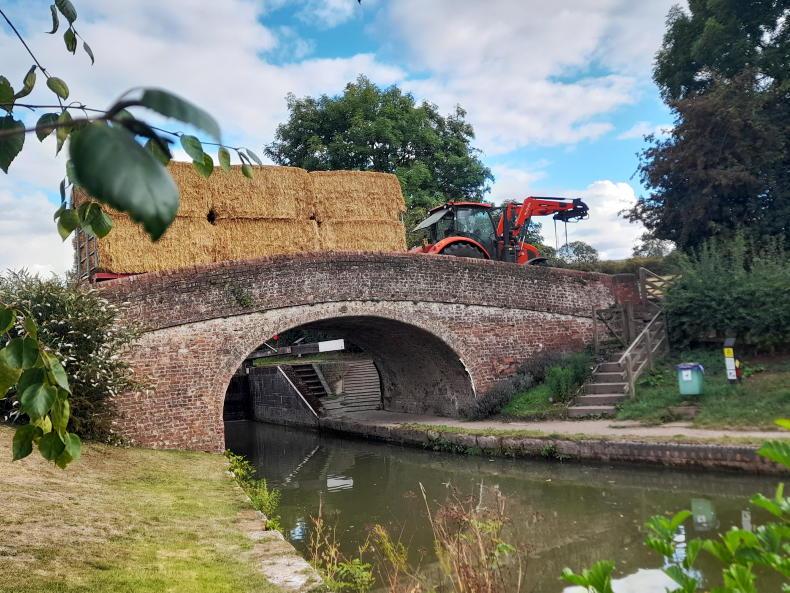
Part of this time (four nights) was spent on a canal boat in the middle of England.
It’s something I have wanted to experience since watching Timothy West and Prunella Scales (yeah, her from Fawlty Towers) doing their bit on television to make canal holidays seem like the most idyllic thing imaginable.
It was, at times, just as relaxing as it is made out to be, but a word of warning here. We had Sam, our son, with us to captain the ship (he had a fair amount of experience), and without that knowledge it would have been quite a daunting debut for Susan and me on our own.
Steering a long boat up into numerous locks and then knowing how to operate the winding paddles and when to close the main gates isn’t rocket science, but it does require careful concentration till you get used to it.
In addition, the drought in England played its part too, because extremely low water levels mean that meeting other boats on these narrow waterways can result in getting jammed on the silt.
So apart from the other two members of our crew having to deal with an ageing, anxious farmer (“Dad, you don’t have to shout so loudly every time another boat comes into sight”) there were lengthy spells of total relaxation.
Study
Despite miles of heavy, overhanging hedging (was that deliberately done to shelter the horses that originally pulled the barges along the towpaths?) there were also enough gaps to let me study the local farming landscape.
Boy, was it dry. Grassland was burnt to a crisp and I didn’t see one single field of green grass. Without exception fields were white and only the substantial areas of creeping thistle with their deep roots seemed to be thriving.
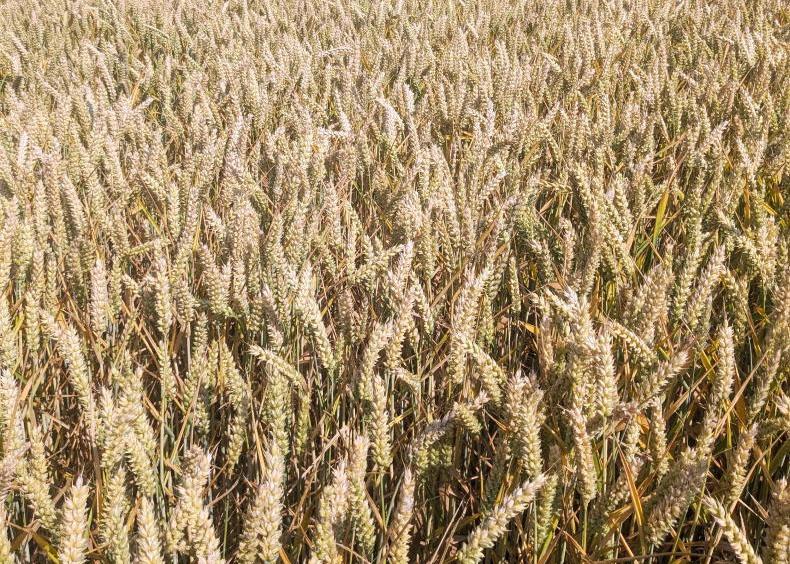
Grain harvest was nearly finished and as far as I could see, crops must have been light. Unbaled fields of straw looked to have swards that were cut with a 10-foot header, except they were about 30 or 40 feet apart.
The lack of rainfall will undoubtedly have a significant financial impact for farms across England, but spare a thought also for the likes of people whose livelihood depends on the canals.
The woman who runs the company we used told us at least part of the Grand Union Canal is going to be closed in the coming days due to low water levels.
September is one of their busier months, and the prospect of having to lay off staff wasn’t one she was looking forward to. In addition, there are pubs dotted regularly along these routes, depending on passing trade from the boats.
No water means no boats, which means no people and, therefore, no income. I suppose all businesses have their own unique sets of challenges, not just farming.