


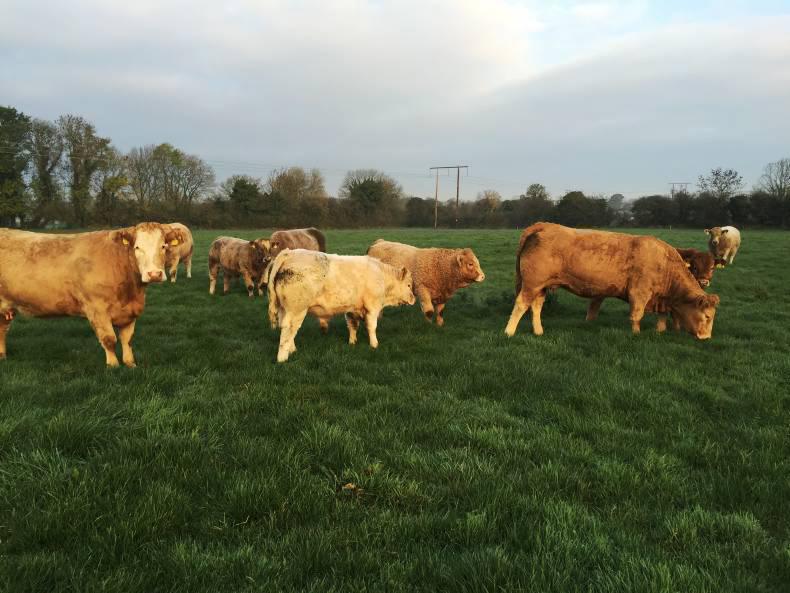
If silage quality is poor during this time, feed cost per kilogram of weight gain will climb above €2. When weanlings hit pasture, 1 kg of weight gain costs just €0.70. Hence, it is in our best interests to achieve as much of our lifetime gain as possible in the great outdoors; when the pit is closed up and the meal bin tightly shut. To help farmers do this, bovines are wired to exhibit accelerated growth rates following a period of nutritional restriction – ie a store winter. This phenomenon is known as compensatory growth, and it can be a potent weapon in the war on costs.
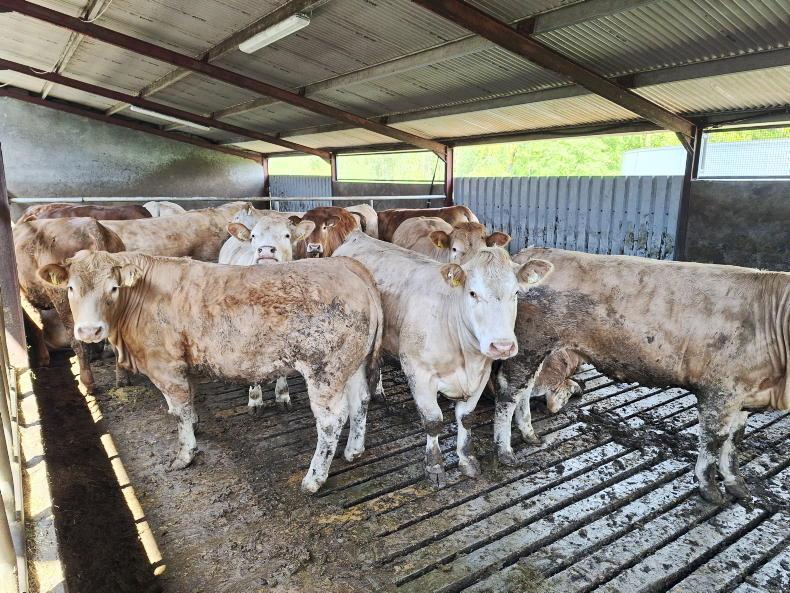
Two recent trials at Grange have demonstrated the principle in all its glory. In year one, spring-born bulls fed 6kg (Hi) of meal plus silage for their first winter turned out to grass 63kg heavier than those fed 2kg (Low) of meal plus silage. After the spring grazing season, the Low bulls had closed the gap to just 21kg of liveweight. Then, following a subsequent intensive-finishing period, bulls were slaughtered at 19 months. Final weight difference was less than 10 kg in favour of the Hi animals. The animals fed 2kg (Low) had grown at 0.67kg per day during the winter – the aim for grass-bound animals is 0.5-0.7kg daily.
In trial 2 (Figure 2) – a better grazing year; bulls were fed 3 (Low) or 6kg (Hi) of concentrate with silage for the winter. At turnout, Hi bulls were 50kg heavier. But, by the end of the spring grazing season, the Low animals had caught their Hi counterparts on the weighing scales. Animals fed 3kg (Low) had grown at 0.7kg per day during the winter.
Target growth rates can be achieved with good-quality silage and modest amounts of concentrate – depending on forage quality (Table 1). In Table 2 and Table 3 there are examples of two concentrate mixes formulated to support these growth rates (1.1 UFL; 16% crude protein). Though generally included in finishing rations to prevent acidosis, the inclusion of fibre-based ingredients (pulp, distillers, soya hulls) here is not a precautionary measure. At low levels like this (<3kg) rumen acidity will not become a problem.
In terms of feeding value, starch sources such as rolled barley and maize are 10% better than soya hulls. So why not leave the pulps and hulls out, and feed more barley?
Think back to noughties, before the Dublin footballers became a superpower. Meath were a good team – but not a great team. Yet, whenever they took the field against the Dubs, they played out of their skins and outshone themselves.
When silage is the staple, the feeding value of fibre-based ingredients like soya hulls often improves relative to cereal (high starch) ingredients such as barley or maize. Like our Meath team, under certain conditions these ingredients perform above-and-beyond usual levels. It is known as an “interaction” – think of Graham Geraghty’s fist interacting with Alan Brogan’s jaw. The microbes that digest silage do not like starch reigning on their parade. A fibrous ingredient like soya hulls negates the negative effects of starch and helps us to get more from our silage. This effect only manifests itself where concentrates supplement good-quality silage at low to modest levels. Don’t expect to reap the benefits at finishing time if offering a high-concentrate diet. There comes a point at which the positive effects from fibre do not outweigh the removal of energy-rich starch ingredients.
Neither the best silage, nor the highest-spec diet in the land will make up for below-par management of weanlings. They are vulnerable animals – by breaking the maternal bond we have interfered with mother nature’s plan. Ensure a good vaccination plan is adhered to, examples of which can be found in previous IFJ FOCUS editions. The change in diet will disturb the animal further and ideally the animal is weaned two to three weeks before a switch from grass to silage. If indoor weaning is a must, nutrient intake needs to remain high. This is achieved either with some extra concentrates or excellent quality silage (75% DMD). If possible, wean gradually – keeping cows in adjacent pens for up to a week and allowing staggered access, before pulling either calves of mothers away totally.




SHARING OPTIONS