Thankfully Christmas and New Year have passed us by and we took a well deserved rest from farming, with only the basics carried out.
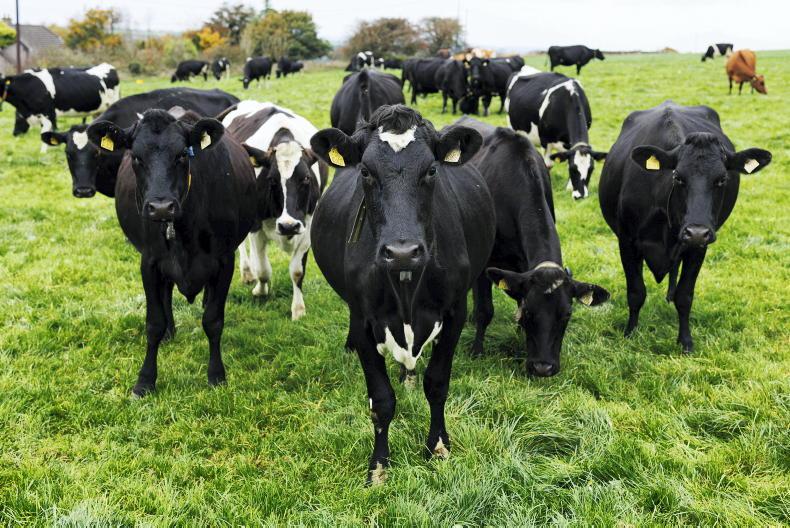
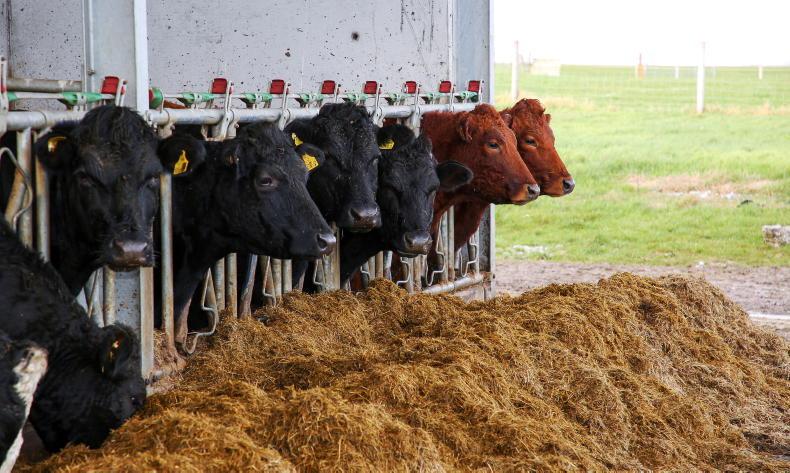
We did however get a couple tasks carried out. All cattle were weighed. It reinforced my belief that going down the route of making quality silage pays. The average daily gain from birth ranged from 0.68 to 1.08 kgs per day. The average daily gain for the period on the farm ranged from 0.5 - 1.2 kgs. Four animals however have lost weight since purchase. One animal was being bullied in the shed and was let out to a small paddock and another had a damaged horn from feeding through the barrier and joined the first outside. However the other two animals displayed no clinical signs of weight loss so they will be monitored closely. This leaves the average weight at 520 kgs which is the most important figure, as all cattle will be returning to grass at heavier weights which in turn will reduce concentrate usage next summer. All animals have been on silage-only diets since entering the farm. Some people would suggest supplementing with 2 kgs of ration but I would question the economics of that when gain is over 0.5 kg per day. The weighing was carried out by an ICBF technician, which is an excellent service. All the information is directly uploaded onto the ICBF database and was available on the laptop when I got home. This leaves the weighing a fast operation and there was no need to worry about scribbling on pieces of paper or mislaying information.
The ICBF database also provides in-depth information on each animal from birth. This can also only improve as people record more details and more genetic information becomes available. Beef finishing enterprises operate under such tight margins and volatility there is no room for complacency or poor management. Every cost has to be examined and cheap weight gain achieved where possible.
ADVERTISEMENT
A recent purchase of a hook drencher has made a previously laborious (and often dreaded) job a whole lot easier. As I mentioned here, we have been treating for rumen fluke for the past three years and it can be only carried out using an oral product. This treatment in the past was physical and at times dangerous and I questioned the merits of a hook drencher but I would now put it down as a best farm buy. Cattle were calm and unstressed as they weren’t being handled and the whole procedure was completed in a very quick time. Steers now have been covered for all parasites and both liver and rumen fluke. The last treatment covered both mature liver fluke and rumen fluke; this was delayed until eight weeks after housing to allow all fluke to mature to adult stage.
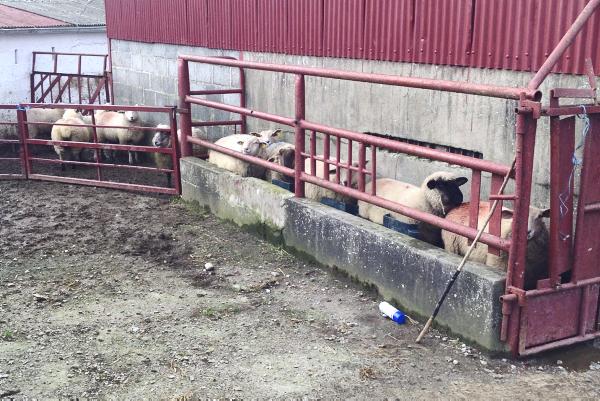
Sheep were scanned today and there was a great deal of improvement from last year. The mature ewes had a scan of 1.85 and a litter size of 1.92. Ewe lambs had a litter and scan size of 1.1. This improvement can be related to several factors:
Ewes going ram in good body condition score
Maturing flock with average age 3 years
Better management around mating resulting in near no embryonic loss
The triplets and one set of quads will be divided off and started on concentrate feed and built up to 1.0 kg per day. Doubles and singles will start on 0.4 kgs per day because silage is good quality. Ewe labs are outdoors and will get hay and a standard plane of 0.5 kgs. per day until lambing. I found in past a standard plane of nutrition prevents any oversized lambs.
Register for free to read this story and our free stories.
This content is available to digital subscribers and loyalty code users only. Sign in to your account, use the code or subscribe to get unlimited access.
The reader loyalty code gives you full access to the site from when you enter it until the following Wednesday at 9pm. Find your unique code on the back page of Irish Country Living every week.
CODE ACCEPTED
You have full access to the site until next Wednesday at 9pm.
CODE NOT VALID
Please try again or contact support.
Thankfully Christmas and New Year have passed us by and we took a well deserved rest from farming, with only the basics carried out.
We did however get a couple tasks carried out. All cattle were weighed. It reinforced my belief that going down the route of making quality silage pays. The average daily gain from birth ranged from 0.68 to 1.08 kgs per day. The average daily gain for the period on the farm ranged from 0.5 - 1.2 kgs. Four animals however have lost weight since purchase. One animal was being bullied in the shed and was let out to a small paddock and another had a damaged horn from feeding through the barrier and joined the first outside. However the other two animals displayed no clinical signs of weight loss so they will be monitored closely. This leaves the average weight at 520 kgs which is the most important figure, as all cattle will be returning to grass at heavier weights which in turn will reduce concentrate usage next summer. All animals have been on silage-only diets since entering the farm. Some people would suggest supplementing with 2 kgs of ration but I would question the economics of that when gain is over 0.5 kg per day. The weighing was carried out by an ICBF technician, which is an excellent service. All the information is directly uploaded onto the ICBF database and was available on the laptop when I got home. This leaves the weighing a fast operation and there was no need to worry about scribbling on pieces of paper or mislaying information.
The ICBF database also provides in-depth information on each animal from birth. This can also only improve as people record more details and more genetic information becomes available. Beef finishing enterprises operate under such tight margins and volatility there is no room for complacency or poor management. Every cost has to be examined and cheap weight gain achieved where possible.
A recent purchase of a hook drencher has made a previously laborious (and often dreaded) job a whole lot easier. As I mentioned here, we have been treating for rumen fluke for the past three years and it can be only carried out using an oral product. This treatment in the past was physical and at times dangerous and I questioned the merits of a hook drencher but I would now put it down as a best farm buy. Cattle were calm and unstressed as they weren’t being handled and the whole procedure was completed in a very quick time. Steers now have been covered for all parasites and both liver and rumen fluke. The last treatment covered both mature liver fluke and rumen fluke; this was delayed until eight weeks after housing to allow all fluke to mature to adult stage.
Sheep were scanned today and there was a great deal of improvement from last year. The mature ewes had a scan of 1.85 and a litter size of 1.92. Ewe lambs had a litter and scan size of 1.1. This improvement can be related to several factors:
Ewes going ram in good body condition score
Maturing flock with average age 3 years
Better management around mating resulting in near no embryonic loss
The triplets and one set of quads will be divided off and started on concentrate feed and built up to 1.0 kg per day. Doubles and singles will start on 0.4 kgs per day because silage is good quality. Ewe labs are outdoors and will get hay and a standard plane of 0.5 kgs. per day until lambing. I found in past a standard plane of nutrition prevents any oversized lambs.
If you would like to speak to a member of our team, please call us on 01-4199525.
Link sent to your email address
We have sent an email to your address. Please click on the link in this email to reset your password. If you can't find it in your inbox, please check your spam folder. If you can't find the email, please call us on 01-4199525.
ENTER YOUR LOYALTY CODE:
The reader loyalty code gives you full access to the site from when you enter it until the following Wednesday at 9pm. Find your unique code on the back page of Irish Country Living every week.






SHARING OPTIONS