


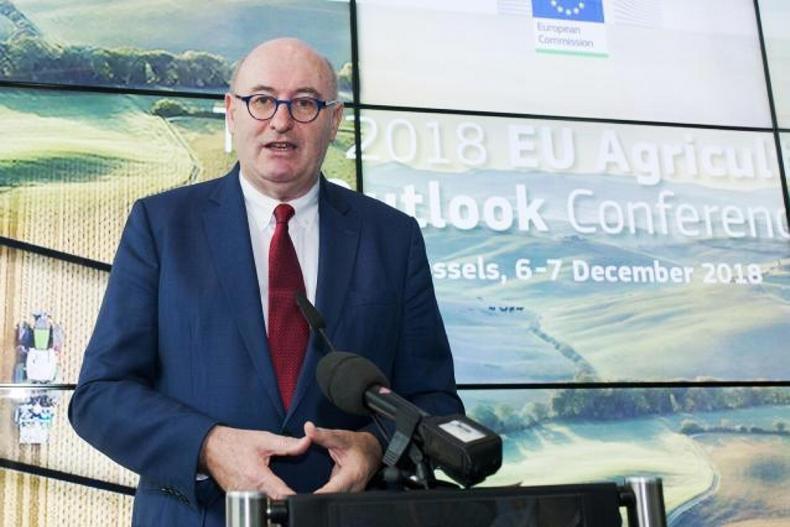
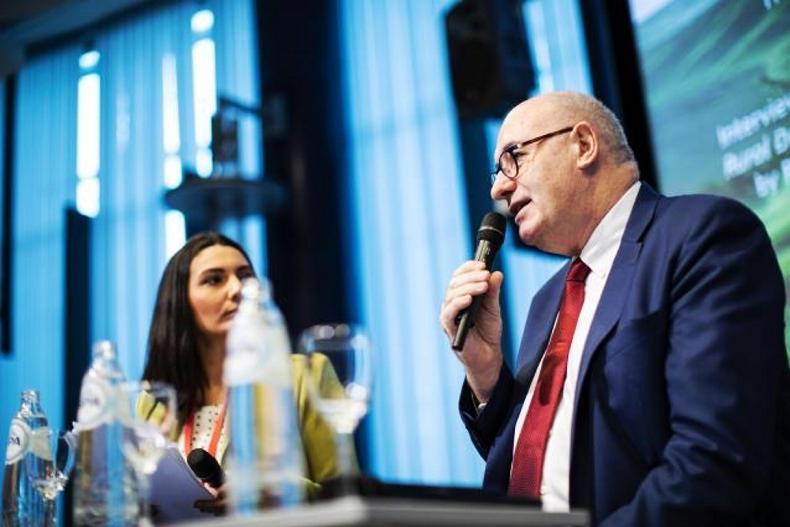
The EU agricultural outlook conference dedicated the afternoon session of the first day to trade, with a particular focus on Japan and Africa.
The conference was addressed first by Japan’s Hiromichi Matsushima, vice-minister for international affairs at the ministry of agriculture, forestry and fisheries.
He was followed by Debisi Araba, director africa region and International Centre for Tropical Agriculture (CIAT), Italy.
Japan and Africa
While Africa is a significant export market for the Irish dairy industry - milk powders in particular - but also a growing market for other dairy products.
However, the conclusion of the free trade deal with Japan, the world’s third-largest economy and net food importer, means it is the most exciting prospect as a market for Irish farmers in the years ahead.
He also emphasised the importance of protecting Japan's agriculture
The Japanese minister was keen to highlight the synergies between the EU and Japan and the fact that they have just 360 square metres of land per head of population means that they have to import food.
He highlighted the changing Japanese food culture as presenting opportunities for the EU to sell to Japan.
Although he also emphasised the importance of protecting Japan's agriculture, not just for basic food suppliers, but also maintenance of the rural environment.
This, he also reflected, was a further similarity with the EU.
Agriculture in Japan
While Japan has historically been protective of its agriculture, the minister emphasised that Japan was seriously committed to trade.
He credited the country’s rapid economic recovery from the war as being built on trade and that they were one of the first Asian countries to become members of GATT, a forerunner to the World Trade Organisation (WTO) in 1955.
EU-Japan trade deal
The trade deal between the EU and Japan is very favourable for agriculture.
Beef tariffs will be reduced from 38.5% to 9%, but it will be a slow burner, as this is phased in over 15 years.
Irish dairy and pigmeat are already well established in the Japanese market.
Japan is a cheddar- and butter-buying market and these will have zero tariffs, which will be a huge difference from trading with the 29.8% tariff that is currently in place.
Ireland would expect exports of all these products to increase when these tariff changes take place.
On pigmeat, there will be duty-free trade with processed pork meat and almost duty-free trade for fresh pork meat.
Ultimately, the deal provides for 85% of EU agri-food products (in tariff lines) being allowed to enter Japan duty-free, although this will take up to 15 years.



SHARING OPTIONS