The Agri-Food Regulator now has the capacity to compel price and market information from businesses, Minister for Agriculture Martin Heydon has announced.
This comes as part of a commitment under the Programme for Government to strengthen transparency and fairness across the agri-food supply chain.
An Rialálaí Agraibhia (the Agri-Food Regulator), established in December 2023, has a dual statutory role: enforcing legislation on unfair trading practices (UTPs); and carrying out price and market analysis to improve transparency and equity throughout the agri-food supply chain.
Enhanced powers
Minister Heydon has signed regulations that will provide the regulator with additional powers to compel the provision of price and market information in circumstances where voluntary requests for such information have not been complied with.
This, he said, will allow the regulator to provide insightful analysis into the agri-food sector, while having regard to any potential impact on competitiveness or the distortion of competition.

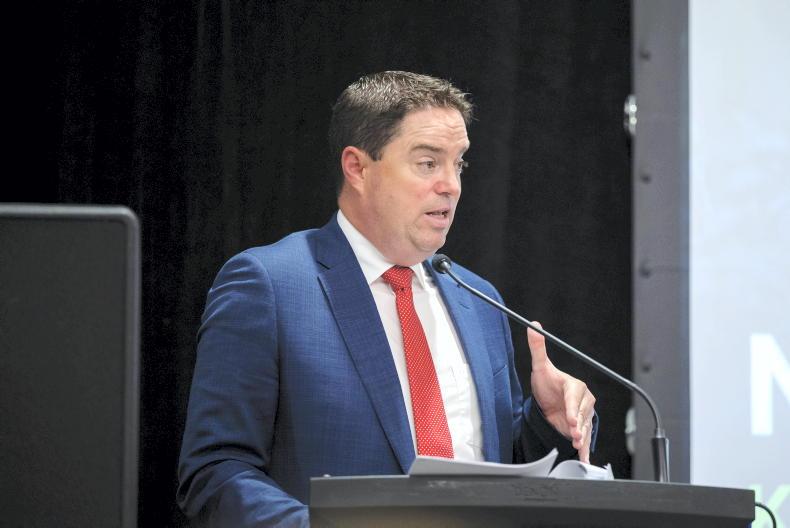
Niamh Lenehan, CEO Agr-Food Regulator's office. \ Philip Doyle
The enhanced powers relate specifically to the regulator’s price and market analysis function, which is entirely separate from its enforcement role in relation to UTPs.
Scope and proportionality
The Agricultural and Food Supply Chain Act 2023 applies across the agri-food supply chain, including supermarkets and large retailers. However, Minister Heydon confirmed that the new regulations will exclude small businesses in recognition of the potential administrative burden such measures can place on smaller enterprises.
For the purposes of these regulations, a small business is defined, in line with EU legislation, as an enterprise that employs fewer than 50 persons and whose annual turnover and/or annual balance sheet total does not exceed €10m.
Commenting on the scope and proportionality, Minister Heydon said: “I am conscious that smaller enterprises can be disproportionately impacted by regulatory or administrative burdens.
"Having discussed this with relevant parties, I am satisfied that the quality and robustness of the regulator’s analysis will not be significantly impacted by the exclusion of small businesses.”
To further minimise administrative burden, the regulations provide that the regulator may not compel data for an individual product from any business more than once in a 12-month period.
Commencement date
The regulations will come into effect on 31 December 2026, allowing sufficient lead-in time for the Agri-Food Regulator to develop the necessary systems, processes and procedures to implement the new powers effectively.
In the interim, the regulator will continue to carry out its market analysis and reporting functions using publicly available information and data provided voluntarily by businesses.
Smaller suppliers
The Minister emphasised that the primary objective of the regulations is to improve transparency in the agri-food supply chain and to strengthen the position of smaller suppliers who may face larger buyers with greater bargaining power.
“These enhanced powers will significantly improve the regulator’s ability to deliver meaningful and insightful price and market analysis across all parts of the agri-food supply chain, including the retail sector,” Minister Heydon concluded.
The Agri-Food Regulator now has the capacity to compel price and market information from businesses, Minister for Agriculture Martin Heydon has announced.
This comes as part of a commitment under the Programme for Government to strengthen transparency and fairness across the agri-food supply chain.
An Rialálaí Agraibhia (the Agri-Food Regulator), established in December 2023, has a dual statutory role: enforcing legislation on unfair trading practices (UTPs); and carrying out price and market analysis to improve transparency and equity throughout the agri-food supply chain.
Enhanced powers
Minister Heydon has signed regulations that will provide the regulator with additional powers to compel the provision of price and market information in circumstances where voluntary requests for such information have not been complied with.
This, he said, will allow the regulator to provide insightful analysis into the agri-food sector, while having regard to any potential impact on competitiveness or the distortion of competition.
Niamh Lenehan, CEO Agr-Food Regulator's office. \ Philip Doyle
The enhanced powers relate specifically to the regulator’s price and market analysis function, which is entirely separate from its enforcement role in relation to UTPs.
Scope and proportionality
The Agricultural and Food Supply Chain Act 2023 applies across the agri-food supply chain, including supermarkets and large retailers. However, Minister Heydon confirmed that the new regulations will exclude small businesses in recognition of the potential administrative burden such measures can place on smaller enterprises.
For the purposes of these regulations, a small business is defined, in line with EU legislation, as an enterprise that employs fewer than 50 persons and whose annual turnover and/or annual balance sheet total does not exceed €10m.
Commenting on the scope and proportionality, Minister Heydon said: “I am conscious that smaller enterprises can be disproportionately impacted by regulatory or administrative burdens.
"Having discussed this with relevant parties, I am satisfied that the quality and robustness of the regulator’s analysis will not be significantly impacted by the exclusion of small businesses.”
To further minimise administrative burden, the regulations provide that the regulator may not compel data for an individual product from any business more than once in a 12-month period.
Commencement date
The regulations will come into effect on 31 December 2026, allowing sufficient lead-in time for the Agri-Food Regulator to develop the necessary systems, processes and procedures to implement the new powers effectively.
In the interim, the regulator will continue to carry out its market analysis and reporting functions using publicly available information and data provided voluntarily by businesses.
Smaller suppliers
The Minister emphasised that the primary objective of the regulations is to improve transparency in the agri-food supply chain and to strengthen the position of smaller suppliers who may face larger buyers with greater bargaining power.
“These enhanced powers will significantly improve the regulator’s ability to deliver meaningful and insightful price and market analysis across all parts of the agri-food supply chain, including the retail sector,” Minister Heydon concluded.








SHARING OPTIONS