



The Irish Co-operative Organisation Society (ICOS) has called on the Department of Finance to amend the flat-rate farmers' VAT top-up to align with the livestock sales figure of 4.8%.
Since 1 January, the flat-rate VAT top-up reduced from 5.1% to 4.5%. Livestock and environment executive with ICOS Ray Doyle told the Irish Farmers Journal that this is the first time in 32 years that the flat-rate has been lower than the livestock sales rate.
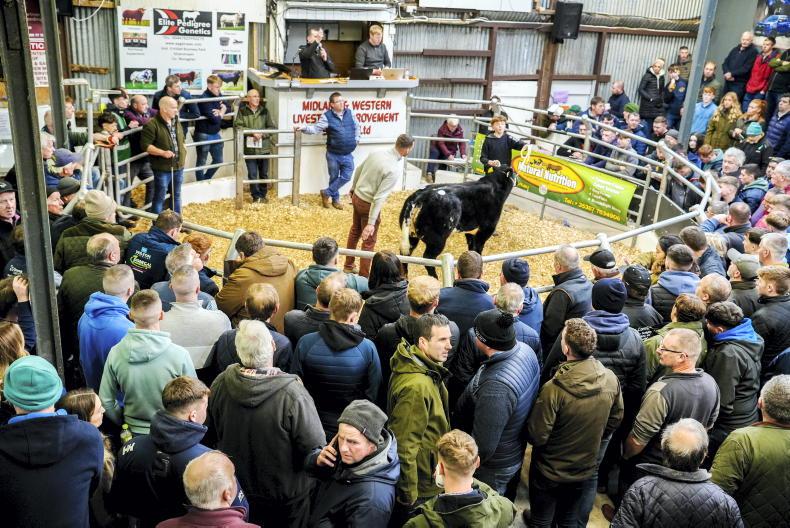
An ICOS delegation met with Department of Finance officials last week on the cut, with the body mounting strong opposition to the measure and stating that it is now having a discriminatory impact on livestock marts and non-VAT registered farmers.
It has reiterated its call for the flat-rate addition to be amended to ensure farmers who are not VAT registered who are selling livestock through marts are not disadvantaged.
This is particularly where livestock sales remain subject to the 4.8% VAT rate while the flat-rate addition has fallen to 4.5%, creating an anomaly that leaves farmers under-compensated, ICOS said.
“We made the case that the flat-rate addition should be adjusted to align with the livestock VAT rate so that the scheme continues to fully compensate farmers, as originally intended, without distorting competition or imposing a hidden cost on livestock producers,” Doyle said.
“ICOS will continue to engage constructively with the Department, but our position remains firm. Marts must not be discriminated against. Non-VAT registered farmers must not be financially penalised, and the flat-rate scheme must remain simple, fair and fit for purpose. This is obviously also a priority in the current inflationary climate which is burdening rural communities with additionally excessive costs,” he added.
ICOS also raised concerns that while Government has cited a Central Statistics Office (CSO)-based VAT calculation as the basis for the change introduced in last year’s Budget, the formula underpinning that decision has yet to be provided.
It said that if the State needs to address balancing within the VAT system, this can and should be managed over an extended period rather than through a sharp deduction in one year that penalises farmers and marts, only to be potentially reversed in another.


SHARING OPTIONS