


It will be made available to farmers in Britain around eight weeks after the licence is granted.
“Once licensed in an EU country, it makes it easier for other member states to licence the vaccine,” said Fergal Morris of MSD animal health.
Ideally, the vaccine is administered prior to the breeding season, which means it will almost certainly be available for sheep farmers prior to this year’s breeding season.
It could be available to Irish farmers by May, which would mean that many spring calving cows could be protected from the disease.
Animals that have been exposed to the virus are believed to obtain protective immunity for life.
This means that their offspring are safe from the virus; however, it is difficult for farmers to know if their herds or flocks were exposed to the virus.
Analysis conducted by the Department of Agriculture found that farms in the south and southeast had high levels of exposure.
While animals as far away as Sligo were exposed to the virus, the levels of exposure fell dramatically as farms got further from the southeast.
Levels of exposure can vary within herds as each animal must be bitten by an infected midge to achieve immunity.
Fergal Morris explained that animals bitten by an infected midge between day 20 and 80 of pregnancy frequently give birth to animals with nerve damage.
Pregnant animals bitten between days 80 to 150 generally give birth to offspring with muscle damage. Both problems have been reported by Irish farmers over the past number of months.
Seventy cases of the Schmallenberg virus have now been officially confirmed in 10 counties. With 27 farms confirmed, Co Cork has 38% of all cases. The majority of cases in Cork are in cattle (22) with the remaining five confirmed in sheep. With 15 confirmed cases, Kilkenny has the second highest number of infected farms. Nine cases were confirmed in sheep as opposed to six in cattle.
With 11 confirmed cases, Wexford has the third highest prevalence of the virus which is more common in sheep (seven) than cattle (four).
Waterford and Wicklow both have five cases while Tipperary and Carlow have two. Counties further from the southeast, such as Dublin, Kerry and Limerick, all have one confirmed case.
It is believed that the 70 confirmed cases is a significant under-estimation of the actual number of cases being felt on the ground.
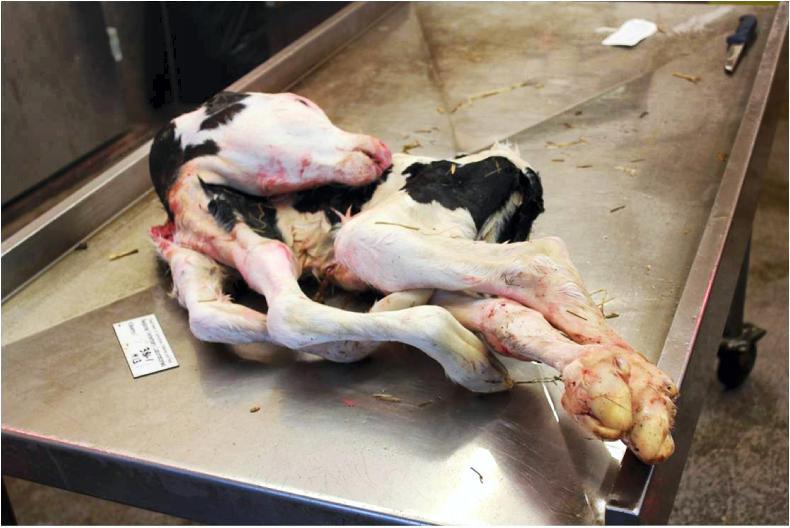
Many calves and lambs are so deformed that the owners are in no doubt that they are dealing with the Schmallenberg virus. For this reason, many are not sending infected foetuses’ to the Department’s regional veterinary laboratory for confirmation.




SHARING OPTIONS