


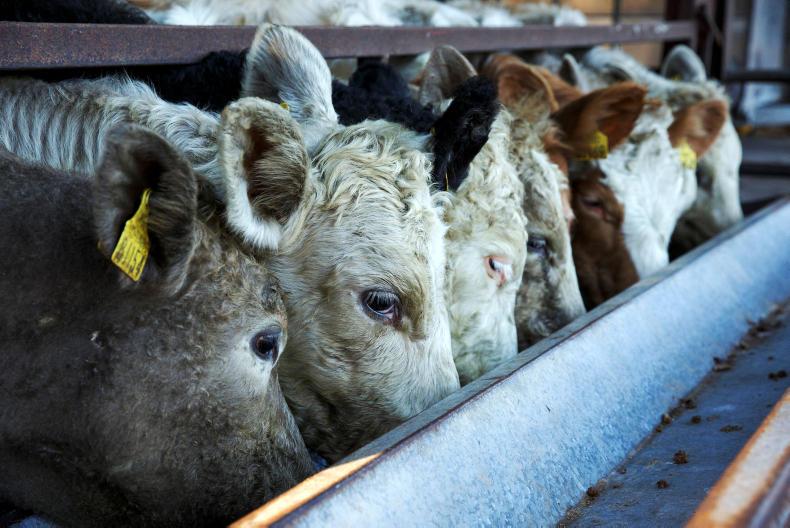
Hard questions need to be asked of the retail sector regarding its margins, according to the Irish Cattle and Sheep Association (ICSA) general secretary Eddie Punch.
Addressing over 50 farmers at an ICSA meeting entitled “meeting the challenges of feeding beef”, he highlighted how poor factory and mart prices were impacting farmers.
“Unless you’re getting €1,000 or better for a weanling, you’re at nothing,” he told the crowd, criticising the supermarket standards, which he said penalised bigger continental-type cattle.
"Retail sector has to asked hard questions about what margin it is taking" @ICSAIreland general secretary Eddie Punch. Big crowd at the "Meeting the challenges of feeding beef" event in Mullingar with @ThompsonFeeds and @KepakGroup pic.twitter.com/EpQSG4HsLa
— Farmers Journal (@farmersjournal) October 9, 2018
He also addressed the issue of supply and demand, citing higher cull cow figures across Europe as a good, given it would mean fewer beef calf births in the long-term. This would have a knock-on effect on cattle numbers, which could improve prices down the road.
“Beef price has dropped week on week for a number of weeks and from an ICSA point of view it’s gone too low,” Punch said.
If you’re getting a Jersey bull calf for free, you’d want to get €165 with him
“I think we have to decide how we’re going to move forward and make this industry sustainable.”
“We can’t expect the supports from the European Union to make unprofitable businesses, profitable.”
Punch encouraged beef farmers to find out how much it cost them to produce a kilo of beef and to become more “ruthless” when it came to their margins and the price they were willing to accept from factories.
He welcomed news from Budget 2019, which outlined a new scheme called the Beef Environmental Efficiency Plan (BEEP) that would involve the weighing of cows and calves on farms.
Kepak
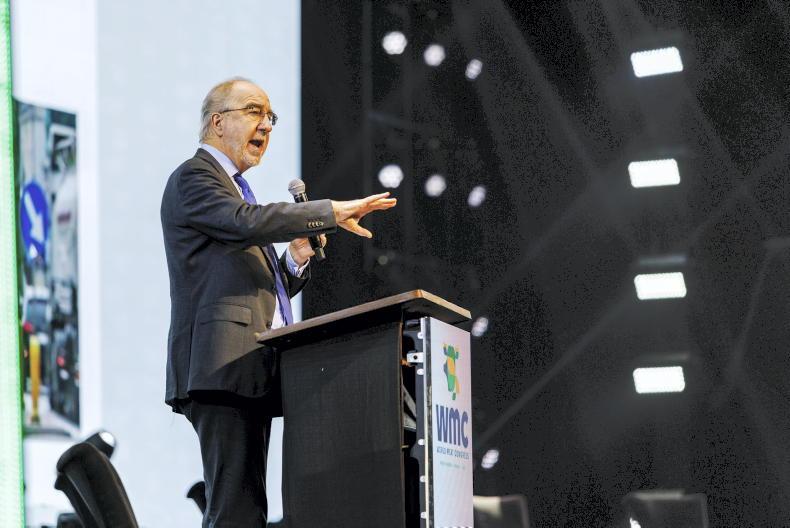
The event also included a presentation from Jonathan Forbes of Kepak, who outlined how much the consumer dictated what type of steak they wanted.
“Retailers now have agriculture departments,” Forbes said.
“They [retailers] want transparency…we get regular audits on our factories and farms.”
“We support agriculture sustainability programmes with them.”
He was blunt about what Kepak is after in terms of specifications.
“We want retail-specification animals,” Forbes said.
“We are a young heifer, a young steer and a young bull operation…we require light carcasses for our markets.”
Forbes accepted that the current beef price was difficult for farms but defended the price compared to other countries in Europe.
“Ireland is currently running 107% ahead of the EU-average price,” he said.
Drought had an impact on kill figures ?? - "Increase of 5,000 cows over that three week period as guys came under pressure" - Jonathan Forbes of @KepakGroup tells @ICSAIreland
— Farmers Journal (@farmersjournal) October 9, 2018
Brexit was emphasised for Kepak, with 70% of Irish beef heading to the UK market, according to Forbes.
However, he said that Kepak was still forward-selling and working with its suppliers to get the best outcomes, which was how its buyers wanted to operate.
Forbes said that, as a company, Kepak is very farmer-focussed and its average supplier slaughtered an average of 22 animals.
He confirmed concerns that were voiced by the ICSA general secretary in terms of taking on certain breeds of dairy beef into a fattening system.
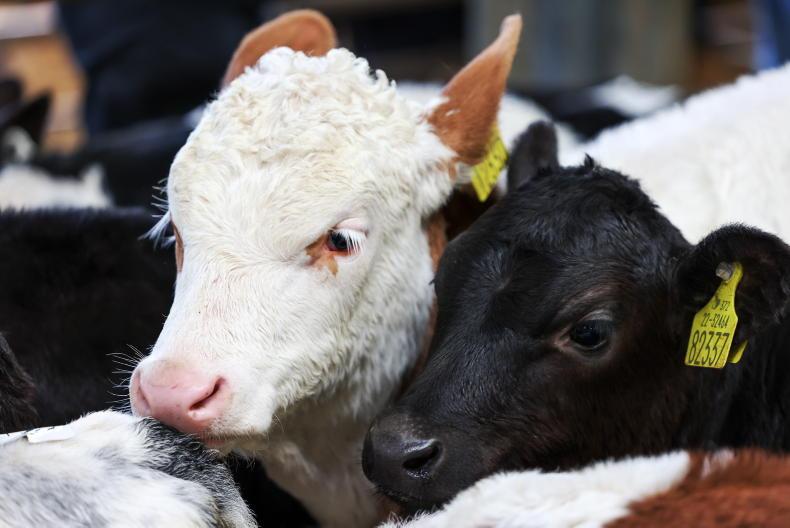
“If you’re getting a Jersey bull calf for free, you’d want to get €165 with him,” Forbes said.
Thompsons Feeds also gave a presentation led by Richard Moore, who insisted that every farmer should get their silage tested before deciding how much to feed this winter.



SHARING OPTIONS