



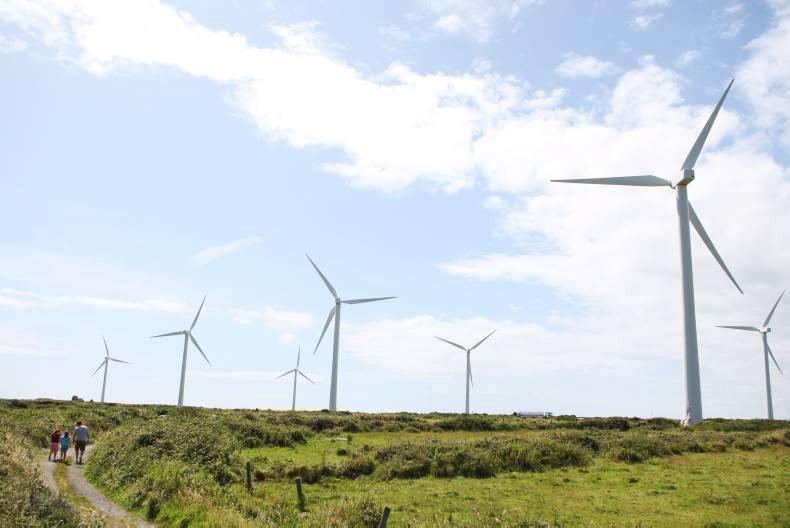
Subsidies for renewable electricity producers, principally windfarms in Ireland, date back to a time when renewable technologies were experimental.
Many countries have offered subsidies to encourage solar energy and generation from wood chips. The renewable technologies have, however, matured and their costs have declined as their promoters constantly remind us. Many governments have scaled back their subsidies and, in some cases, have announced their intention to withdraw them altogether. Subsidies are not too costly when only limited amounts of renewable capacity are in place, but can become a serious imposition on consumers and taxpayers as more and more producers join the subsidy queue.
The renewables industry makes regular claims that it can produce cheap electricity but insists without apparent embarrassment that the subsidies must continue. There is intense lobbying under way in Ireland to prolong the existing wind subsidies and to bring in a new subsidy scheme for solar farms. These measures would add further to Irish electricity costs.
Ireland has a large surplus of generating capacity at present and the subsidisation of further additions, along with the cost of the associated transmission lines, is passed through to consumers. Electricity prices, already among the highest in Europe, continue to rise despite the substantial fall which has occurred in oil, gas and coal prices.
One of the reasons is that windfarms get paid extra when the wholesale market price, mainly driven by the gas price, goes down. For the year 2015/16, the subsidy to renewables producers will rise from €94m to €174m, to be added on to electricity bills. These subsidies are justified on the basis of curbing carbon dioxide emissions. But the claim is less and less credible as the installation of intermittent capacity proceeds. If wind capacity is expanded much beyond current levels, it will regularly exceed the maximum amounts that can be absorbed by the grid at the less busy times.
New wind farms will have to be guaranteed subsidies even when they cannot produce at all and their potential output has no value. Remarkably, Irish policy also subsidises peat-fired stations, which have the highest per-unit emissions of any power generation technology. The policy is hopelessly confused.
The growing generation surplus should discourage investment in yet more plants and, not surprisingly, no new gas plants are planned. Many existing gas plants are regularly idle (when the wind blows) and this reduces their efficiency, increasing emissions. It also brings big losses to those who have invested in gas plants, including the Government. But there is no signal from this distorted Irish market to curtail the construction of windfarms, since they are fully protected from the weak wholesale market price caused by excess capacity. This, rather than any desire to save the planet, explains the continuing gold rush by the promoters of renewable projects.
In the 28-member EU, the portion of total electricity generated from renewables has almost doubled since 2003. But, in Ireland, it has almost trebled. In the UK, where subsidy costs are already alarming the government, wind contributed 9.3% of electricity output in 2014. In Ireland, the wind share had already reached double that figure. It is simply not true that Ireland has been failing to make its fair contribution to the European effort to combat climate change.
Commitment
The Irish Department of Energy remains committed to ever-increasing deployment of windfarms, apparently without a care in the world about the subsidy costs, and in its recent consultation document appears to be contemplating an extension of the gold rush to developers of solar farms.
If these developers were seeking to farm the wind or the sun, their proposals could be treated as genuine commercial ventures seeking planning permission on their merits.




SHARING OPTIONS