


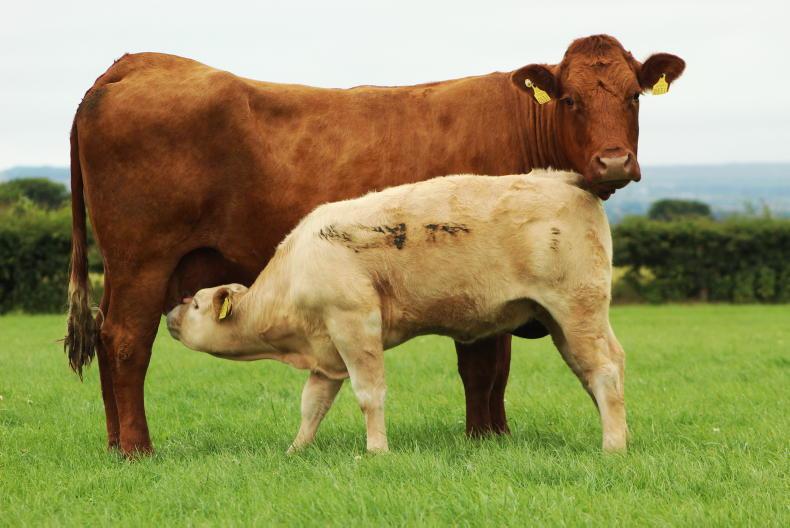
The Irish suckler beef industry should prepare a robust defence of itself or it will find itself politically isolated in the drive to reduce the carbon footprint of Irish cattle farming. We have been skirting around this issue for quite a while but the latest assertions make the direction quite clear. A recent internal report says there is no single step that will have as big an effect in achieving sustainable intensification in Irish agriculture as a shift from suckler beef production to beef from the dairy herd.
If adopted, this change would mark a major shift in policy. It would be desirable that the consequences be realised and put in context.
Up to the imposition of the milk quota in 1984, Ireland had about 400,000 suckler cows. Today, there are just under one million. However, at that time we had over 70,000 dairy farmers; today, there are barely 16,000. So, the dairy sector has become more concentrated. It is not clear if many of those who exited dairying will go back into it. Most of the commentary seems agreed the bulk of any increase will be based on existing dairy farms having more cows rather than large numbers of new entrants.
If, however, a large-scale conversion to dairy beef enterprises is to take place, then it would seem sensible to be clear on what areas are suitable only for suckler cows and presumably sheep. So far, neither official Government papers on the future of Irish agriculture – Food Harvest 2020 and Food Wise 2025 – have given a definitive target on how many suckler cows should be aimed for. They have quantified a 50% increase in milk output much more definitively.
What is not clear is what breeding programme is desirable to produce a viable dairy beef industry. The national dairy herd has become much more single-purpose than the old British Friesian, let alone the Shorthorn. The most dairy sires used on the existing dairy herd produce bull calves of little or no value.
We are also short on the details needed to identify beef sires for use in dairy herds – sires that would ideally have good carcase quality as well as the normal production traits.
While it is easy enough to devise a programme that will result in a viable dairy beef sector, it is also necessary to quantify what aid is necessary to sustain a viable suckler industry. Sucklers have almost disappeared in countries such as Denmark and the Netherlands. We have much more marginal land than either of these two countries but marginal land should not mean marginalised rural communities.
A national policy on dairy beef is almost, by stealth, being created – we need an open policy for suckers that those in it can plan sensibly for the future.





SHARING OPTIONS