



Focus
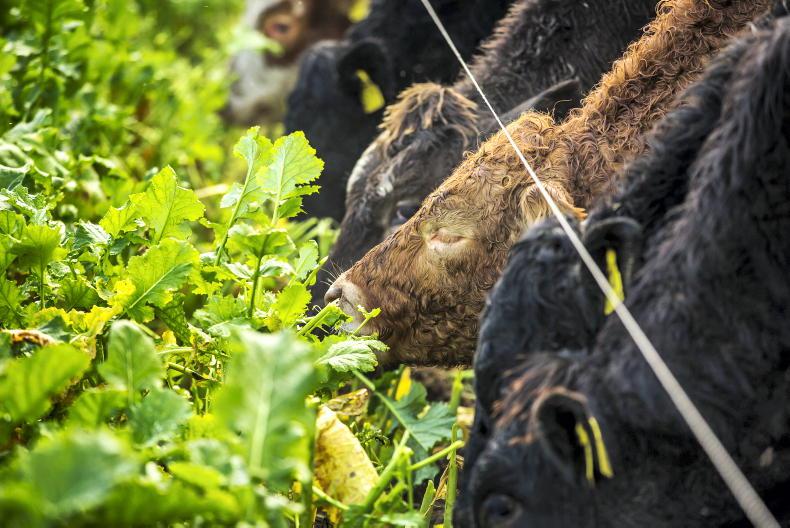
Siobhán Walsh has a special spread on catch crops, or cover crops as tillage farmers often call them, this week (pages 34-37). I’ve talked to a few farmers that have hybrid and kale crops in and all seem happy with germination, given the mixed weather of rain and sunshine. The main job now is to keep a close eye for leaf damage, as it can attack to the extent of a complete disaster. A insecticide spray is relatively cheap, but, more importantly, it means you will get a return on the money you have spent already establishing a crop. If considering an arrangement with a tillage farmer, it’s time to start talking now and maybe trying something on a winter crop field that has been harvested already.
Summer mastitis
Despite constant reminders, many take no precautions. Meanwhile, some still get a case despite taking precautions. The hot and wet weather is ideal for flies, especially where there is tree cover. Many farmers use pour-on or tar and fly repellent, and still get cases and then stop using anything, but usually the situation only gets worse. Take precautions if grazing vulnerable stock near wooded fields, etc. Similarly, the heat has brought the flies back onto calves. I had a number of farmers on the phone this week with pink eye in heifer calves. Be careful, especially if you are feeding calves meal. It can pass from calf to calf very quickly. Most farmers inject 1cc of Pen&Strep into the soft muscle under the eyelid, rather than squirt it directly into the eye. If you squirt it directly into the eye then you need to repeat the procedure for at least three days. You can get away with one or maybe two treatments if you inject into the muscle. Treat calves at the first sign, as it will get progressively worse.
Bull in or out
Be careful of the clean-up bulls, as with less work some bulls are getting very cross. Also be careful that you are using the right bull. A long gestation, beef, sweeper bull could add up to three weeks in some cases. This is the last thing you want for a late-calving cow. We are not far from May-calvers now. There is surplus grass on most farms at the moment. Most are thankful to have the opportunity to take heavy paddocks out for round bale silage, as supplies of winter feed are low. While second-cut silage harvesting has started down south, those in the midlands will wait for another week or two before cutting, to allow paddocks a chance to bulk up. The plan for some is to spread 40 to 50 units of nitrogen on this again, to maybe get a third cut or a September grazing on outside farms, etc. Watery slurry is in the mix also for some on outside farms, which brings a lift to phosphorus and potassium. Try and get it on with the dribble bar or trailing shoe to limit the nitrogen losses. If considering reseeding, then go earlier rather than leaving it until September. Manage soil fertility and take the opportunity now while you can.



SHARING OPTIONS