



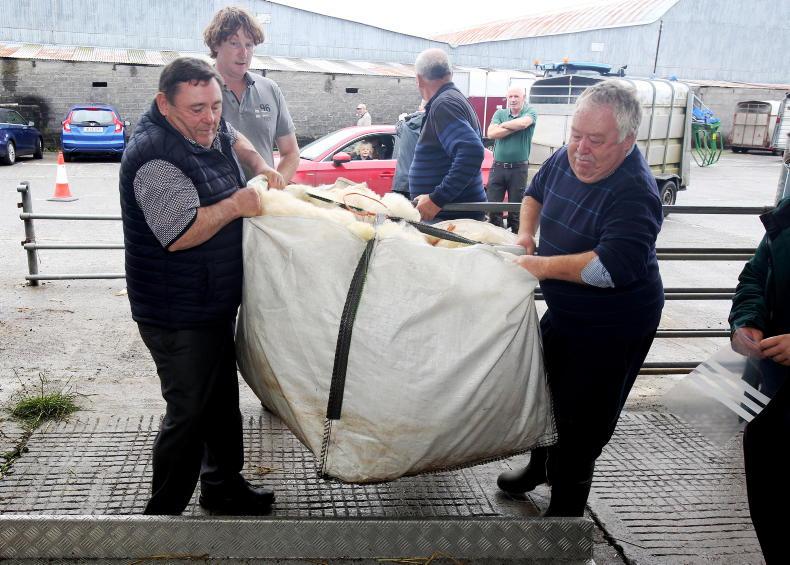
The Galway Wool Co-op has taken a major step forward in achieving one of its key objectives of re-establishing the cultural integrity of Irish wool. The co-op is supplying wool from the 2023 wool clip for a first-of-its-kind Irish wool traceability study, which will be undertaken by the MiCRA Biodiagnostics Technology Gateway, based in TU Dublin’s Tallaght campus.
MiCRA stands for Microsensors for Clinical Research and Analysis. It is an industry-led technology gateway, which focuses on the advancement of electrochemical sensor technologies, diagnostic products and prototype development. The technology which is being used to provide a means of establishing the provenance of Irish wool is termed ‘spectroscopic analysis’.
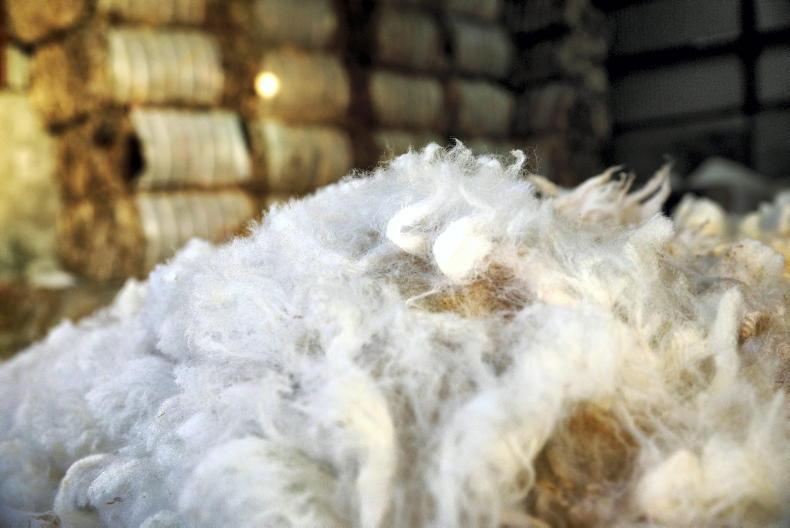
Information known as ‘spectral data’ is collected from various stages of the supply chain, including raw wool, processing and final products, and processes known as chemometric techniques are employed to establish a robust traceability system. Essentially, the combination of these processes enables fingerprinting of wool samples, allowing for accurate verification of origin, authenticity and quality control.
Galway Wool Co-op explains that the utilisation of such technologies “enhances transparency, reduces fraud, ensures product integrity and provides stakeholders with valuable insights into the Irish wool supply chain, ultimately promoting sustainability and consumer confidence”.
Increased transparency
Speaking at the recent Galway Wool Co-op Meitheal, an event which marks the collection of the wool clip, Co-op secretary Blátnaid Gallagher said: “In some ways, farmers are protesting and they are taking the wool out of the route to market which goes out to Bradford, out to China. Farmers realise they have a quality product; it’s premium Irish wool and its native to Ireland.”
The study will trace wool from the raw clip delivered by farmers and then follow this through a number of different enterprises to build up data via a number of other processes.
“In some ways, we can start to weed out the false importation of wool from the Southern Hemisphere. Indeed, there is a lot of European wool here in Ireland. It’s been labelled Irish and I think that’s got to stop.
“What we are doing here today is ensuring that farmers can trace their wool all the way back to the farm, and then the consumer is getting a far more honest product and traceability.
Price premium
The Galway Wool Co-op has been in existence for about three years and in each year has secured a premium price for its members.
This year’s wool price is expected to be in the region of €2.50/kg. The co-op will deduct a percentage of the price to cover running costs, and it is hoped farmers will receive in the region of €2/kg.
“We [the co-op] will take as small an amount as possible. We will take enough to cover the basic running of the co-operative itself, so our audited accounts, our insurance, ICOS membership and things like that.
“After that, we will give as much back as we can back to the farm. We are hoping for €2/kg – we are starting at €1.65/kg – then to clear all the costs, and hopefully then we will rebate the extra 35c/kg.”
Wool collected must be from members of the Galway Wool Co-op and from registered, purebred Galway sheep.


SHARING OPTIONS