



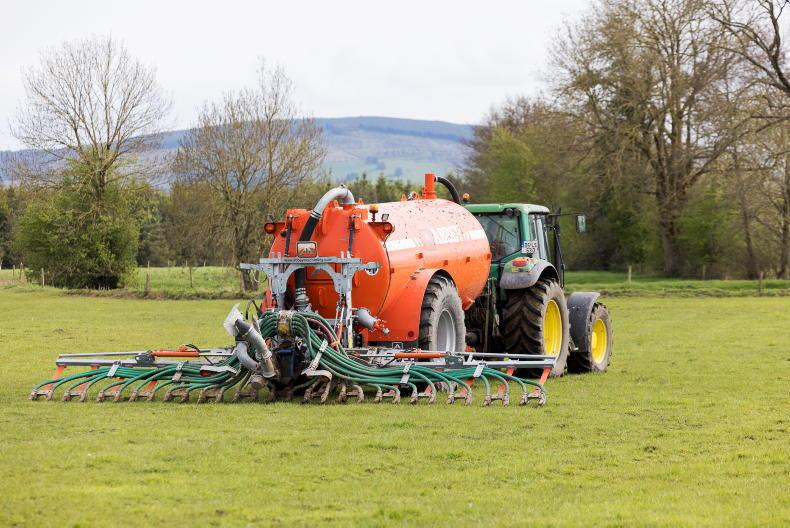
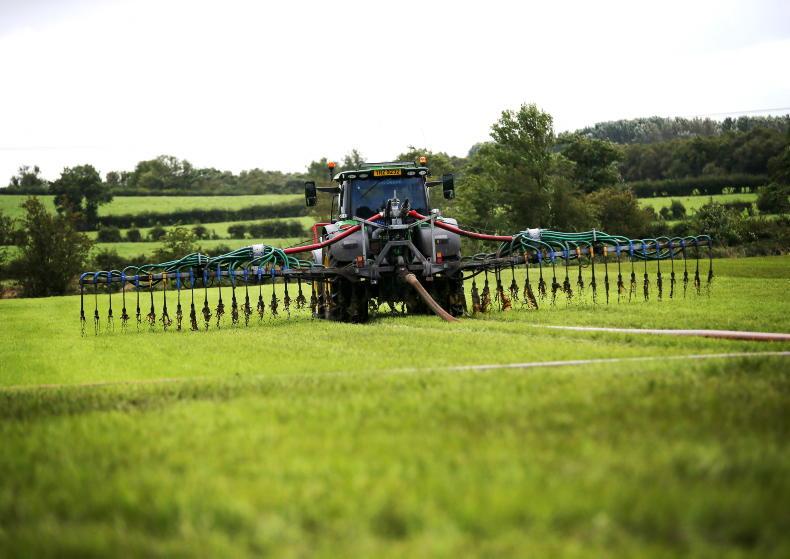
The amount of fertiliser spreaders and slurry tankers seen on the roads in the past week is akin to a dry week in spring, with everyone grabbing the first opportunity in a number of weeks to get some nutrients back on to grass swards again, particularly on those that had been cut in first cut silage and have sat fairly stagnant since.
It was the right action by those that did hold off on applying nutrients, as the lack of rainfall seen in the weeks previous meant that nitrogen was likely to just sit on the top layer and be of little value. The combination of rainfall and the application of nutrients has really turned farms around in the last few days for many, although some farming on drier soils are still struggling with growth rates, and will continue to until significant rainfall hits them.
Quality of grass is the main issue facing many, with the only cure for stem being to hit it with a mower, be it for topping, pre mowing or mowing out as surplus.
If you are still in the position that you are struggling to maintain farm cover, then hitting paddocks with a mower will only slow down regrowth further. Graze swards tight, and any stem present can be corrected in the next round when growth has hopefully recovered fully. We are often guilty of topping paddocks more for aesthetics than for sward quality, so it is best to forego the good looking paddock and maintain grass in front of stock for now.
Ger McSweeney – Millstreet, Co Cork
Growth has been picking up with the rain – 30mm in total. I have been applying watery slurry onto the fields across the weekend, with more to go out tomorrow. I would like to get some 18-6-12 spread onto the ground also to get compounds back into the soil.
The clover which was over sown in May has had a few tough weeks, and has been stressed with the drought, but it should recover with the added moisture in the ground.
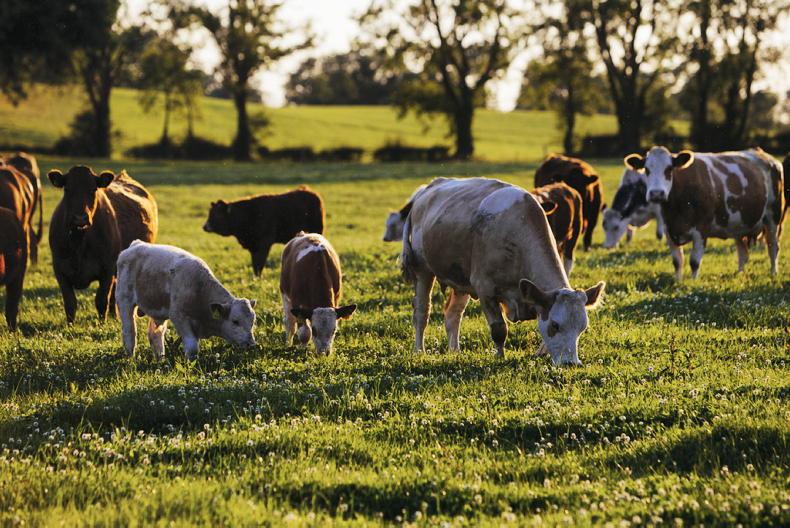
I have been grazing heavy covers to keep grass in front of cattle, with a pre grazing yield of 2,000kg DM/ha. I also took out two paddocks two weeks ago which averaged four bales/acre.
The high dry matter of the grass has kept the cattle content with good clean outs achieved.
System Suckler to beef
Soil Type Variable
Farm cover (kg/DM/ha) 572
Growth (kg/DM/ha/day) 39
Demand (kg/DM/ha/day) 35
Ken Gill – Clonbullogue, Co Offaly
First cut silage has been lifted in recent weeks and I am happy with it, despite the fact there is slightly less of it than last year.
The silage ground didn’t show any signs of growth for two weeks afterwards until the rain pushed on growth. I had three or four paddocks that had gone strong, but I let the cattle graze them tight.
I am out topping at the moment, but it is mainly thistles as the cattle are achieving good clean outs.
More rain is required to allow grass growth to continue as the positive effects can be seen from what we have received so far.
Growth will take off inside the next week if we receive the rain that is forecast. I will also close up paddocks for second cut next week.
System Suckler to finishing
Soil Type Variable
Farm cover (kg/DM/ha) 729
Growth (kg/DM/ha/day) 46
Demand (kg/DM/ha/day) 27
Niall O’Meara – Killimor, Co Galway
The rain which has fallen in the last week to ten days has really given grass growth a boost here on the farm. I have two and a half hectares allocated towards my second cut which have now been closed off.
Ground still remains very hard under foot. I have spread 13kg to the hectare of urea across 42 of the 45 paddocks within the grazing block.
The red clover that I have sown has done well throughout the drought conditions, with is now ahead of the grass in that field.
I will begin to restrict the intake of the cows as they are due to start calving in August. The cattle are very content but I have noticed the flies becoming an issue so I have treated all the cows with Stockholm tar.
System Suckler to weaning
Soil Type Variable
Farm cover (kg/DM/ha) 616
Growth (kg/DM/ha/day) 53
Demand (kg/DM/ha/day) 37


SHARING OPTIONS