


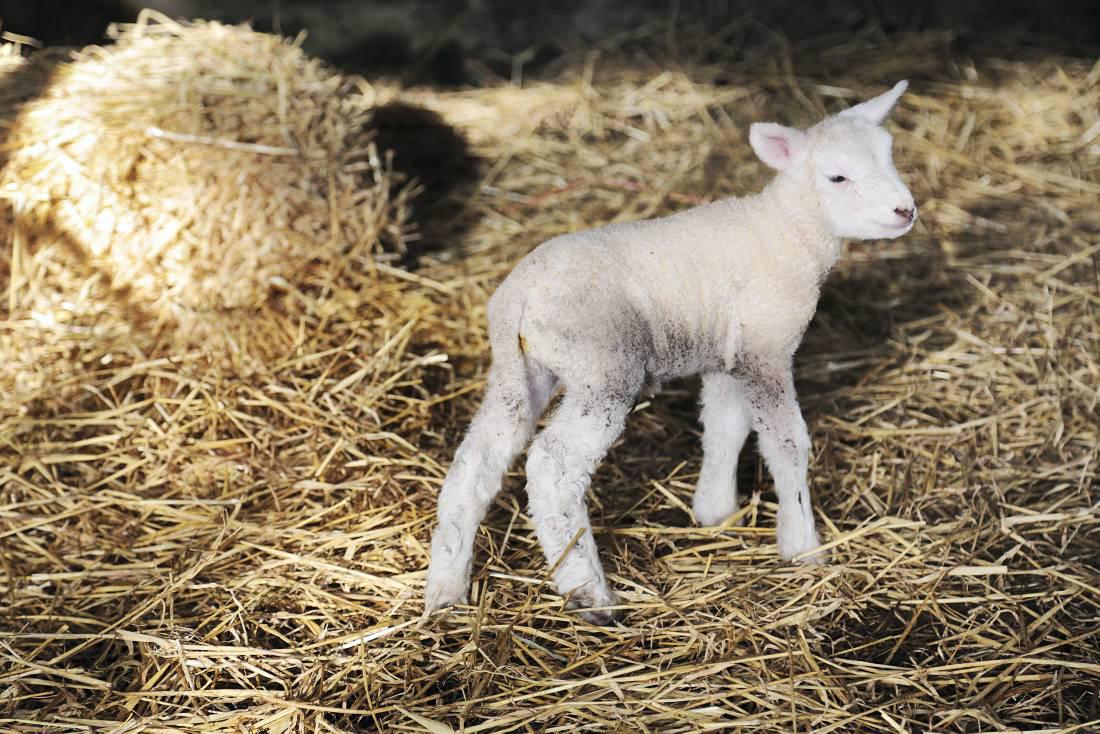
Santa has come and gone for another year. This year, the stork also made an appearance when it came to one of my ewes, with the birth of a healthy lamb. This caused huge excitement among the kids, but confusion for me as the rams are always kept well away from the ewes during the summer.
I have been wondering about this for a long time and the only occasion they had any contact was when they were mixed with a mob of ewes to move from some fields across the road when they were being shorn in early August. The road is so busy that it is easier to move bigger groups of sheep less often.
Scanning started here just before Christmas and, as usual, the ewes have been divided up into groups according to their expected lambing dates. First up were the 250 ewes that were artificially inseminated for Sheep Ireland.
I had been concerned that ewe conception rates to first service would be poor due to the amount of raddle markings present on the ewes, with approximately 40% of them presenting with raddle marks. As it turned out, 76% of the ewes held to AI. There is a litter size of 1.97 lambs per ewe after the empty ewes have been removed.
The second group consists of the mature ewes which were mated in the first two weeks of the breeding season. This is where I find using different raddle colours during mating helps with management decisions later on in the year.
This group scanned 1.92 lambs per ewe after empty ewes were removed. I will re-scan empty ewes with the last group of mature ewes and with any luck the majority will be carrying lambs.
Quads
This year, for the first time, I have a number of ewes scanned with quads. Most of these are as a result of the artificial insemination process. However, there are a number in the main group too.
For me, these are only going to cause trouble at lambing, with extra time and effort needed to keep them all alive. I will have to keep a closer eye on this bunch of sheep.
Most of the ewes will be housed by the end of the week with only the ewe lambs remaining outside. They will be housed according to litter size and expected lambing date.
I will keep the singles close to where the triples are housed so that I don’t have far to go during lambing to get a lamb to cross-foster. Where possible, I will be hoping to cross-foster as many of these as possible, as it is easier and more cost-effective than hand-rearing them, though I’m sure I’d have two very enthusiastic helpers looking to assist with the novelty of the first few bottle feeds.
All the triples have started to receive meal in the last week along with the best silage available. They have started on 300g of meal per day, but this will gradually increase up to 1kg per day prior to lambing. I believe the sooner you start feeding the triples, the better – for them and their lambs.





SHARING OPTIONS