


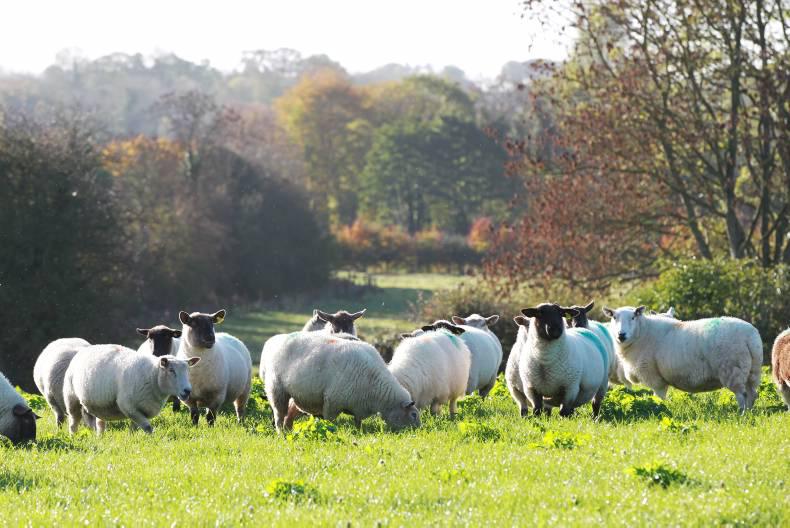
There has been very little research carried out on finishing cull ewes, with efforts concentrated on identifying the most profitable finishing systems for lambs. This is understandable, given ewe and ram throughput contributes on average between 13% and 15% of the annual sheep kill, as detailed in Table 1.
In recent years, there has been more interest from specialist producers in finishing cull ewes following a significant increase in their sale value.
This has been especially the case in the last three to four years, with large-framed cull ewes frequently exceeding the value of finished lambs, while at the same time greater demand for store lambs has increased competition levels.
Finishing principles
The same principles apply to cull ewe finishing systems as to lambs. Grass represents the cheapest option, with tight margins between the purchase and sale price leaving only room for targeted concentrate feeding.
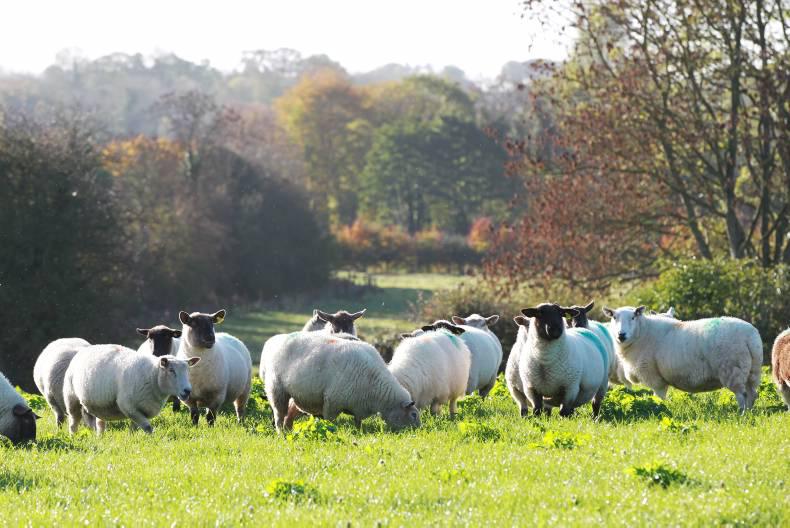
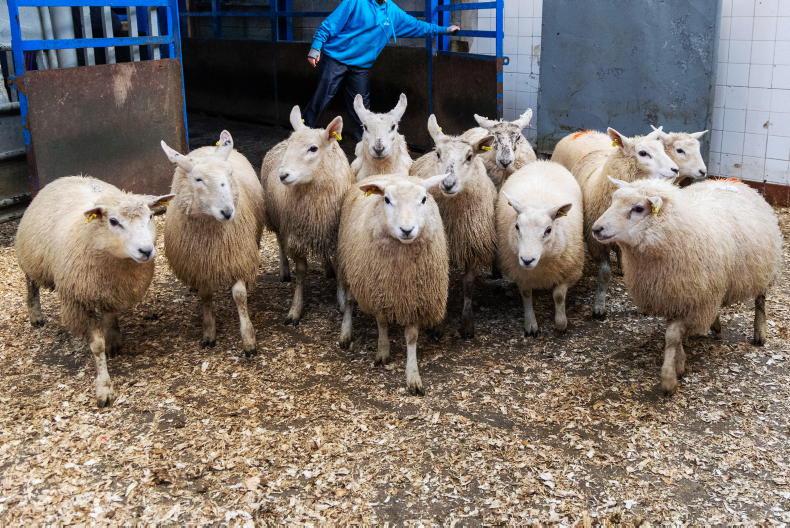
Similar to lambs, finishing cull ewes at this stage of the year onwards requires access to good-quality grass.
The feeding value of autumn grass diminishes as the year progresses, but given a ewe does not normally need to apportion a percentage of her intake to growth, a higher level of performance can regularly be expected than with store lambs.
On good-quality grass, ewes in good health and starting from a reasonable level of condition (BCS 2.25 to 3) will gain in the region of one condition score or 8kg to 12kg (depending on breed and mature weight) in eight to 10 weeks during the September to November period.
Daily liveweight gain will be particularly boosted where ewes are grazing reseeded paddocks or transferred on to fresh ground not previously grazed with sheep.
Performance will reduce in December and January, especially if underfoot conditions are poor and grass utilisation is reduced during periods of heavy rainfall, such as those experienced this week.
As such, the aim should be to limit the duration of the finishing period to two to three months where possible, with many finishers targeting the period from mid-November to mid-January for trading ewes.
Selection has a large role to play, with poorly fleshed ewes or ewes with a poor mouth unlikely to perform satisfactorily on a grass-only diet.
A lower purchase price may improve the economics of finishing poorer-quality ewes by leaving a wider differential between purchase and sale price that allows a significant quantity of meal to be fed, but this requires precise planning and budgeting of feeding levels and costs.
Ewe selection
As mentioned above, ewes within 10% to 15% of their finishing weight, in good health and with a good mouth have the best chance of experiencing a shorter finishing period.
Lowland ewes with continental breeding, such as Suffolk crosses, generally have a mature weight range of 75kg to 80kg. Mule ewes have a mature weight of about 75kg, while Belclare cross ewes have a lower mature weight of 70kg to 74kg, with Lleyn cross ewes lower again at 60kg to 70kg.
Hill breeds such as Scottish Blackface ewes with a smaller frame and grazing on harder hills have a mature weight of 50kg to 55kg, while larger-framed ewes (Perth type) can weigh up to 65kg and greater in cases. Cheviot ewes follow a similar trend.
Marketing ewes
Marketing ewes at the correct stage will influence returns. Most factories impose an upper weight limit in the region of 40kg. Some are more restrictive at periods when ewes are in good supply, imposing an upper weight limit of 34kg to 35kg to entice sales of lighter ewes, while likewise, feeders with more negotiating power can secure a few extra kilogrammes carcase weight allowance when ewes are in tighter supply.
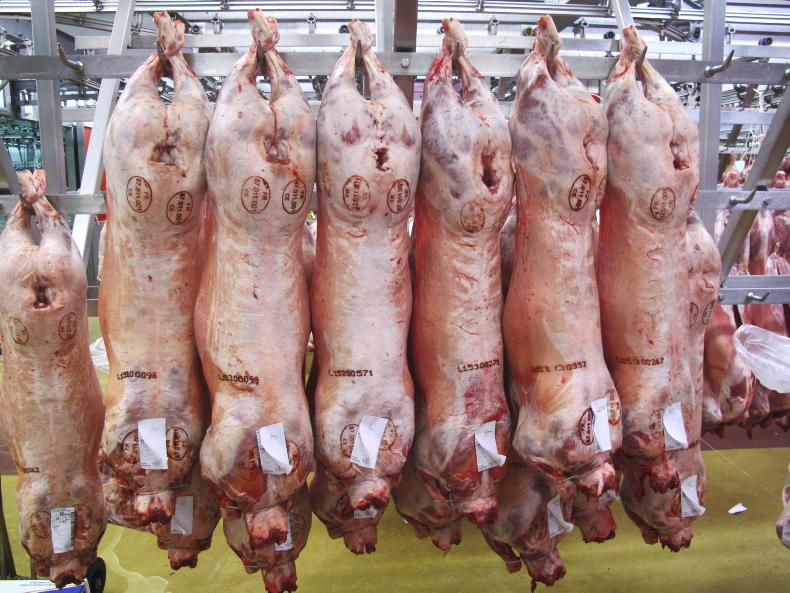
Continental-cross fleshed R and U grading lowland ewes will achieve a kill-out percentage of 44% to 45%, with plainer-quality ewes killing out at 42% to 43%. Fleshed hill and crossbred ewes will kill from 40% to 43%, with poorly conformed ewes lacking flesh falling under 40% kill-out.
The same can be said on price with large finishers and factory agents in the strongest selling position. The mart has established itself as a good alternative avenue to trade ewes, particularly large-framed heavy ewes, with wholesale and periodic live export demand often pushing returns beyond what smaller producers can secure in the factory.
Demand has been helped by tighter supplies in the market, with the weekly ewe and ram kill running anywhere from 700 to 1,000 head behind 2014 levels.
Ewe and ram throughput for the year to date is running 43,855 head or 14.3% below the same period in 2014.
At present, there is a tight price range of about €20 to €25 between feeding ewes with an average cover of flesh and similar type slaughter-fit ewes.
This leaves tight room to operate and great care must be placed on developing and sticking to a budget to return a margin. Table 2 details the typical costs that should be taken into account. The budget is for illustrative purposes and it is important to use realistic figures for your own farm.
Some farmers do not include a grazing cost as ewes may be consuming grass that would otherwise go to waste.
However, in many cases, a cost should be apportioned, as ewes may be grazing rental ground on a temporary basis or grass that would be better served for a breeding flock.
Where grazing temporarily, costs vary from 10c to 15c/head per day.
As mentioned above, the volume of concentrates fed has a large influence on costs and potential returns. This does not mean concentrates should not be fed, but rather their use should be strategic and designed to achieve the optimum return.
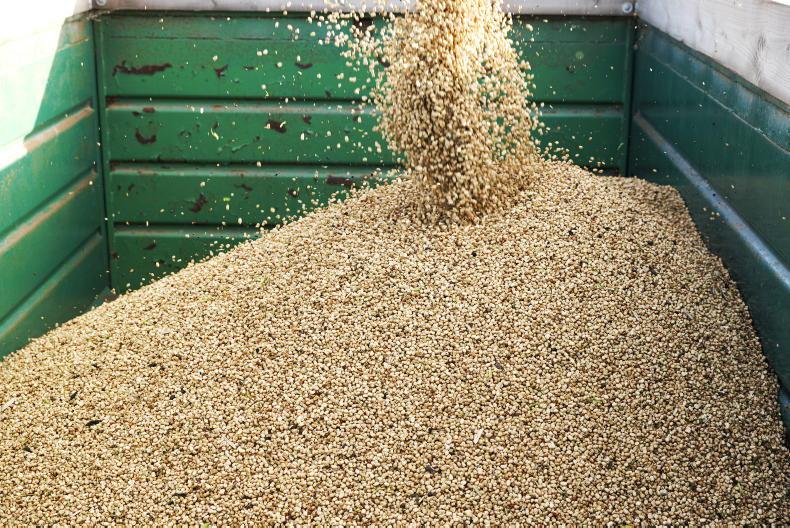
Where grass quality is diminishing, feeding 300g to 500g daily will help to maintain performance. Some farmers increase feeding levels to close to 1kg per day to maximise performance when grass supplies are diminishing.
If progressing down this route, it is important to target a short feeding period, as costs can quickly accumulate.
It is regularly the tail-end or poor-performing ewes that generate the highest costs. It is worth picking a point in time when all ewes should be marketed, as some cull ewes will perform well below their counterparts, despite the same treatment.
Health considerations
At this stage of the year, liver fluke and external parasites are the two main factors to consider. Acute liver fluke is the greatest concern and products should be selected that treat at least immature and not only mature fluke.
However, take care, as many of these products have a withdrawal period of 40 to 60 days.
Dipping provides the best treatment for external parasites, but injectable products can also offer protection. Again, take care to read manufacturers’ guidelines, as some products require re-treatment seven to 14 days later to kill eggs that have since hatched.


SHARING OPTIONS