The focus in the Irish and New Zealand across-country genetics comparison trial (INZAC) flocks has turned to breeding and having animals in prime condition.
Ewes and rams underwent regular body condition scoring in recent weeks, while lead researcher in the trial Fiona McGovern says ewe nutrition is under the spotlight, with sponging set to take place in three weeks.
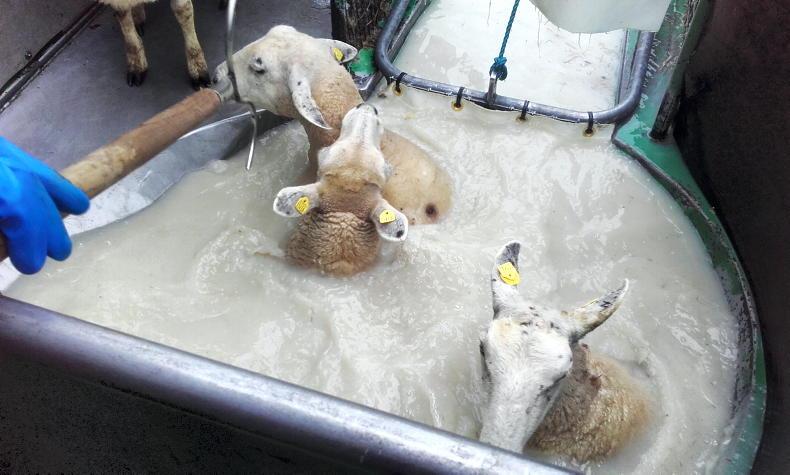
Regular footbathing is also taking place to keep on top of any lameness issues, while the physical condition of rams on farm has also been assessed.
Improved nutrition
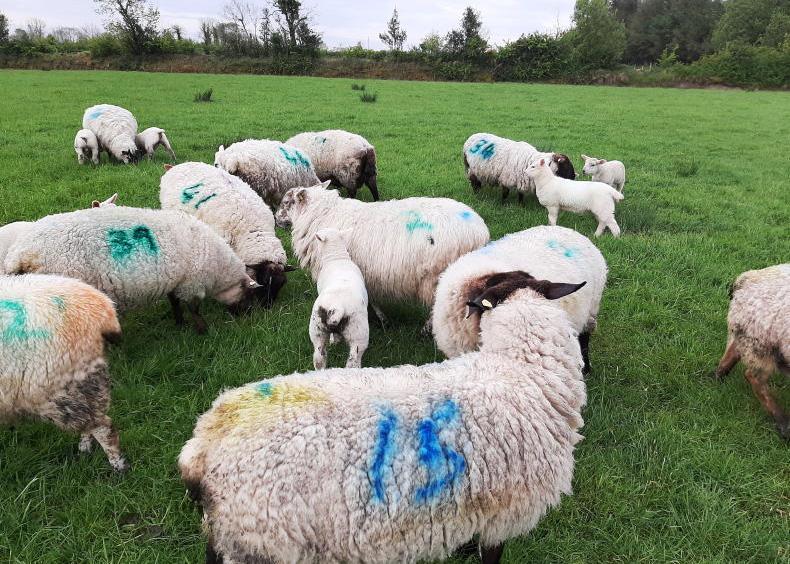
Ewes are still grazing after lambs, but with the number of lambs present in the flocks reducing as regular drafting continues, the quality and volume of grass on offer is increasing. This is ensuring ewes are on a rising plane of nutrition.
Grass quality in recent weeks has been above normal given that all swards were grazed tight during drought conditions. This is allowing ewes to graze out paddocks to 4cm without hitting performance.
Difficult year
Getting ewes back on track has been particularly important given the difficult year. Ewes had to deal with tight grass supplies for a significant period in spring, while within each grazing group ewes were tightened up into a 1ha paddock and fed silage for a three- to four-week period to conserve grass supplies for lambs during the worst of drought conditions in July. The timing coincided with weaning and limited the effect of feeding silage.
The farm is now back on track in terms of grassland management. Regular rainfall throughout August saw growth rates averaging between 60kg DM/ha and 80kg DM/ha, with this week’s grass growth at 65kg DM/ha.
The recovery in growth rates and lower grass demand also facilitated 25% of each farmlet to be removed from the grazing rotation last week as baled silage, with winter forage supplies now replenished.
The aim is to take full advantage of current growth rates to maximise autumn grass supplies.
Grazing ahead
The farm is currently running at 22 days grazing ahead, but will come under pressure in September and October with a higher stocking density when rams are set-stocked for single-sire repeat mating post-AI.
Therefore, all paddocks are receiving their final allocation of nitrogen (N), with 17kg N/ha or a half-bag CAN per acre applied after grazing/silage harvesting. Total usage in the system is set at 13kg N/ewe.
Lamb performance
The steps taken to prioritise grass supplies for lambs and introduction of supplementary feeding has kept the lamb drafting pattern on track.
Supplementation was introduced in early July in response to a sharp falloff in grass growth rates and continued until the first weekend in August.

The high genetic merit Irish Suffolk and Texel ewes have achieved higher performance in 2018 and closed the gap with their New Zealand counterparts.
Lambs were accustomed to meal feeding since spring and quickly responded, with supplementation rates maintained at 500g per head daily with the exception of one week where grass supplies were particularly under pressure and supplementation was increased to 700g daily.
The drafting programme has remained similar to previous years, with lambs selected at 43kg liveweight in June and drafted out of the farm.
The liveweight used for drafting increases by 1kg each month and currently stands at 46kg for September. However, animals are not slaughtered at this stage, as all lambs are subsequently scanned for back fat and muscle depth measurements, which commenced in mid-July.
These results are also used in decisions regarding the selection of replacements and, therefore, drafting for slaughter cannot take place until scanning takes place. The last of the back fat and muscle depth scanning took place this week.

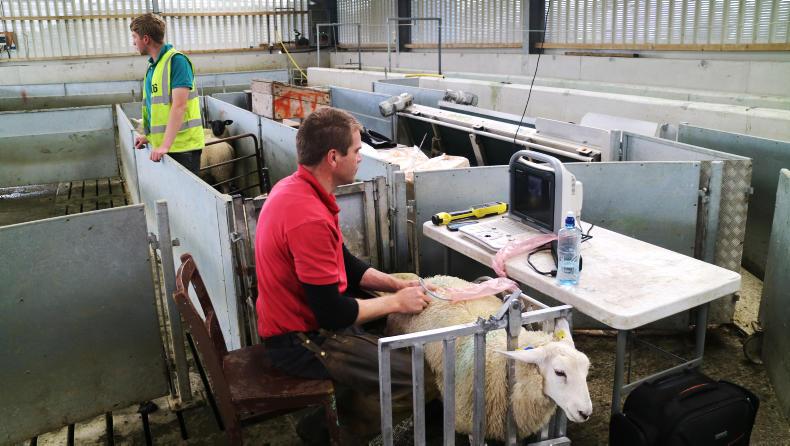
Michael O'Neill, Sheep Ireland carrying out back fat and muscle depth scanning last week.
Fiona explains that about 40% of lambs drafted are retained as replacements (ewes and potential rams for breeding), with the remainder processed and used to collect slaughter performance data.
Other measurements, such as dag score, are also collected at this stage and, along with measurements such as a lameness score, contribute to the new health sub-index.
Closing the gap
Table 1 details performance of the three groups – the New Zealand (NZ) Suffolk and Texel, the high-genetic-merit Irish group and the low-genetic-merit Irish group. The data is provisional and has not been statistically analysed.
The NZ strain of Suffolk and Texel sheep continue to record the best performance, but the gap between them and the high-genetic-merit Irish sheep has closed in 2018 for a number of parameters.
Performance up to weaning was largely similar, with the NZ-bred sheep stealing a march on the high-genetic-merit Irish group since weaning. There are eight more lambs drafted in the NZ group and it will now be interesting to see how the two groups compare in terms of back fat scanning and slaughter performance.

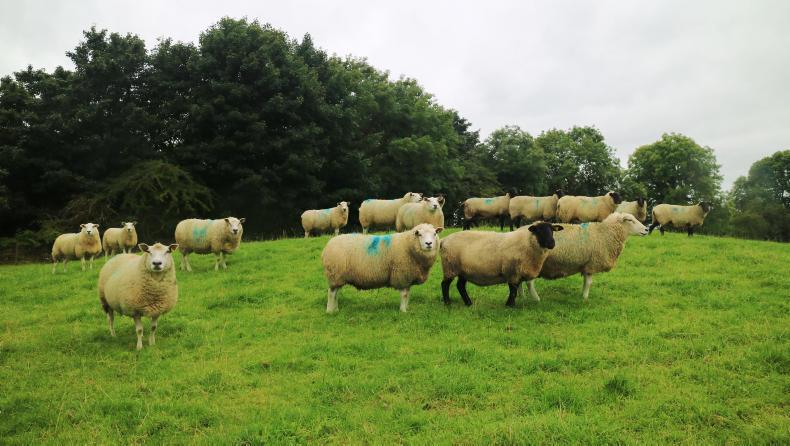
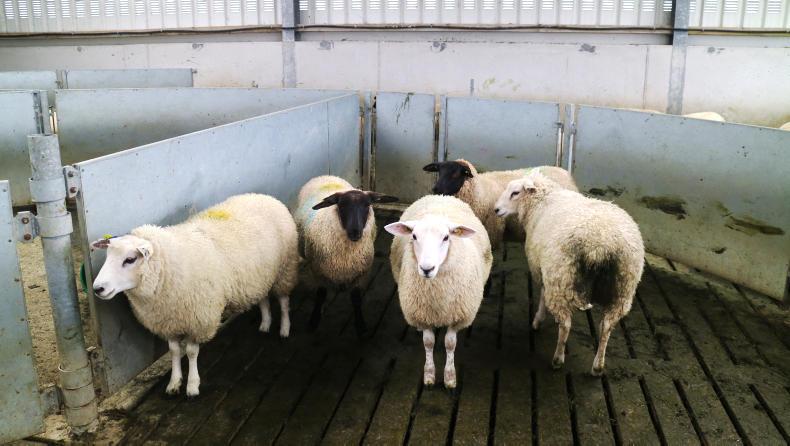
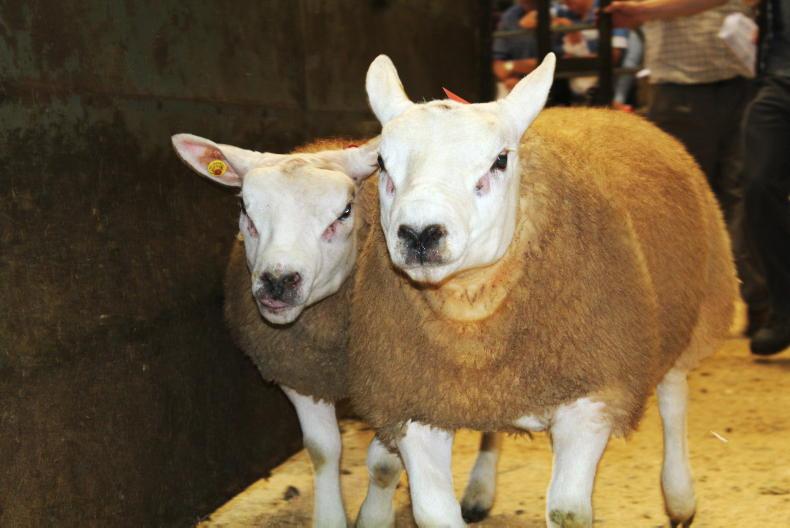
New Zealand Suffolk and texel lambs - the lambs are left undagged as scores are taken at different stages throughout the season.
The trial is also validating the Sheep Ireland genetic evaluations, with the differences between performance in the high- and low-genetic merit Irish groups mimicking what was predicted.
There are considerable differences in terms of the number of lambs weaned, lamb daily liveweight gain and drafting performance.
Stage two
Stage one of the trial is the project taking place in Teagasc Mellows Campus, Athenry, Co Galway. Stage two involved getting sires in the INZAC flock used on a number of commercial farms, with farmers in the Teagasc BETTER Farm Sheep programme using select sires from the high-genetic-merit Irish and NZ groups during the 2017 breeding season.
This allows progeny of these animals to be compared in a commercial environment, but it also underpins another important element of stage two – selecting replacements from these flocks and setting up a flock of ewes where performance of crossbred females can be followed and, in particular, the longevity of the New Zealand crossbred progeny can be evaluated.
The focus in the Irish and New Zealand across-country genetics comparison trial (INZAC) flocks has turned to breeding and having animals in prime condition.
Ewes and rams underwent regular body condition scoring in recent weeks, while lead researcher in the trial Fiona McGovern says ewe nutrition is under the spotlight, with sponging set to take place in three weeks.
Regular footbathing is also taking place to keep on top of any lameness issues, while the physical condition of rams on farm has also been assessed.
Improved nutrition
Ewes are still grazing after lambs, but with the number of lambs present in the flocks reducing as regular drafting continues, the quality and volume of grass on offer is increasing. This is ensuring ewes are on a rising plane of nutrition.
Grass quality in recent weeks has been above normal given that all swards were grazed tight during drought conditions. This is allowing ewes to graze out paddocks to 4cm without hitting performance.
Difficult year
Getting ewes back on track has been particularly important given the difficult year. Ewes had to deal with tight grass supplies for a significant period in spring, while within each grazing group ewes were tightened up into a 1ha paddock and fed silage for a three- to four-week period to conserve grass supplies for lambs during the worst of drought conditions in July. The timing coincided with weaning and limited the effect of feeding silage.
The farm is now back on track in terms of grassland management. Regular rainfall throughout August saw growth rates averaging between 60kg DM/ha and 80kg DM/ha, with this week’s grass growth at 65kg DM/ha.
The recovery in growth rates and lower grass demand also facilitated 25% of each farmlet to be removed from the grazing rotation last week as baled silage, with winter forage supplies now replenished.
The aim is to take full advantage of current growth rates to maximise autumn grass supplies.
Grazing ahead
The farm is currently running at 22 days grazing ahead, but will come under pressure in September and October with a higher stocking density when rams are set-stocked for single-sire repeat mating post-AI.
Therefore, all paddocks are receiving their final allocation of nitrogen (N), with 17kg N/ha or a half-bag CAN per acre applied after grazing/silage harvesting. Total usage in the system is set at 13kg N/ewe.
Lamb performance
The steps taken to prioritise grass supplies for lambs and introduction of supplementary feeding has kept the lamb drafting pattern on track.
Supplementation was introduced in early July in response to a sharp falloff in grass growth rates and continued until the first weekend in August.
The high genetic merit Irish Suffolk and Texel ewes have achieved higher performance in 2018 and closed the gap with their New Zealand counterparts.
Lambs were accustomed to meal feeding since spring and quickly responded, with supplementation rates maintained at 500g per head daily with the exception of one week where grass supplies were particularly under pressure and supplementation was increased to 700g daily.
The drafting programme has remained similar to previous years, with lambs selected at 43kg liveweight in June and drafted out of the farm.
The liveweight used for drafting increases by 1kg each month and currently stands at 46kg for September. However, animals are not slaughtered at this stage, as all lambs are subsequently scanned for back fat and muscle depth measurements, which commenced in mid-July.
These results are also used in decisions regarding the selection of replacements and, therefore, drafting for slaughter cannot take place until scanning takes place. The last of the back fat and muscle depth scanning took place this week.
Michael O'Neill, Sheep Ireland carrying out back fat and muscle depth scanning last week.
Fiona explains that about 40% of lambs drafted are retained as replacements (ewes and potential rams for breeding), with the remainder processed and used to collect slaughter performance data.
Other measurements, such as dag score, are also collected at this stage and, along with measurements such as a lameness score, contribute to the new health sub-index.
Closing the gap
Table 1 details performance of the three groups – the New Zealand (NZ) Suffolk and Texel, the high-genetic-merit Irish group and the low-genetic-merit Irish group. The data is provisional and has not been statistically analysed.
The NZ strain of Suffolk and Texel sheep continue to record the best performance, but the gap between them and the high-genetic-merit Irish sheep has closed in 2018 for a number of parameters.
Performance up to weaning was largely similar, with the NZ-bred sheep stealing a march on the high-genetic-merit Irish group since weaning. There are eight more lambs drafted in the NZ group and it will now be interesting to see how the two groups compare in terms of back fat scanning and slaughter performance.
New Zealand Suffolk and texel lambs - the lambs are left undagged as scores are taken at different stages throughout the season.
The trial is also validating the Sheep Ireland genetic evaluations, with the differences between performance in the high- and low-genetic merit Irish groups mimicking what was predicted.
There are considerable differences in terms of the number of lambs weaned, lamb daily liveweight gain and drafting performance.
Stage two
Stage one of the trial is the project taking place in Teagasc Mellows Campus, Athenry, Co Galway. Stage two involved getting sires in the INZAC flock used on a number of commercial farms, with farmers in the Teagasc BETTER Farm Sheep programme using select sires from the high-genetic-merit Irish and NZ groups during the 2017 breeding season.
This allows progeny of these animals to be compared in a commercial environment, but it also underpins another important element of stage two – selecting replacements from these flocks and setting up a flock of ewes where performance of crossbred females can be followed and, in particular, the longevity of the New Zealand crossbred progeny can be evaluated.






SHARING OPTIONS