



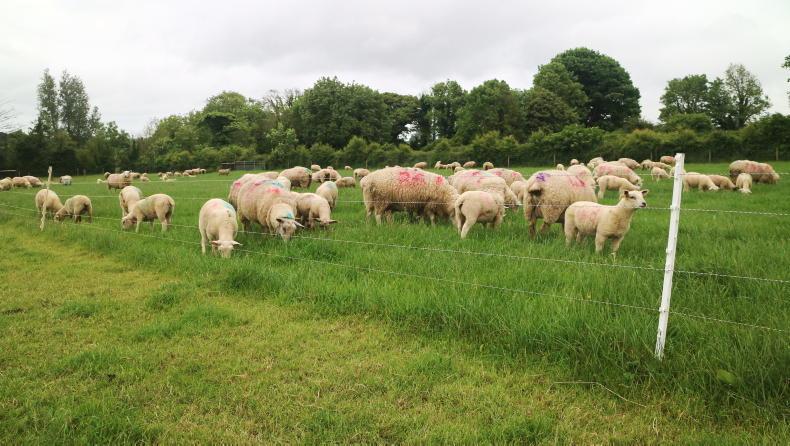
Slaughter performance: Reports from farmers, producer group coordinators and procurement personnel point to significant variability in the kill-out of lambs. The greatest issues seems to be with farmers selecting lambs at a low liveweight and when combined with a poor kill-out risking lambs dropping below a minimum carcase weight of 17kg.
It is understandable dropping down in the weights for a final draft pre-weaning or where prices are under significant pressure. Where there is any question mark regarding lambs hitting minimum carcase weights then the live trade is a better option with a firm trade for short keep stores.
Factory agents are also dropping down in weights in mart sales but have more negotiating power to avoid heavy cuts on underweight carcases. Some plants are said to be cutting upwards of €1/kg where lambs are below the desired carcase weight. The steadying in price should also reduce the pressure to move lighter lambs where there is any doubt about slaughter performance. The kill-out in lambs has been reported from as low as 42% to 43% in ram lambs and crossbred lambs to 47% to 49% in young lambs with a very good cover of flesh and those with access to concentrate supplementation.
Water supply: There is often a theory on sheep farms that animals have a low water requirement. This may be true where sheep are grazing swards with a low dry matter and where there is a heavy dew at night. However all categories of stock will have a high demand for water in the current heat and this will only increase as the dry matter content increases in swards.
Failing to ensure sheep have access to sufficient water will depress intake and increase the risk of animals suffering from heat stress. Water is particularly important for any animals consuming concentrates.
Selecting replacements: It is a good practice when selecting replacement ewe lambs at weaning to initially select 10% to 15% more lambs than is likely to be required. This will allow lamb performance to be accessed post-weaning and will provide an opportunity to do another assessment at a later stage and remove any ewe lambs that have not performed as desired.
With current cull ewe prices there is also no reason to be retaining problem ewes where there are opportunities to bring younger sheep in to the system in their place.
Pour-on application: The incidence of blowfly strike was lower than normal for the first half of the year and has increased gradually in some areas. It is important to remember that applying pour-on in peak daytime temperatures will affect the efficacy of the product as it will evaporate before it has a chance to bind to the fleece. This should be delayed until late in the evening allowing maximum time for chemicals to bind to the fleece.
Sun protection: Farmers are often guilty of failing to take precautions when it comes to applying sun cream. Given the forecast that is ahead it is vital that sun protection is applied. With night-time temperatures remaining high it is worth assessing if dogs held in kennels have enough airflow and that housing is not too warm.



SHARING OPTIONS