



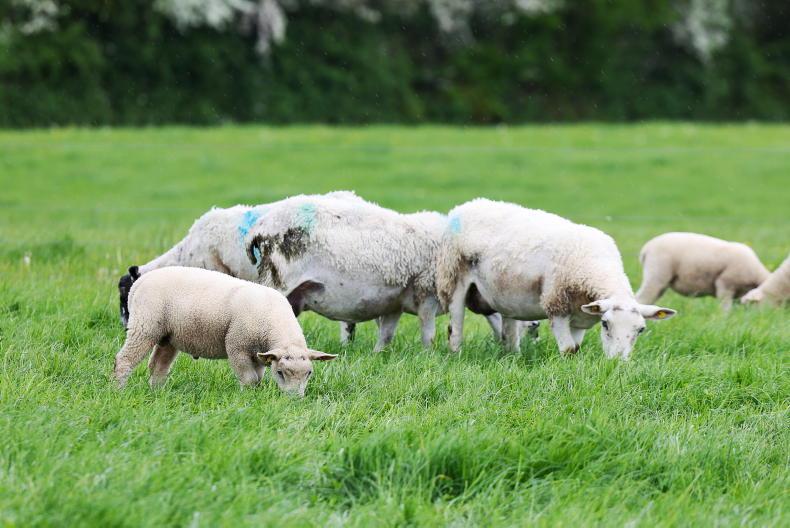
Drafting lambs
Reports indicate that lamb performance in earlier mid-season lambing flocks has been better than anticipated following a slow start to the year. Farmers who have weighed in the last week have been surprised to have more lambs than envisaged hitting or coming close to target slaughter weights. It is worth weighing regularly and assessing if it is better to draft lambs at a lighter weight in the final draft before weaning.
The kill-out percentage typically reduces by 1% to 2% from pre-weaning to post-weaning so there may be an opportunity to draft at a lighter weight without compromising on target carcase weights. This decision will depend on the liveweight of lambs, the likely kill out achieved and current grass supplies.
Cobalt supplementation
Cobalt deficiency generally doesn’t appear on the radar until July but where there is a history of issues on the farm and lambs are being handled in the coming weeks then it may be a good opportunity to get in ahead of issues establishing.
Lambs typically have a requirement for about 1mg of cobalt daily for vitamin B12 production and as sheep do not have the ability to store cobalt they must acquire it on a regular basis via their diet or supplementation.
A study carried out in Athenry examining trace element supplementation with cobalt and a cobalt / B12 / selenium mix increased average weight at drafting and carcase weight by 2.1kg and 1.4kg, respectively. There was however no significant benefit under the conditions in Athenry from including vitamin B12 and selenium along with cobalt. Clinical symptoms of an acute deficiency include lambs going dry in the wool or starting to pine away despite being on a good plane of nutrition. A loss of appetite will also be apparent along with runny eyes and tear staining on the face and raised worm counts due to immunosuppression. Early signs can be the ears of lambs becoming scally / scabby with skin flaking away.
Oral supplementation will typically cover a two week period but there will not be a major fall off in performance if this extends to three week intervals. If administering a bolus then it is important to follow manufacturer’s guidelines and administer carefully as the lining of a lamb’s throat can be easily damaged through animals not being sufficiently restrained. Issues with a deficiency are generally confined to lambs with no need to supplement ewes in good health.
Blowfly protection
The threat of flystrike has remained relatively low to-date with only sporadic reports of significant issues so far. Where a preventative pour on has not been applied to date then it may be important to reassess your plans if they included applying a product with a long withdrawal period and there are lambs that may be fit for slaughter within this timeframe. Withdrawal periods range, in the main, from seven days to 40 days with the difference stemming from the period of protection ranging from up to eight weeks to up to 19 weeks.
Final reminder: The Teagasc lowland sheep conference takes place on Thursday 18 June in the Shearwater Hotel Ballinasloe from 3pm to 5pm and is followed by a farm walk on the farm of John Galvin, Taughmaconnell, Roscommon (H53 R942). See www.farmersjournal.ie for more details.




SHARING OPTIONS