



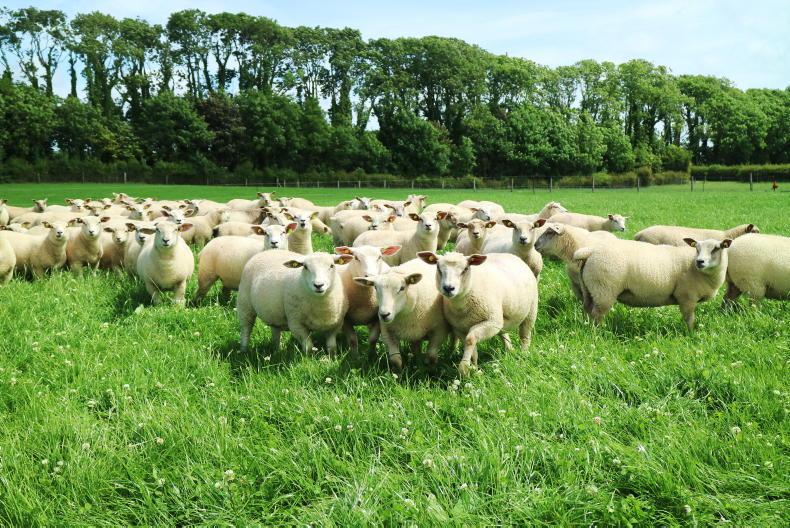
Selecting replacements: Many mid-season flocks lambing in early to mid-March are now in the midst of weaning lambs. Farmers retaining their own replacements from within the flock should identify potential replacements early to avoid the best-performing animals from leaving the flock in the first few drafts of lambs. It is advisable to provisionally select about 10% to 15% more replacements than required to allow selection decisions to take account of performance post-weaning. Replacements should ideally be selected on the back of their own performance and background breeding data, including linking lambs to ewes with good maternal performance and sired by rams with desired traits.
Drafting pre-weaning: For flocks which are weaning, there is potential to draft lambs at a lower weight pre-weaning, to take account of a higher kill-out. Grass-finished lambs with a good cover of flesh should kill-out in the region of 47%, on average pre-weaning with lambs which have received concentrate supplementation achieving a kill-out of up to 49% to 50%. While lambs lacking flesh will kill-back to 44% to 46% or even lower. The kill-out potential of lambs will typically fall by 1% to 2% following weaning, with a check in performance inevitable, with the exception of lambs being finished intensively, with access to high levels of concentrate supplementation. There have been some questions recently concerning the merits or disadvantages of abrupt weaning and gradual weaning. Gradual weaning, whereby a number of ewes are removed from the flock on a continual basis, such as every few days for example, will lower lamb stress levels. However, the merits of lower stress levels are frequently negated by lambs competing with ewes for the best-quality grass and the check in performance from weaning being exaggerated. A higher stress level in lambs weaned abruptly is typically short lived, with the big advantage here being able to prioritise the best-quality grass available to lambs, while also streamlining management practices and being able to restrict the nutritional intake of ewes for the first week post-weaning.
Blowfly strike: Reports continue to highlight a high incidence of blowfly strike, with reports in the last week including cases of blowfly strike in dry hogget ewes shorn early. This is something to be mindful of, while cases in lambs that have not received any preventative cover are also significant. The severity of strikes has increased significantly, with maggots boring into skin rather than moving through the fleece. As such, it is important that where preventative cover has not been administered to date, that it is adopted quickly, with no benefit at this stage of the year to be gained from delaying treatment to extend cover later into the season. Care should continue to be taken in terms of product choice, and specifically with regard to withdrawal dates.
Grassland management: Reports on grass supplies are variable, with farms in the west that were in a strong position limited in cases by grass growth rates dipping and delayed cutting of meadows that could not be mown until 1 July. It is important in these flocks that steps are taken to ensure sufficient grass is available post-weaning. Highly stocked farms should consider applying 25 to 30 units of nitrogen to boost growth, while 10 to 15 units on lower stocked farms will boost grass growth and sward quality.





SHARING OPTIONS