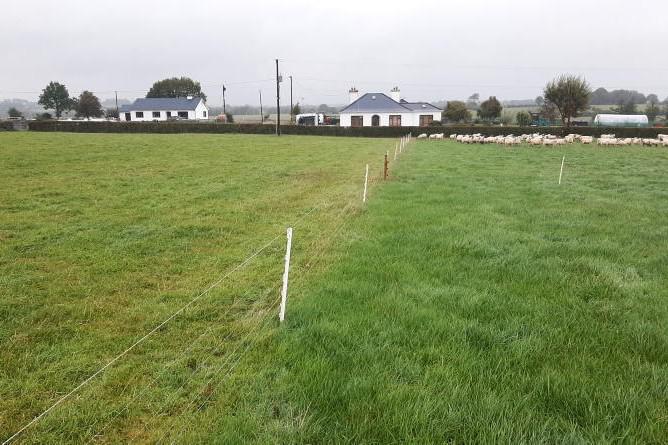
Temporary fencing: Discussions on grassland management on page 39 highlight the positive role that temporary electric fencing can play in optimising grass utilisation in the coming months.
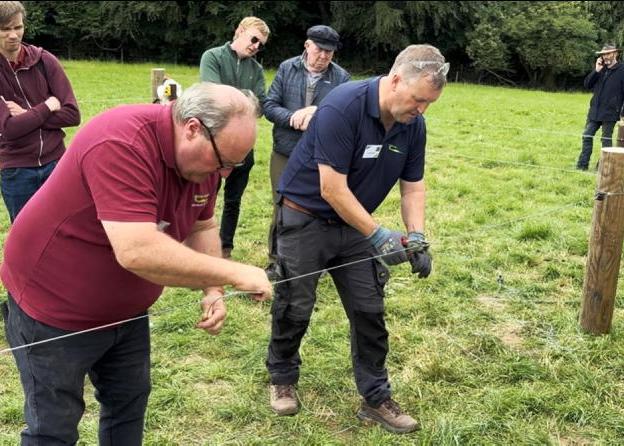
The secret to implementing such a system is to get sheep accustomed to the practice at the outset, by erecting a more robust fence.
Some farmers erect a fence with four strands of wire placed at 20cm, 30cm, 50cm and 80cm above ground level, place posts closer together and concentrate the fence voltage on a smaller area to maximise the voltage. This is especially important with battery or solar-powered units, where the voltage is lower than mains unit fencers.
Once sheep are accustomed to electric fencing then three strands of wire generally suffice at a height of 30cm, 50cm and 80cm. Where using polywire then it is advisable to connect the voltage at the start of a roll of wire, as sometimes the connection can become damaged at the site of joining. In this way the connection can simply be moved with the damaged piece of wire removed. If, however, this occurs in the centre of the line of wire, then the flow of current can be compromised.
Genotyping hill rams: The sheep feature on page 38 covers sale dates for hill sheep breeding groups recording performance with Sheep Ireland. Farmers who wish to produce scheme eligible rams for the Sheep Improvement Scheme are reminded of the importance of genotyping rams destined for using in this year’s breeding season, if not already complete.
Delaying genotyping until after breeding commences risks rams being lost and if sire parentage cannot be DNA verified, then these animals will not be eligible for the scheme. A hill flock genotyping application form is available at www.sheep.ie and an application portal for the OviFlock EIP project is also present.
SIS genotyped rams: The recent warning that failure to complete the genotyped ram action in the first three years of the Sheep Improvement Scheme will lead to expulsion from the scheme and significant penalties, has got some farmers wondering if they have satisfied this requirement in the correct year.
The year selected for genotyping can be found via your agfood.ie account (or what will shortly be myagfood.ie) under the SIS portal. The ram only needs to be present for use in the year selected to satisfy scheme terms and conditions.
The reference number of ewes for the scheme can also be found here. It is important to note that the reference number for SIS may be different to the payable number for the National Sheep Welfare Scheme (NSWS). This can also be accessed via the NSWS portal. The reference number must be maintained across the calendar year for SIS while the payable number must be present in NSWS to complete the actions upon.
Where there is any concerns then the sheep schemes section can be contacted at sheepscheme@agriculture.ie or on 057-8674422. This email is also used where a farmer wants to reduce their reference/payable number.
Cyperguard: Supplies of the sheep dip Cyperguard are back on the market again following disruption to supplies in recent months. Manufacturers of the dip, Bimeda Animal Health, report that supplies of the non-organophosphate sheep dip which can be used by organic farming producers should be back on shelves from the end of last week or early this week.